
Real human readers do not need an AI content detector to feel that a paragraph is “off.” They notice when a piece is too smooth, too vague, too evenly structured, or oddly detached from the person who supposedly wrote it.
Want to bypass Turnitin in 2026? Grab the free prompt pack.
Get the exact text-humanization prompts I use to drop an AI score by hand — copy, paste, submit. Free, straight to your inbox.
Send me the free prompts →That does not mean every polished sentence is AI-generated. Strong writers can be clear and organized. Non-native English writers, students following a strict rubric, and professionals using templates can all produce text that looks “AI-like” to a suspicious reader. Research from Stanford HAI has also shown that AI detection can unfairly penalize non-native English writing patterns, which is a reminder that style alone is not proof of authorship.
Still, there are repeatable patterns that make AI-generated content feel synthetic to humans. If you understand those patterns, you can edit more honestly, protect your own voice, and avoid writing that sounds like it came straight from a prompt.
Real readers do not judge writing the same way detectors do
AI detection tools look for statistical patterns in text. Human readers look for intent.
A detector may react to predictability, uniform sentence structure, or common phrasing. A person reacts to different questions: Does this sound like the writer knows the subject? Does the example feel lived-in? Is the paragraph saying something, or just arranging words that usually appear in this topic?
That is why AI-generated writing can sometimes pass a detector but still fail a human read-through. It may be technically correct, grammatically clean, and logically organized, while still feeling hollow.
The problem is rarely one sentence. It is the accumulation of small signals: a generic opening, a perfectly balanced list, a cautious conclusion, and no moment where the writer’s actual judgment shows up.
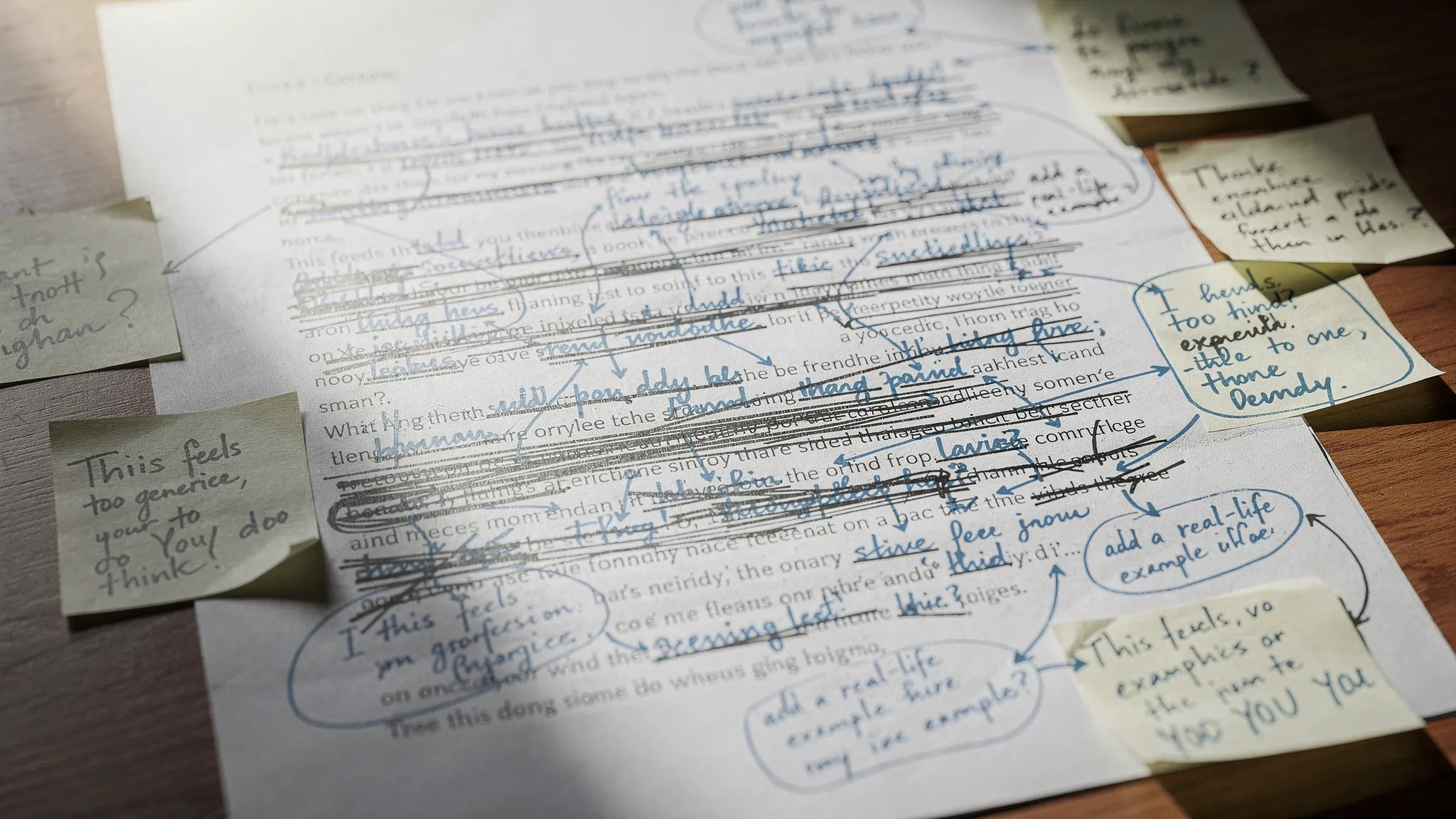
The biggest signs that writing sounds AI generated
1. It opens with generic “topic summary” language
AI-generated writing often begins by announcing the topic in the broadest possible way:
“In today’s fast-paced digital world, effective communication is more important than ever.”
“Throughout history, education has played a crucial role in shaping society.”
These openings are not always wrong, but they feel interchangeable. A human reader can tell when an introduction is trying to sound important before it has said anything specific.
A more human opening usually starts closer to the real reason the piece exists. Instead of summarizing the universe, it identifies a concrete tension, question, mistake, or observation.
For example, “Many students only realize their essay sounds artificial after a professor says the tone feels too polished” is more grounded than “AI writing has become increasingly prevalent in modern education.”
2. The structure is too symmetrical
AI tools love clean symmetry. Three reasons, three benefits, three challenges, three solutions. Every paragraph is similar in length. Every section ends with a neat sentence that restates the point.
That structure is easy to read, but it can also feel manufactured. Human writing often has uneven weight because real thinking is uneven. One point may need a short paragraph. Another may need a longer explanation, a caveat, or an example.
If every paragraph has the same rhythm, readers may feel like they are moving through a template instead of a thought process.
3. It uses “smart” words without making a sharper point
AI-generated content often reaches for abstract nouns: landscape, framework, transformation, optimization, implications, dynamics, ecosystem, leverage, robust, comprehensive.
Those words are not banned. The issue is when they replace concrete meaning.
“AI tools can enhance productivity in the educational landscape” sounds less human than “AI can help a student outline faster, but it can also flatten their essay into the same tone as everyone else.”
Human readers trust writing that trades vague importance for specific usefulness.
4. It avoids taking a real position
A common AI tell is excessive balance. The text says something is important, complex, beneficial, challenging, and worth considering, but it never makes a judgment.
This happens because AI models are often trained or prompted to be safe, neutral, and broadly acceptable. The result can feel like a report that refuses to choose a side.
Human writing does not need to be aggressive, but it should show a point of view. A student might say, “The policy is well-intended, but it punishes the students it claims to protect.” A marketer might say, “This feature is useful, but it should not be the headline.” A reviewer might say, “The tool works for casual rewriting, but I would not trust it for technical material.”
That kind of judgment is hard to fake with generic filler.
5. The examples feel like placeholders
AI examples often sound plausible but empty:
“For instance, a business can use this strategy to improve customer engagement and achieve better results.”
Which business? What strategy? What engagement? What changed?
Human readers notice when examples could apply to any industry, any assignment, or any product. A stronger example includes a constraint, number, audience, setting, or consequence.
Compare that with: “A small tutoring company might use AI to draft weekly lesson reminders, but the owner still needs to add the student’s actual goal, such as retaking Algebra II after failing the first semester.”
Specificity makes writing feel authored.
6. The transitions are too polished
AI-generated text often leans on formal transition phrases:
- Moreover
- Furthermore
- In conclusion
- It is important to note
- This highlights the significance of
- Ultimately
These phrases are not automatically bad. The problem is frequency. When every paragraph begins with a signpost, the writing starts to feel like a machine assembling an essay.
Human transitions are often more direct. “But that creates another problem.” “The harder part is proving it.” “This is where readers get suspicious.” These phrases do more than connect sections. They show the writer is actively guiding the reader.
7. It explains obvious things
AI writing often over-explains because it is trying to be helpful. It defines familiar terms, repeats the assignment prompt, or adds background that the target reader already knows.
For example, an article for college students does not need to explain that “essays are a common form of academic assessment.” A guide for SEO writers does not need to explain that “blog posts are used to share information online.”
Real human writers usually have a sharper sense of audience. They know what the reader already understands, and they spend time on what the reader is actually worried about.
8. It sounds emotionally flat
AI-generated text can describe serious issues in a strangely calm tone. It may discuss being accused of cheating, losing a job opportunity, or failing a class with the same neutral cadence it uses for explaining a productivity app.
Human writing usually has emotional proportion. It does not need melodrama, but it should recognize stakes.
If a topic is stressful, the writing should sound like it understands that. If a topic is technical, it should not pretend to be inspirational. If a topic is controversial, it should not smooth away the conflict.
9. It has no trace of process
Human writing often reveals how the writer arrived at the point. You see the order of discovery, the limitation, the exception, the “I expected X, but found Y” moment.
AI-generated content tends to present conclusions without a trail. It gives the final answer, but not the thinking path.
That absence matters. Readers trust writing more when they can see evidence of selection and judgment. Why this example? Why this source? Why this recommendation over another?
10. The voice does not match the situation
A paragraph may sound AI-generated because the tone is mismatched. A student reflection sounds like a corporate white paper. A product review sounds like a press release. A personal statement sounds like a motivational blog post.
Voice is not just “casual” or “formal.” It is the relationship between the writer, the reader, and the situation.
A real student writing to a professor may be careful but not salesy. A founder writing a product update may be confident but not academic. A blog writer explaining AI detection may be direct, skeptical, and practical.
When the voice does not fit the context, readers notice.
AI-sounding patterns and better human edits
| AI-sounding pattern | Why readers notice it | Better human direction |
|---|---|---|
| “In today’s fast-paced world…” | It could introduce almost any topic | Start with the specific problem your reader has |
| “It is important to note that…” | It adds formality without adding meaning | Say the point directly |
| “This offers numerous benefits…” | It claims value without naming it | Name the exact benefit and who gets it |
| Perfectly even paragraphs | It feels templated rather than reasoned | Let paragraph length follow the idea |
| Generic examples | They sound plausible but unearned | Add a real setting, constraint, or consequence |
| Overly balanced conclusions | They avoid judgment | State the practical takeaway clearly |
What makes writing feel human instead
Human-sounding writing is not messy writing. Adding typos, slang, or random sentence fragments will not make a weak draft feel authentic. It may just make it worse.
The best human writing usually has four qualities.
First, it has context. The writer knows who the reader is and why the topic matters right now.
Second, it has selection. The writer chooses which details matter instead of covering every possible angle.
Third, it has judgment. The writer is willing to say what is useful, risky, overrated, unclear, or worth doing next.
Fourth, it has rhythm. Sentences do not all move at the same speed. Some are short because the point is simple. Others are longer because the idea needs development.
This is also why a text humanizer can help with surface-level flow, but it cannot fully replace a human edit. A tool can vary wording and reduce obvious AI patterns. It cannot know what you actually observed, what your instructor emphasized in class, or which client objection came up on a sales call.
A 15-minute human read-through pass
If your writing sounds AI generated, do not start by randomly paraphrasing everything. Use a focused pass.
- Cut the generic opening: Remove the first sentence if it sounds like it could appear in 500 other essays or blog posts. Start with a concrete problem, question, or claim.
- Underline vague nouns: Look for words like landscape, aspect, factor, solution, issue, and benefit. Replace at least half with specific people, actions, or outcomes.
- Add one earned example: Include a detail that could only come from the assignment, source, product, client, class, workplace, or personal experience.
- Make one real judgment: Add a sentence that says what you actually think, not just what “can be argued.”
- Break the symmetry: Vary paragraph length where the logic calls for it. Do not force every section into the same shape.
- Read it out loud: If a sentence sounds like something no person would say, rewrite it in your natural voice while keeping the meaning.
- Check for meaning drift: If you used AI writing tools or a humanizer, compare the revised version against the original facts, citations, names, and numbers.
For academic work, keep your drafts, notes, and version history. If someone questions your authorship, process evidence is usually more persuasive than claiming a detector is wrong. For more on preserving your own style during edits, see Detection Drama’s guide on rewriting AI text without losing your original voice.
The difference between “polished” and “AI-sounding”
A lot of people confuse polished writing with AI writing. That is dangerous.
A well-edited essay can be clear. A professional report can be structured. A non-native speaker may use simpler sentence patterns because they are writing carefully. A student may follow a rigid rubric because the instructor required it.
The better question is not “Does this sound polished?” It is “Does this sound grounded?”
Grounded writing has signs of real authorship: accurate details, source-aware reasoning, audience fit, and a voice that matches the situation. AI-sounding writing often has polish without fingerprints.
That distinction matters for both writers and reviewers. If you are editing your own work, aim for specificity and ownership, not artificial imperfection. If you are judging someone else’s work, do not treat a smooth tone as proof of AI use.
When a humanizer helps, and when it does not
A text humanizer can be useful when a draft is stiff, repetitive, or obviously shaped by AI-generated phrasing. It can help vary sentence rhythm, reduce generic transitions, and make paragraphs feel less mechanical.
But a humanizer is not a substitute for thinking. It will not add your actual classroom notes, your client’s real objection, your product experience, or your personal reasoning. It may also change facts if you do not review the output carefully.
A safer workflow is simple: lock the facts, rewrite for clarity, run a humanization pass if needed, then do your own final review. If the writing is high-stakes, such as academic, legal, medical, or technical content, be extra cautious. The more precise the subject, the more important manual review becomes.
Detection Drama’s free tools and guides can help you analyze AI-like patterns and humanize AI text, but the final standard should always be human readability, accuracy, and defensible authorship.
Frequently Asked Questions
What makes writing sound AI generated? Writing usually sounds AI generated when it is generic, overly balanced, too symmetrical, emotionally flat, and light on specific examples or judgment. Human readers notice when a piece sounds polished but not grounded in real context.
Can human readers reliably tell if text was written by AI? Not always. People can notice AI-like patterns, but they can also be wrong. Clear, formal, or non-native English writing may be misread as AI-generated, so style alone should never be treated as proof.
Should I add mistakes to make AI text sound human? No. Random mistakes, slang, or awkward phrasing usually make writing worse. A better approach is to add specificity, context, real examples, and natural sentence rhythm while keeping the writing clean.
Why does ChatGPT writing often sound the same? AI tools tend to choose common phrasing, safe claims, balanced structures, and predictable transitions unless guided with strong context. Without a human edit, the result can feel competent but generic.
Can a text humanizer fix AI-sounding writing? A text humanizer can improve flow and reduce obvious AI patterns, but it cannot replace your own examples, reasoning, or fact-checking. Use it as an editing aid, not as the final author of the piece.
How do I know if my draft passes a human read-through? Read it out loud and ask whether it sounds like someone with real knowledge of the topic wrote it for a real reader. If the draft could fit any prompt, brand, or class, it needs more specific detail and ownership.
Want to check whether your writing feels too AI-like?
If your draft sounds clean but strangely generic, run it through a second-pass workflow before you submit or publish. Start by identifying vague phrasing, flat rhythm, and missing context. Then revise for specificity, accuracy, and voice.
You can use Detection Drama for free AI authenticity analysis, humanization resources, and practical guides on making AI-assisted writing sound more natural. For a deeper editing workflow, read Generated AI Text: How to Make It Pass a Human Read-Through.
