Turnitin’s AI indicator can be stressful because it looks like a single number, but it is not a verdict. It is a probability-style signal based on patterns in the writing, and those patterns can show up in perfectly legitimate work, especially in formulaic academic sections (definitions, literature reviews, conclusions) and in heavily “polished” drafts.
Want to bypass Turnitin in 2026? Grab the free prompt pack.
Get the exact text-humanization prompts I use to drop an AI score by hand — copy, paste, submit. Free, straight to your inbox.
Send me the free prompts →This guide focuses on lowering a Turnitin AI score the honest way, without hidden characters, synonym-spinning, or “one-click humanizer” rewrites. The goal is to make your submission more defensible: clearer authorship, more original thinking, and fewer machine-like fingerprints.
How to Lower Turnitin AI Score Without: First, make sure you are solving the right problem
Before you edit anything, separate three different issues that students often mix together:
Turnitin Similarity %: text-matching overlap with sources.
Turnitin AI indicator: likelihood-style signal based on writing patterns.
Academic integrity policy: what your class allows (AI for brainstorming, grammar, outlines, or none at all).
If you have not already, read the difference between similarity and AI detection first: Turnitin AI % vs Similarity %: What’s Actually Different?.
A quick ethics note (important)
If your institution prohibits using AI to produce the draft you submit, then “lowering the AI score” is not the real fix. The fix is rewriting the work yourself and documenting your process, or disclosing permitted AI assistance.
If you wrote the work yourself (or used allowed tools like grammar correction) and got flagged anyway, the steps below are exactly what reduces false-positive risk and improves the credibility of your authorship.
Why Turnitin flags writing that is not “AI-written”
Turnitin’s AI model is tuned for academic contexts. In practice, it often reacts to:
Highly standardized phrasing (textbook-like definitions, generic topic sentences)
Uniform sentence length and predictable paragraph structure
Overuse of transitions and “essay glue” phrases
Lack of assignment-specific details (everything sounds broadly true, nothing sounds personally produced)
Heavy polishing passes that remove natural variation (sometimes from tools like Grammarly)
Detection Drama breaks this down in more depth here: Why Turnitin Flags AI When Other Detectors Don’t and Normal Writing Habits That Can Trigger Turnitin AI Flags.
The most reliable way to lower a Turnitin AI score: strengthen authorship signals
The safest “anti-flag” strategy is not to game the detector. It is to make the writing look like it came from a real person doing real work.
1) Rebuild the draft in a way that leaves a believable trail
Turnitin does not see your Google Docs history, but your instructor can ask for it, and having it often changes the conversation.
If you are revising an existing draft that is reading as “too clean,” do at least one of these:
Create a fresh document and retype (or recompose) from your outline and sources.
Write one messy “thinking draft” section first, then refine.
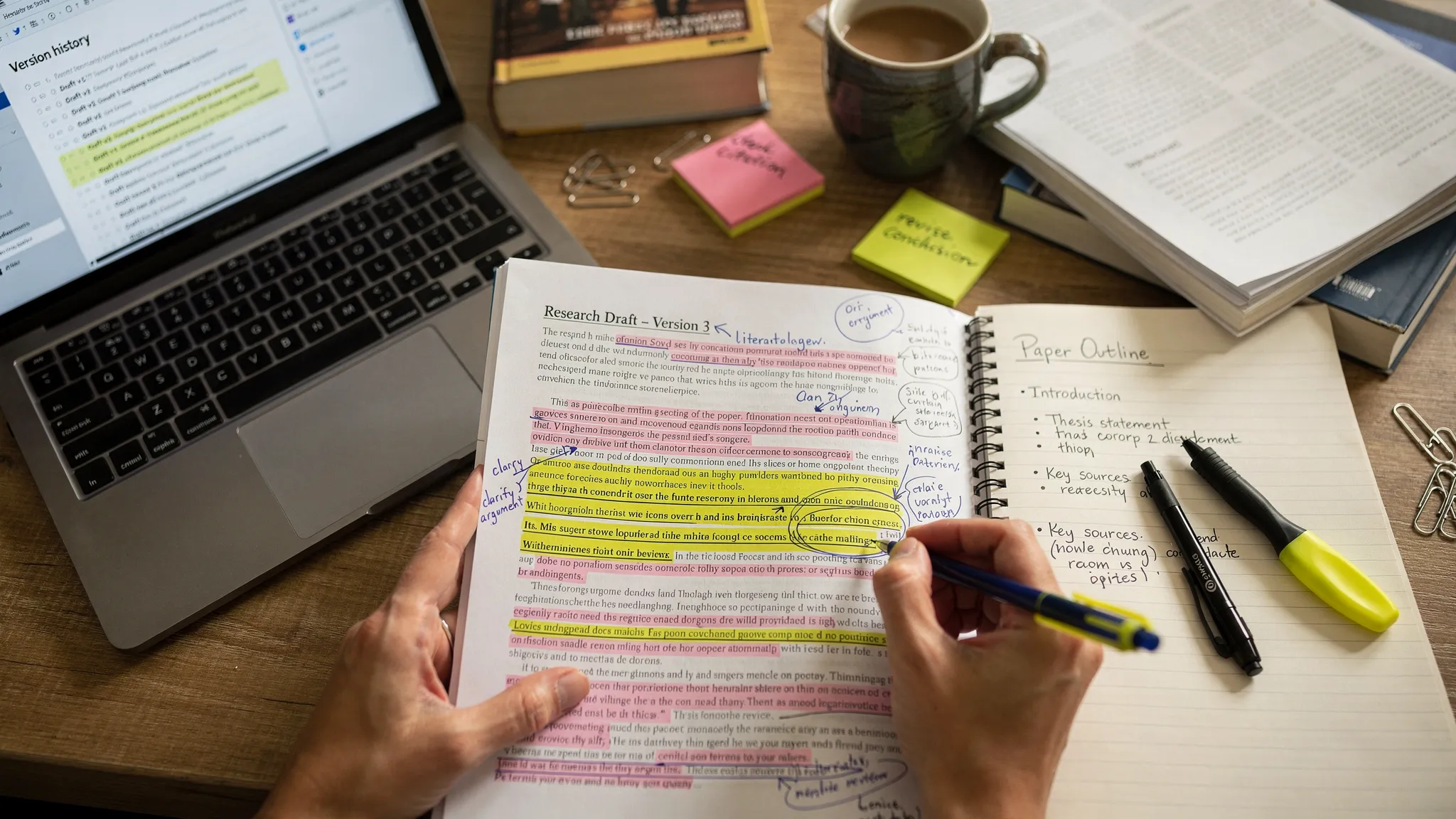
Keep your planning artifacts: outline, annotated readings, notes, citations you considered but did not use.
If you need a practical standard for what counts as persuasive proof, use this: Is Google Docs or Word Version History Enough as Proof?.
2) Replace “general truth” paragraphs with assignment-specific specificity
AI-like writing is often correct but generic. Human academic writing tends to be anchored in the exact assignment context.
Look for paragraphs that could fit into 1,000 other essays. Then inject details that require you to have done the work:
Course concepts, lecture terms, or the professor’s framing
The exact dataset, case study, company, community, policy, or text you were assigned
Your chosen method and why you chose it
Constraints you faced (time window, missing data, conflicting sources)
One concrete example per major claim
A practical test: If someone removed your name and course title, could the paper still be uniquely “yours”? If not, add specificity.
3) Add original reasoning, not just smoother phrasing
A common mistake is editing for “flow” only. That can actually make text more detector-friendly because it becomes more uniform.
Instead, edit for thinking:
Make a claim.
Show the evidence.
Explain your reasoning.
Address an objection.
State a limitation.
That pattern is harder to fake and much more characteristic of genuine student work.
4) Reduce template structure in high-risk sections (intro, lit review, conclusion)
Certain sections are more likely to trigger AI indicators because people (and AI) write them in predictable templates.
Here is a quick map of common “hot zones” and what to change.
Section
Why it gets flagged
What to revise (manual, not gimmicks)
Introduction
Predictable hook, broad background, thesis stated too cleanly
Replace generic background with assignment context, narrow the problem fast, add your motivation or scope choice
Definitions / background
Textbook tone, standardized phrasing
Paraphrase from understanding, cite the source, add a course-specific example
Literature review
Repetitive summary sentences, uniform citation rhythm
Compare studies, explain why one is more relevant, note conflicts, add your selection criteria
Body paragraphs
Topic sentence + 3 supports repeated identically
Vary paragraph length, include a counterexample, add a short “so what” interpretation
Conclusion
Restates thesis with stock phrases
Add implications, limits, what you would do next, and what changed in your view
If you want more examples of the exact habits that trigger flags, see: Normal Writing Habits That Can Trigger Turnitin AI Flags.
5) Make sentence rhythm more natural, but do it intentionally
You do not need randomness. You need human variation that comes from meaning.
Common “AI-shaped” patterns include:
Many sentences with the same length
Several paragraphs that start the same way (for example, “Additionally,” “Moreover,” “Furthermore”)
Lists that read like a brochure
Manual fixes that also improve readability:
Combine two short sentences when they are tightly linked.
Split one long sentence if it contains two different ideas.
Use occasional first-person only if your assignment allows it (for example, “In this analysis, I focus on…”).
Replace filler transitions with logic words that match your argument (for example, “because,” “however,” “this matters because”).
The key is that each change should serve clarity. Edits that only exist to “look human” tend to reduce quality and raise suspicion.
6) Quote and cite correctly (and do not “paraphrase without meaning”)
Turnitin’s similarity and AI systems are different, but citation discipline helps both.
What often causes trouble is when a paragraph:
Sounds like a generic summary of sources
Contains zero specific page numbers, figures, or named details
Uses vague attributions (“research shows”) instead of precise ones
Better:
Cite a specific claim.
Include a short quote where wording matters.
Then add your interpretation of why that source matters for your argument.
If you are in a situation where you are trying to reduce similarity, do it ethically (better paraphrasing, citations, synthesis), not by hiding matches. Detection Drama has a related explainer on Turnitin reporting symbols here: What Does the Turnitin Asterisk % Mean? (Explained).
7) Be careful with “over-polishing” tools (including Grammarly)
A surprisingly common pattern in 2025–2026 is this: a student writes a normal draft, then runs an aggressive polish, and the final version becomes more uniform, more formal, and more predictable.
If you use Grammarly (or similar tools), consider:
Avoiding whole-document “rewrite” style suggestions right before submission
Making smaller edits over time (so your version history reflects gradual work)
Keeping a copy of the pre-polish draft
If you were flagged and Grammarly was part of your workflow, this guide is directly relevant: Grammarly Triggered Turnitin AI: How to Prove Authorship.
8) Validate risk the right way (do not chase a single magic number)
Two truths can coexist:
Detectors can be inconsistent.
You still need a submission that holds up under human review.
If you keep rewriting just to move a percentage, you can accidentally damage:
Factual accuracy
Citations and meaning
Your ability to explain the work orally
A better approach:
Identify which passages read as generic or template-like.
Revise for specificity and reasoning.
Keep your drafts and notes.
Turnitin is not publicly available for most students to pre-check, so treat any third-party detector as a rough signal, not a guarantee.
If an instructor has already raised concerns, do not rush to “fix the score.” That often backfires.
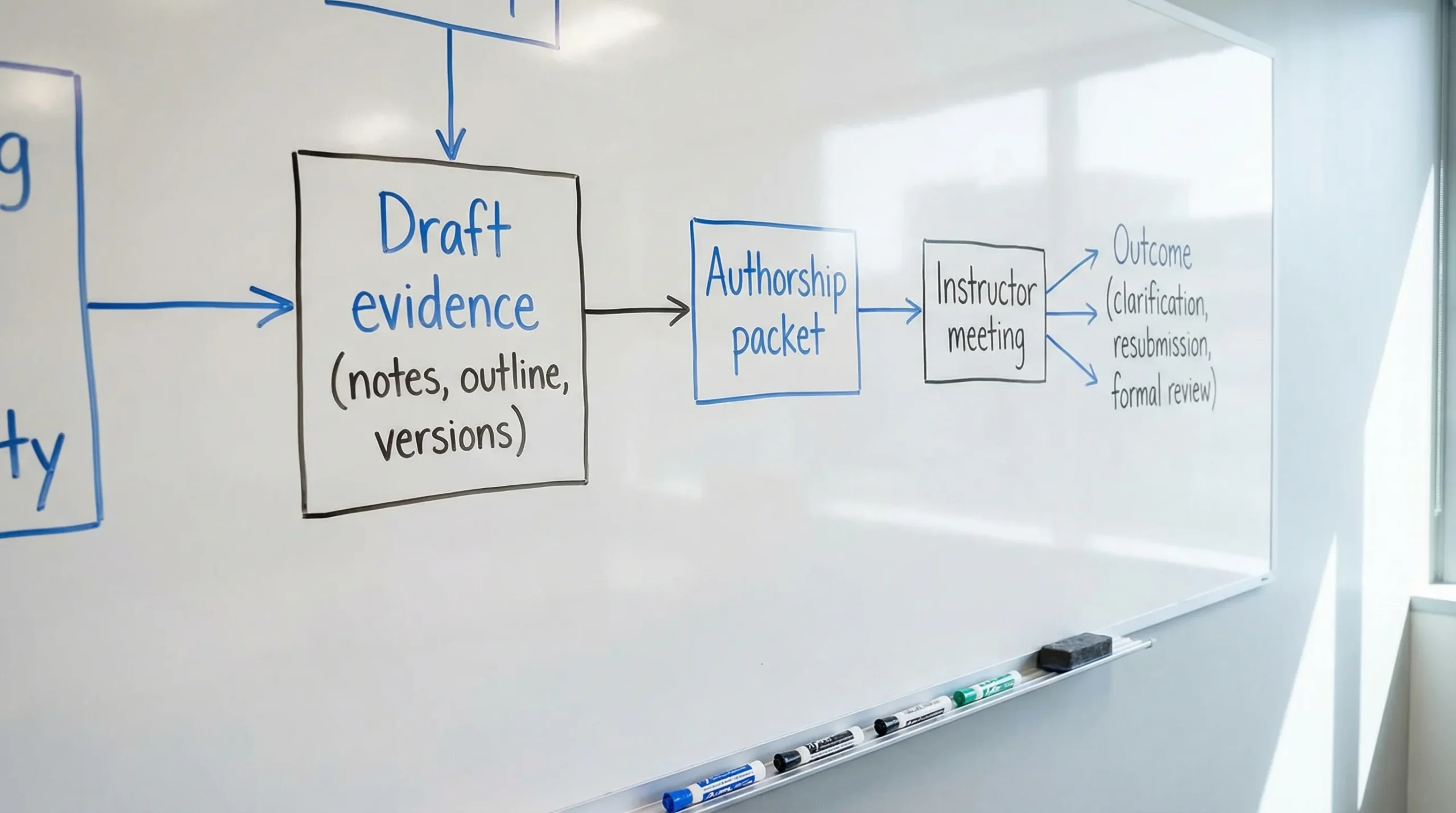
Focus on building an authorship case:
- Preserve the original submission and timestamps.
- Export version history screenshots or file history.
- Gather outline, notes, sources, and your research trail.
- Prepare a one-page timeline of how you wrote the paper.
- Offer an oral explanation of your argument and sources.
Two step-by-step resources that help in real disputes:
- Accused of AI Use: What to Do in the Next 24 Hours
- Flagged 35% AI on Turnitin: What Proof Can Clear You?
 DetectionDrama.com and use the report to revise your writing the defensible way: clearer thinking, clearer sourcing, and clearer authorship.
