What to do when an AI detector flags you
Category: AI Humanizers
-
Does StealthWriter Bypass GPTZero? Only Its Blog Says So (2026)
StealthWriter’s website makes no detection claim at all. Its blog still hosts a GPTZero bypass tutorial, and that tutorial says typos did half the work.
-
Does Rephrasy Bypass GPTZero? Its Terms Argue With Themselves (2026)
Rephrasy guarantees 100% pass rates on every major detector, including in the markup it submits to Google. Section 7 of its own Terms declines to guarantee it.
-
Does GPT Scrambler Bypass GPTZero? Its Terms Disclaim Nothing (2026)
GPT Scrambler sells bypass all AI detectors and its Terms contain no warranty disclaimer at all. Its 80% claim is plausible and unevidenced.
-
Does GenZWrite Bypass GPTZero? The 98% Has No Source (2026)
GenZWrite claims 98% success on GPTZero. The one line that ever cited a source for it is no longer on the pricing page, and no such study exists.
-
Does RewriteIQ Bypass GPTZero? Read Its Own Policy (2026)
RewriteIQ guarantees a 100% human score on one page and calls 100% humanization a myth on another. Its Methodology link returns a 404.
-
Does AiTextools Bypass GPTZero? Start With The Dates (2026)
AiTextools claims GPTZero scores drop under 20% after one pass. We crawled all 66 pages: 44 of 51 dated pages predate the domain, starting with the homepage.
-
Does HueWrite Bypass GPTZero? Its Screenshot Holds Up (2026)
We downloaded HueWrite’s GPTZero screenshot and inspected it. It is genuine, an Advanced Scan, AI 0% on 660 words. It is also stamped Model 4.2b.
-
Does Text Polish Bypass GPTZero? Check The Date On It (2026)
Text Polish publishes a 97% GPTZero score on a post dated 28 November 2024. Its domain was registered 4 October 2025. We checked all 165 posts.
-
Does AuraWrite Bypass GPTZero? Its Only Number Is A Template (2026)
AuraWrite markets GPTZero harder than any detector but Turnitin. Its only published figure is identical across five reviews, and its sales page targets retired metrics.
-
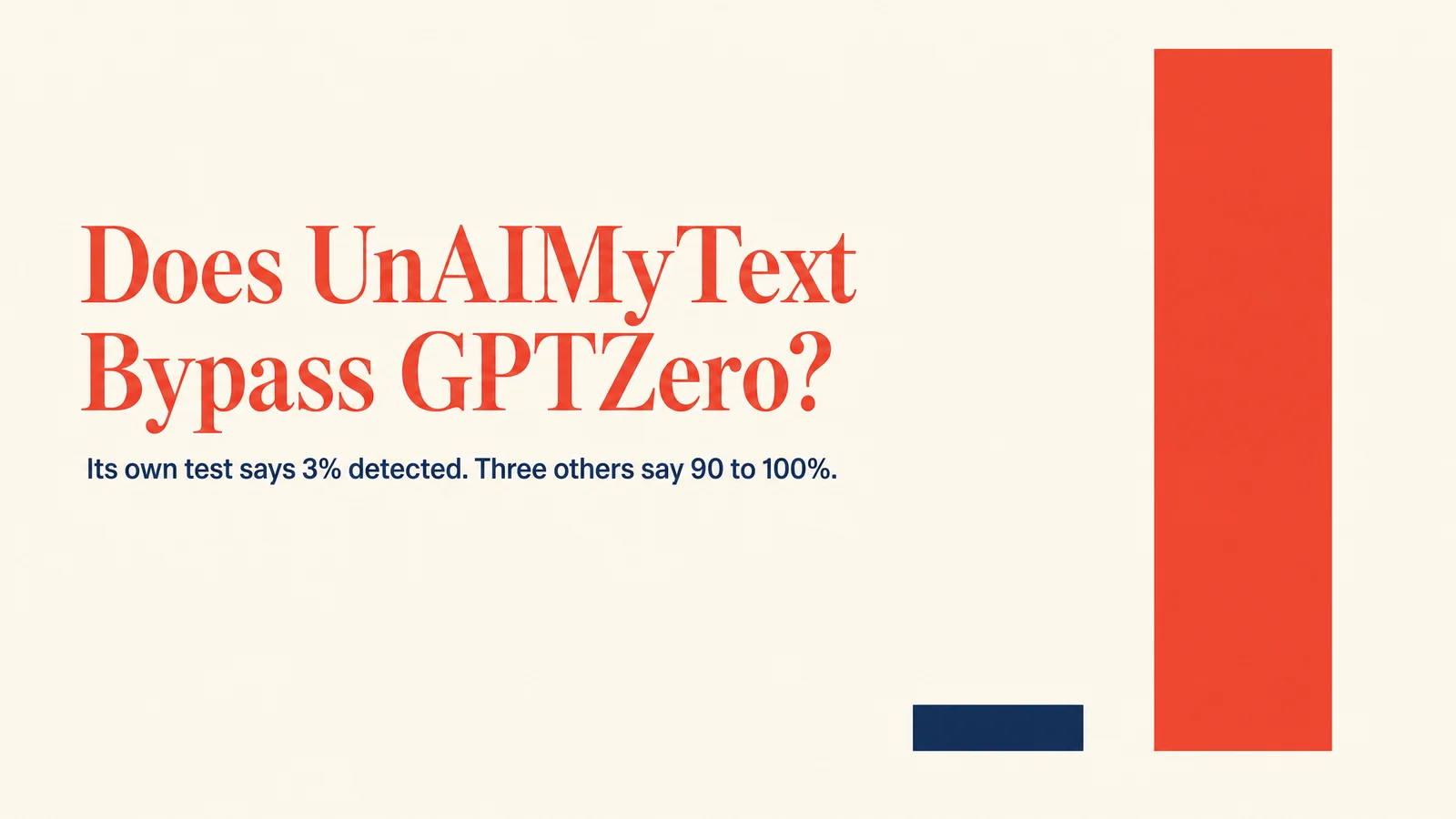
Does UnAIMyText Bypass GPTZero? Four Answers, One Month (2026)
UnAIMyText publishes the most detailed method in this category and says GPTZero catches 3% of its output. Three independent tests say 90 to 100%.