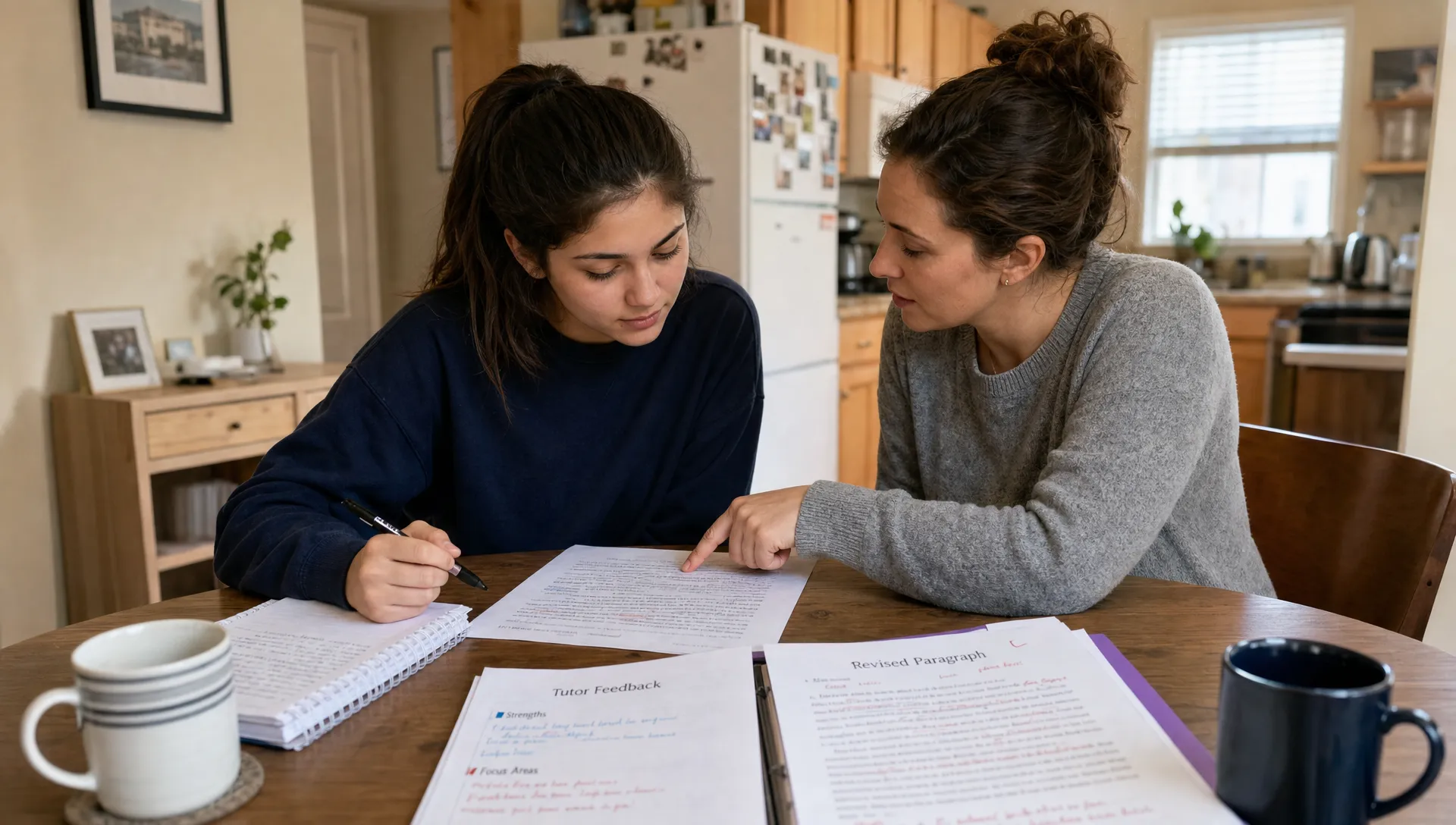
Yes, AI detectors can flag writing edited by a tutor. That can happen even when the student wrote the original draft, met with a legitimate tutor and did not use AI to generate the paper.
The core issue is simple: an AI content detector evaluates the finished text, not the writing process behind it. If tutoring turns a messy but authentic draft into prose that is unusually smooth, generic or uniform, the final version may resemble patterns the detector associates with AI-generated content.
That does not mean tutoring is dishonest. Tutoring is often encouraged, especially in writing centers, ESL support programs and graduate programs. The risk appears when the final submission no longer carries enough of the student’s own voice, revision history or uneven human development to make the authorship story obvious.
Want to bypass Turnitin in 2026? Grab the free prompt pack.
Get the exact text-humanization prompts I use to drop an AI score by hand — copy, paste, submit. Free, straight to your inbox.
Send me the free prompts →Why tutor-edited writing can trigger AI detectors
AI detectors do not know whether a tutor sat beside you, whether you revised for three days or whether every sentence came from your own notes. Most tools analyze the text itself and estimate how likely its wording, structure and predictability are to match AI-generated writing.
Turnitin describes its AI writing detection as an indicator that supports instructor review, not as a complete authorship investigation. The company’s AI writing detection information focuses on identifying text that may have been generated by AI, but the report still needs human interpretation. Vanderbilt University’s Center for Teaching went further and disabled Turnitin’s AI detector in 2023, citing concerns about false positives, limited transparency and the risk of overreliance on automated judgments.
Tutor editing complicates this because the text may become cleaner without becoming fake. A tutor might remove sentence fragments, replace vague transitions, reorganize paragraphs or correct recurring grammar patterns. Those changes are normal forms of academic support, but they can also reduce the quirks that make writing look distinctly personal.
This is similar to the way supervised writing can still get flagged by Turnitin. The fact that someone watched part of the process does not automatically change what the detector sees in the final file.
Common tutor edits that can raise the risk
A tutor’s edits are not all equal. Some preserve the student’s wording and decision-making, while others reshape the paper so heavily that the final draft looks less like the student’s independent work.
| Tutor change | Why it may affect AI detection | Lower risk alternative |
|---|---|---|
| Correcting nearly every sentence | The prose becomes unusually consistent and polished across the whole paper | Ask the tutor to mark patterns, then make the final edits yourself |
| Replacing informal phrasing with academic phrasing | The paper may lose the student’s natural rhythm and vocabulary | Keep your own wording where it is clear enough |
| Standardizing every paragraph structure | Repeated topic sentence, evidence and analysis patterns can look formulaic | Vary paragraph length and structure based on the argument |
| Removing personal examples or specific details | Generic explanations can resemble AI-generated content | Add concrete details from your reading, research or class discussion |
| Upgrading vocabulary throughout the paper | Sudden diction changes can make the voice inconsistent with prior work | Use stronger words only where you fully understand them |
| Rewriting an ESL student’s grammar into flawless native-like prose | Some detectors have shown higher false positive risk for non-native writing | Focus on clarity and meaning rather than erasing every language marker |
| Using AI to rewrite the student’s draft | The rewritten output may carry AI-style patterns even if the idea began with the student | Avoid unauthorized AI rewriting and follow the course policy |
None of these patterns prove misconduct. A careful tutor can help a student produce stronger work. The practical question is whether the final paper still shows a traceable path from the student’s own draft to the submitted version.
Where tutoring ends and rewriting begins
Most academic integrity policies distinguish between feedback and authorship. Feedback helps the student make better choices. Rewriting replaces the student’s choices with someone else’s.
Acceptable help often includes discussing the thesis, identifying confusing sections, explaining grammar rules, pointing out citation issues or asking questions that help the writer clarify ideas. A tutor might say that a paragraph lacks evidence or that the conclusion repeats the introduction too closely. The student still decides how to fix the problem.
Higher risk help includes rewriting sentences line by line, changing the argument, inserting new analysis, replacing the student’s vocabulary across the paper or generating a polished version from a rough draft. Even if a human tutor does the rewriting, the authorship becomes harder to defend. If a tutor uses an AI writing tool behind the scenes, the risk increases because the final language may look like AI output and may violate course rules.
The policy matters. Some instructors allow detailed editing for grammar but not content. Others allow writing center feedback but require disclosure. Graduate theses, journal submissions and professional documents may have separate editing rules. If the assignment instructions mention AI writing tools, unauthorized assistance or outside editing, follow those instructions before relying on general advice.
Can Turnitin flag a paper after tutoring?
Yes. Turnitin can flag a paper after tutoring because it evaluates the submitted text, not the student’s tutoring appointment, browser history or draft folder. A Turnitin AI score does not automatically prove that the tutor used AI, that the student cheated or that the paper was not written by a human.
The most vulnerable cases are usually those with a sharp before-and-after change. If an early draft has inconsistent grammar, uneven paragraphing and a clear student voice, then the submitted draft becomes uniformly polished with generic transitions and expanded abstract claims, an instructor may notice the change even without a detector.
This is also why students sometimes ask why non-native writers get flagged by AI detection. Research by Liang and colleagues, published in Patterns, found that several GPT detectors misclassified a high share of TOEFL essays by non-native English writers as AI-generated. That does not mean every detector will flag every ESL paper, but it shows why language normalization and polished academic phrasing can create unfair suspicion.
How to protect legitimate tutor-edited writing
The goal is not to write badly so detectors leave you alone. The goal is to preserve evidence that the work is yours and make sure tutoring supports your writing rather than replacing it.
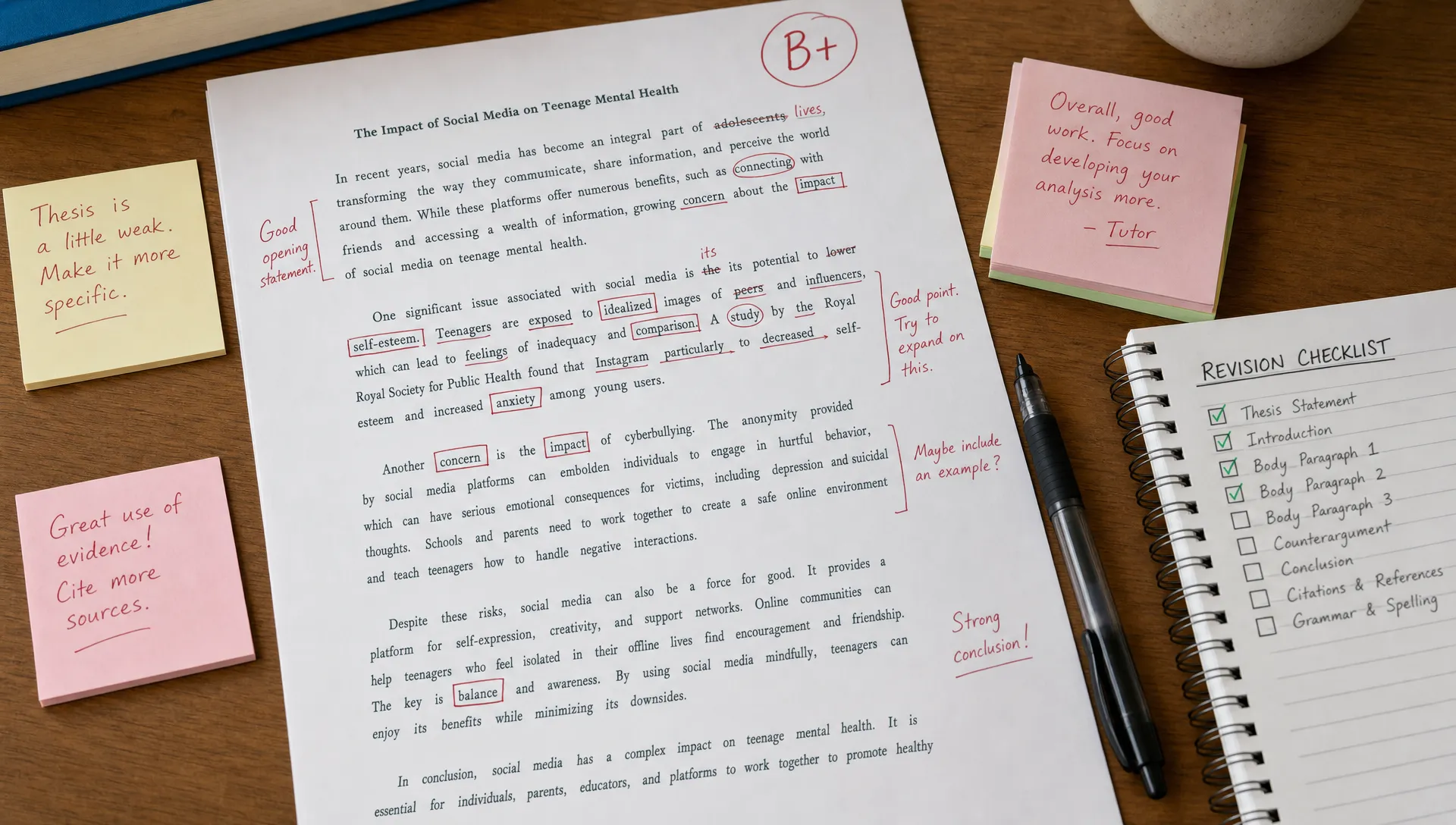
Start by keeping the full writing trail. Save outlines, research notes, rough drafts, tutor comments and later revisions. If you write in Google Docs, Microsoft Word or another editor with version history, do not flatten everything into a single final file until after submission. Version history is often stronger evidence than a detector score because it shows development over time.
Use tutoring in a way that leaves your decisions visible. Instead of asking a tutor to fix the paper, ask them to identify patterns. For example, a tutor can mark three places where analysis is thin and explain what stronger analysis would do. You can then revise the rest in your own language.
A simple documentation habit can help:
- Keep the original draft you brought to the tutor.
- Save a copy with tutor comments or tracked changes.
- Keep appointment confirmations from a writing center or tutor.
- Write a short revision note explaining what you changed after the session.
- Avoid letting anyone rewrite whole paragraphs for you unless the assignment policy clearly permits it.
- If disclosure is required, include a brief note that you received tutoring feedback on grammar, structure or clarity.
Specificity also helps. AI-like writing often feels broad and interchangeable. Human academic writing is stronger when it engages the actual prompt, course vocabulary, assigned readings, lab data, case facts or class discussion. If tutoring made your prose generic, revise it again with concrete details that came from your own learning process.
What to do if tutor-edited writing gets flagged
Do not respond with panic or a blanket claim that AI detectors are always wrong. A better response is calm, specific and evidence-based.
Ask what tool was used, what part of the paper was flagged and whether the instructor will review drafts or writing-process evidence. Some detector reports highlight only portions of the text. Others give a document-level estimate. You need to know what claim you are answering.
Then provide the writing trail. Share your outline, early drafts, tutor comments, revision history, notes from readings and proof of the tutoring session if you have it. Explain what the tutor helped with in ordinary language. For example, say that the tutor helped identify unclear topic sentences and recurring comma errors, then show where you made the changes yourself.
If other detectors say the work is human, that may be worth mentioning, but it should not be your main defense. Detectors often disagree because they use different models, thresholds and preprocessing rules. Detection Drama has a fuller guide on what to do when Turnitin flags a paper and other detectors do not, but the strongest evidence is usually process evidence, not another score.
If the allegation becomes formal, follow your school’s academic integrity procedure. Keep communication factual. Do not edit or delete document history. Do not ask the tutor to invent an explanation. If the tutor can confirm the type of help provided, ask for a short factual statement rather than an emotional defense.
Should you check a tutor-edited paper with an AI detector?
You can, but treat the result as a warning light, not a verdict. Public AI detectors may disagree with Turnitin and with each other. A low score does not guarantee safety, and a high score does not prove the paper is AI-generated.
Privacy is another concern. Before pasting coursework into any third-party checker, consider whether the tool stores text, trains on submissions or exposes student work. For sensitive assignments, institutional policies may matter as much as detection risk.
If you use a detector or text humanizer, use it within your course rules. Tools can show that a passage looks overly generic or polished, but they cannot certify authorship. The safest long-term habit is still the least dramatic one: write in stages, keep drafts and make final revisions in your own voice.
Frequently Asked Questions
Can a tutor’s grammar corrections trigger AI detection? Yes, especially if the corrections make the whole paper unusually smooth and uniform. Grammar help is legitimate in many settings, but heavy line editing can change the statistical style of the final text.
Does an AI detection flag prove my tutor used AI? No. A flag only suggests that the submitted text resembles patterns associated with AI-generated content. It cannot identify who wrote or edited the text without supporting evidence.
Should I disclose that a tutor helped me? Follow the assignment policy. If disclosure is required, keep it brief and factual, such as noting that you received feedback on organization or grammar from a writing center tutor.
Is writing center feedback safer than private tutoring? It can be easier to document because writing centers often have appointment records and clear policies. The detector risk still depends on how much the final text was rewritten.
What evidence helps most after a false AI flag? Version history, rough drafts, tutor comments, research notes and a clear explanation of your revision process are usually more useful than screenshots from other detectors.
Can a text humanizer fix a tutor-edited paper? A humanizer may change how a detector reads the text, but it does not prove authorship and may violate policy if used to disguise unauthorized AI writing. Use any rewriting tool only when your course rules allow it.
Get a clearer read on AI detection risk
Tutor feedback should help your writing, not create an authorship crisis. Detection Drama offers free AI detection guides, instant tool access and authenticity analysis resources to help you understand why polished text gets flagged. Use those resources responsibly, keep your drafts and make sure the final submission reflects your own work.
