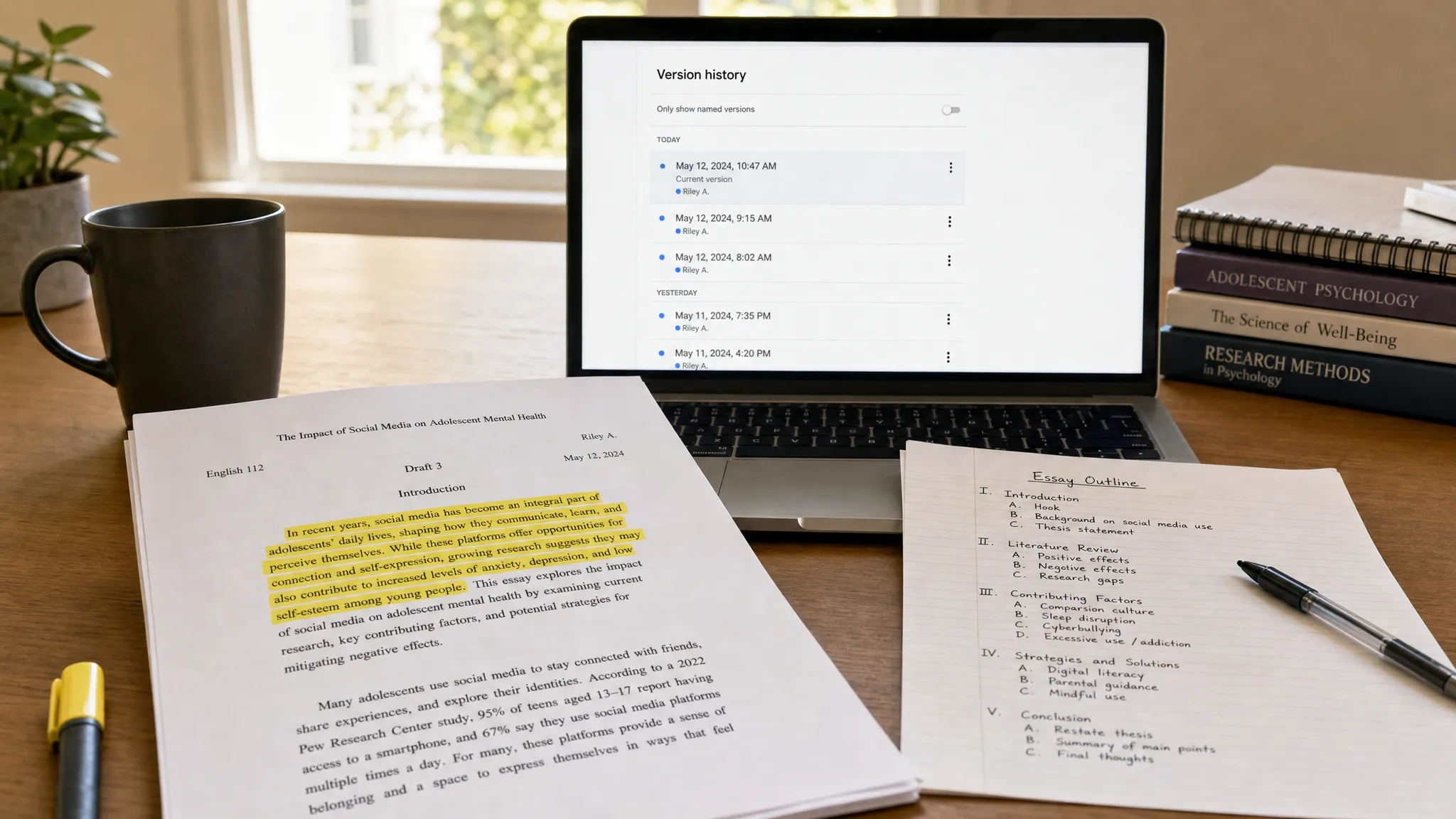
If Turnitin AI highlighted your intro, the most likely explanation is simple: the introduction contains a cluster of sentences that Turnitin’s model predicts are similar to AI-generated writing patterns. That does not automatically mean the whole paper is AI-written, and it does not prove misconduct by itself.
Want to bypass Turnitin in 2026? Grab the free prompt pack.
Get the exact text-humanization prompts I use to drop an AI score by hand — copy, paste, submit. Free, straight to your inbox.
Send me the free prompts →An introduction is one of the easiest parts of an essay to flag because it often sounds polished, broad, and formulaic. Many students open with general statements, balanced sentence structures, and predictable signposting such as “This essay will examine…” Those patterns can resemble AI-generated content even when a human wrote them.
The important question is not “Why did the highlight appear?” but “What evidence explains how this text was written?” A highlighted intro should be treated as a signal to review, not as a verdict.
What Turnitin AI highlighting usually means
Turnitin’s AI indicator is different from its similarity report. The similarity report compares your submission against sources in databases and on the web. The AI indicator estimates whether portions of the text resemble machine-generated writing.
According to Turnitin’s official AI writing detection information, its AI writing features are designed to support instructor review. In practice, that means the highlight is a probabilistic model output, not a direct record of what happened while you wrote.
When an intro is highlighted, it usually means one or more of these things:
- The opening paragraph uses very common essay language.
- The sentences are unusually smooth and uniform.
- The intro summarizes the topic without showing specific research choices.
- The paragraph has fewer personal drafting fingerprints than the rest of the paper.
- A grammar tool, paraphraser, or AI assistant may have heavily rewritten that section.
For a deeper explanation of how highlights should and should not be read, Detection Drama’s guide to what Turnitin’s AI highlighting actually means is a useful companion to this article.
Why introductions get flagged more often than you might expect
Introductions are supposed to be clear, polished, and broad enough to frame the topic. Unfortunately, those same qualities can make them look statistically predictable.
A student might write an entirely human introduction that starts with a phrase like “In today’s rapidly changing world…” or “Throughout history, society has struggled with…” Those openings are not automatically wrong, but they are generic. AI writing tools also produce a lot of generic framing language, so the overlap can create a detection signal.
Another common reason is that students often write the introduction last. By that point, they already know the paper’s structure, so the intro can become a neat, compressed summary of the whole essay. That final polish may sound less messy and less exploratory than the body paragraphs, especially if the body includes specific evidence, citations, or personal analytical choices.
Here is how common intro patterns can be interpreted:
| Highlighted intro pattern | What it can suggest | Innocent explanation | Best next step |
|---|---|---|---|
| Broad opening sentence | Generic AI-like framing | You used a common academic hook | Replace it with a topic-specific entry point |
| Very even sentence length | Low stylistic variation | You edited heavily for clarity | Show drafts or version history |
| No concrete source details | Abstract summary | You saved evidence for body paragraphs | Add a source, case, or debate that shaped the thesis |
| “This essay will…” structure | Formulaic academic signposting | You followed a school template | Make the thesis more specific and argumentative |
| Sudden style change from body | Possible external rewriting | You revised the intro separately | Preserve earlier drafts and explain the process |
A highlighted intro is not the same as plagiarism
This is a major point students often miss. Turnitin is widely known as a plagiarism checker, but an AI highlight is not a plagiarism match.
If the similarity report highlights text, it usually means Turnitin found matching or similar language in another source. If the AI report highlights text, it means the model predicted that the writing style resembles AI-generated text. Those are different claims.
A passage can be AI-highlighted with no plagiarism. A passage can also match a source without being AI-written. In some cases, a well-cited quotation or bibliography may affect the similarity report but not the AI report. In other cases, an original but generic paragraph may affect the AI report but not the similarity report.
So if your intro is highlighted, do not respond as if you have been accused of copying. The stronger response is to show authorship: drafts, notes, outlines, source annotations, and revision history.
If only the intro is highlighted, how worried should you be?
It depends on the full context. A short highlighted introduction with a low overall AI percentage is usually less serious than a long highlighted section combined with a high score. Your institution’s policy also matters. Some instructors treat Turnitin AI reports as conversation starters, while others may have formal review procedures.
The risk level usually depends on four factors:
| Situation | Usually lower concern | Usually higher concern |
|---|---|---|
| Amount highlighted | A few sentences in the intro | Multiple full sections across the paper |
| Overall AI score | Low or borderline | High enough to trigger policy review |
| Draft evidence | Version history and notes exist | No drafts, no outline, no research trail |
| Writing consistency | Intro is slightly more polished | Intro has a completely different voice |
If you know the work is yours, the goal is not to panic or “beat” the detector. The goal is to make your writing process visible. If you suspect a false positive, use a structured response rather than arguing from emotion. Detection Drama’s Turnitin AI false positives checklist walks through the kinds of evidence that can help clarify authorship.
Normal writing habits that can trigger an intro highlight
Sometimes the cause is not AI use at all. It is ordinary academic writing becoming too generic or too uniform.
For example, many students are taught to write in a neutral voice, avoid “I,” use smooth transitions, and state the paper’s purpose clearly. That can produce an introduction that sounds clean but impersonal. AI systems are also trained to produce clean, impersonal academic prose, so the detector may see overlap.
Common human habits that can contribute to intro highlights include:
- Using a template from a writing center, class handout, or past assignment.
- Rewriting the intro several times until every sentence has the same polished tone.
- Asking a grammar checker to make the paragraph “more academic.”
- Using stock phrases like “plays a crucial role” or “has become increasingly important.”
- Writing a general background paragraph before adding any specific evidence.
This does not mean those habits are dishonest. It means they can create text that lacks distinctive authorship signals. If this sounds like your situation, the article on normal writing habits that can trigger Turnitin AI flags explains the issue in more detail.
What to do next if your intro was highlighted
If you are viewing a report before a final submission, use the highlight as a reason to improve the writing, not as a reason to disguise it. If the paper has already been submitted and your instructor has questions, focus on evidence.
A calm first response looks like this:
- Save the report or screenshot if you are allowed to access it.
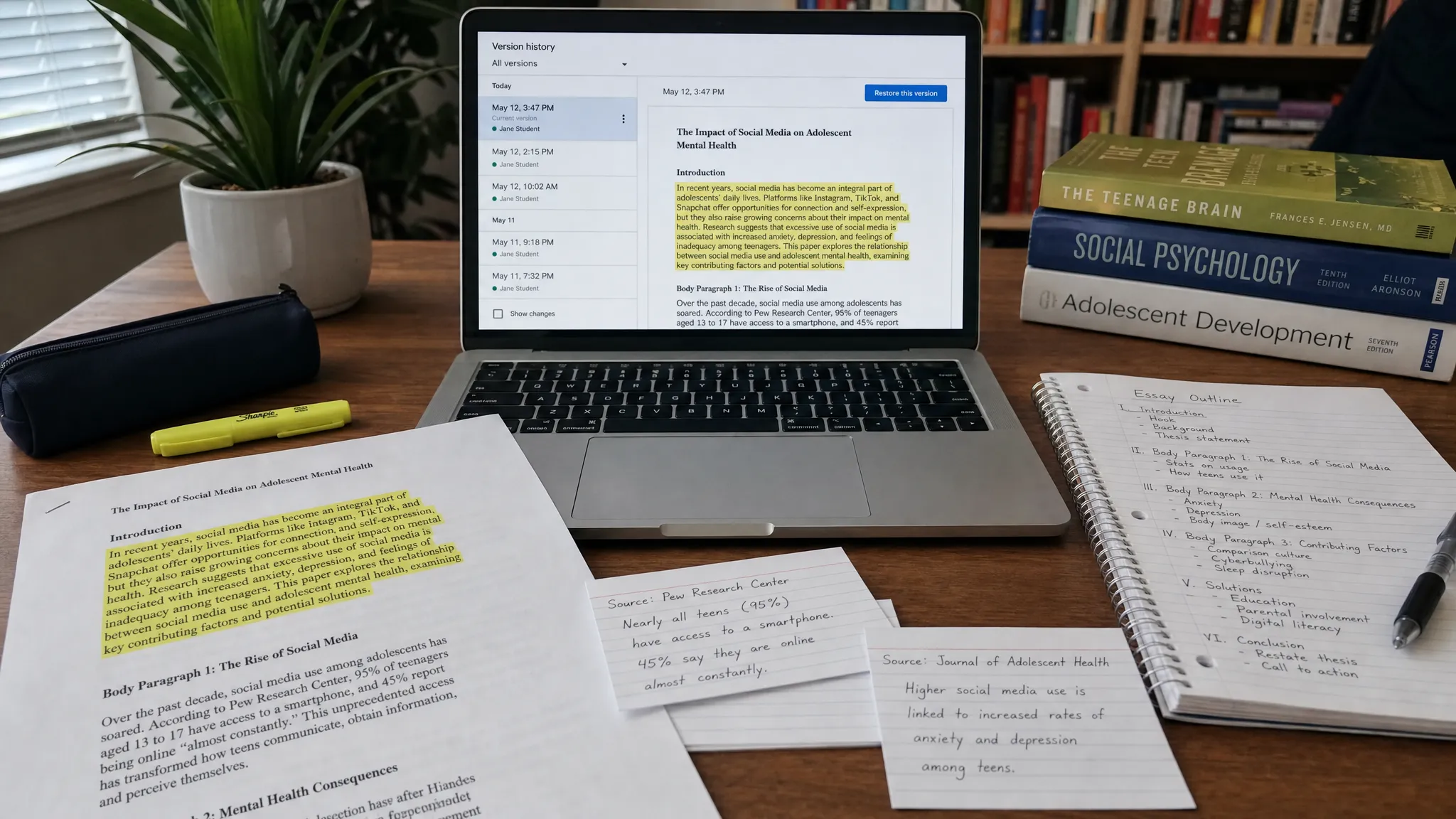
- Preserve your Google Docs, Microsoft Word, or other version history.
- Gather your outline, notes, source annotations, and earlier drafts.
- Compare the highlighted intro with your body paragraphs for voice and specificity.
- Identify any tools used, including grammar tools, citation tools, or AI brainstorming tools.
- Ask your instructor what evidence they want before sending a defensive email.
The best tone is factual: “I saw that the introduction was highlighted, and I can provide my draft history, notes, and sources if helpful.” That is stronger than saying “Turnitin is wrong” without evidence.
How to revise a highlighted intro honestly
If you are still revising the assignment, the best fix is better writing, not detector manipulation. A strong introduction should make your argument more specific, more sourced, and more connected to the assignment.
Instead of trying to make the text sound “more human” by adding errors or awkward phrasing, improve the substance. Add the particular case, source, debate, or observation that led to your thesis. Replace generic claims with the actual problem your paper addresses.
Consider the difference:
| Generic intro sentence | Stronger, more specific alternative |
|---|---|
| “In today’s society, social media has a major impact on young people.” | “Recent debates about school phone bans show how social media is no longer just a personal habit, but a classroom policy issue.” |
| “This essay will discuss the causes and effects of climate change.” | “This essay compares how coastal flooding and insurance costs have changed the climate debate in local government planning.” |
| “Technology plays an important role in education.” | “The question is not whether students use AI tools, but whether course policies can distinguish brainstorming from outsourced authorship.” |
These revisions are not tricks. They make the introduction do what academic writing should do: define a specific problem, establish a position, and prepare the reader for the evidence that follows.
What not to do after an intro highlight
Do not run your introduction through a random “humanizer” just because it was highlighted. That can make the situation worse, especially if the rewritten version changes your voice, distorts your argument, or creates a tool-use trail you cannot explain.
Also avoid detector hopping. A free AI content detector saying “human” does not automatically cancel out Turnitin’s report. Different detectors use different models, thresholds, and text-processing methods. If your instructor is using Turnitin, a third-party result may be interesting context, but it is rarely enough by itself.
Most importantly, do not delete drafts or rewrite your history after the fact. Version history, notes, and source work are often more persuasive than any detector score.
If you actually used AI for the intro
If AI helped draft the introduction, your next step depends on the assignment rules. Some courses allow AI for brainstorming but not drafting. Others require disclosure. Some prohibit it entirely.
If the assignment has not been submitted yet, check the policy and revise accordingly. That may mean replacing the AI-drafted intro with your own writing, acknowledging permitted assistance, or asking the instructor how to handle borderline tool use. If the assignment has already been submitted, do not invent a story. A clear explanation of what happened is safer than denying tool use that your process cannot support.
This is especially important because AI detection disputes are not only about text. They are about trust, process, and policy.
Frequently Asked Questions
Does a highlighted intro mean Turnitin caught me using ChatGPT? No. It means Turnitin’s model predicted that the highlighted text resembles AI-generated writing patterns. It is not direct proof that ChatGPT or any other tool was used.
Can Turnitin falsely highlight a human-written introduction? Yes. Generic academic phrasing, heavy editing, writing templates, and very polished sentence patterns can all contribute to false positives or questionable highlights.
Is an AI highlight the same as a plagiarism match? No. A plagiarism or similarity match points to overlap with existing sources. An AI highlight is a prediction about writing style and generation patterns.
Should I use a text humanizer if only my intro is highlighted? No. If the writing is yours, focus on evidence and honest revision. Humanizer tools can create new problems, especially if they change your voice or violate course policy.
What proof helps if my instructor questions the intro? Version history, outlines, research notes, annotated sources, earlier drafts, and a clear explanation of your writing process are usually more useful than another AI detector result.
A calmer way to handle the highlight
A Turnitin AI-highlighted intro is stressful, but it is not the end of the story. Treat it as a prompt to review the paragraph, strengthen its specificity, and organize your authorship evidence.
If the work is yours, your best defense is your process. Save your drafts, keep your notes, and explain how the introduction developed. A highlighted paragraph may raise a question, but a clear writing trail can help answer it.
