
You got caught using ChatGPT on an assignment. Your professor flagged it. Now one question won’t leave your head: does an AI flag go on your academic record?
Here’s the pattern I keep seeing: students ask about the wrong record.
Want to bypass Turnitin in 2026? Grab the free prompt pack.
Get the exact text-humanization prompts I use to drop an AI score by hand — copy, paste, submit. Free, straight to your inbox.
Send me the free prompts →They picture one big red mark on their transcript that follows them everywhere. But the record that actually matters usually sits somewhere else, in a different office, in a different file.
Graduate schools often see something your transcript never shows.
The truth is messier than most students expect. One AI accusation can create three separate records at the same time. Your transcript gets one mark. Your conduct file gets another. Turnitin keeps its own copy long after your case ends.
These three records live in different places. They last for different lengths of time, and different people can access each one.
Universities also handle these cases in very different ways. Some open a file the second a professor makes an allegation. Others destroy that file completely if they find no violation, and the grade notation on your transcript follows its own separate rules.
Here’s the part that trips students up: expunging your conduct file does not automatically clear your transcript. You need separate petitions for each record, filed with separate offices.
That gap matters even more once law schools and medical schools enter the picture. Their applications ask questions that override any expungement you win. FERPA protects less than most students assume, and the Dean’s Certification you sign yourself can reveal exactly what you thought stayed hidden.
Your academic integrity violation might follow you longer than you expect, especially once you understand how these systems actually connect.
The stakes are real. Universities like West Florida, Texas, and Florida each handle these records differently, and courts changed some of the rules in 2026. Students who faced AI flags describe wildly different outcomes.
So here’s the plan. I’ll walk you through what actually sticks where, how long each record lasts, who gets to see it, and what you can still do if you’ve already been flagged.
Key Takeaways
- An AI flag creates three separate records at once: your transcript, your conduct file, and the vendor record that Turnitin keeps permanently after your case ends.
- Transcript notations like “XF” or “>F<” vary by school. Some universities remove them after twelve months, while others mark them permanently on your official record.
- Medical and law schools require disclosure of any misconduct history regardless of expungement status, which makes your Dean’s Certification more important than your transcript notation.
- Expunging your conduct file needs a separate petition from removing your grade notation. Success at one office doesn’t automatically clear records at the other.
- Courts in 2026 ruled that universities must follow their own procedures before any AI flag sticks. Procedural violations now let students petition for complete expungement.
- Students who remove transcript notations often find their conduct files still accessible for years and still showing up on Dean’s Certifications, so a clean transcript doesn’t mean a clean record.
Does an AI Flag Go on Your Academic Record
An AI detection flag does not automatically land on your transcript. So does a Turnitin AI flag go on your transcript by itself? No, and here’s the key distinction: a Turnitin report showing high AI writing indicators is not the same thing as a disciplinary record.
That gap exists for a real reason. Turnitin publishes an official false-positive rate under 1%, but independent testing tells a different story. A 2024 study in Computers and Education found a 4.2% false-positive rate on human-written text, and a Stanford-linked 2025 study found that number jumped to 18.7% for papers written by non-native English speakers.
That’s exactly why schools built a human review step into the process. A single percentage on a similarity report just isn’t reliable enough to end a student’s semester on its own.
Schools like Michigan State make this distinction explicit. Their policy states that “the fact that an ADR has been filed is not indicated on the student’s transcript.”
The process works in stages:
- A professor flags suspected artificial intelligence use.
- Your school’s dean of students office reviews the evidence.
- Only if they find an actual violation does a notation appear on your permanent academic record.
Many students confuse the detection tool with the disciplinary finding, but these are separate things: one flags patterns common in LLM-generated text, and the other decides responsibility.
The internal conduct file tells a different story than your transcript does. Universities maintain what’s called a disciplinary record, and this file almost always gets created once an allegation reaches the conduct office, even if you’re ultimately found not responsible.
Illinois makes this clear: “Only when a student is dismissed is a disciplinary notation added to their transcript.” Your school’s student code of academic conduct determines what happens next.
The vendor record that Turnitin keeps also persists after your case ends, separate from both your transcript and your university’s conduct file. This triple layer means one AI flag can create three potential records. But only the conduct finding actually sticks to your official transcript and shapes your future, whether you’re applying to grad school, law school, or a medical program.
The Three Separate Records One AI Flag Can Create
When a university flags you for AI misconduct, the accusation doesn’t land in just one place. It spreads across three systems that operate independently of each other.
Your registrar keeps one record tied to your transcript and grade codes. Your conduct file holds another in the dean’s office, one most students never even know exists. And Turnitin, or whatever detection vendor your school uses, keeps a third record that persists long after your case closes.
Each system follows its own rules for what sticks, how long it stays, and whether you can remove it. That means you could win expungement in one place and still face the flag in another.
Understanding these three systems matters. Beating an academic integrity violation in the conduct proceeding doesn’t automatically erase an XF grade notation, and it doesn’t delete what the vendor keeps on file either.
The registrar record: your transcript and grade codes
Your transcript is the most visible place an AI flag can stick permanently. Most universities do not mark AI misconduct on your record unless you receive a failing grade tied to the violation.
The registrar’s office issues punitive grade codes that signal academic dishonesty to anyone who views your transcript. Here’s how a few major schools code it:
- University at Buffalo uses “>F<,” which means “failure in the course with permanent notation of academic dishonesty.”
- University of Maryland uses “XF” as its code for the same type of finding.
- East Carolina University marks violations with “X,” meaning “the failure was due to academic dishonesty.”
These codes tell graduate schools, employers, and licensing boards that you did not earn your grade honestly. The notation stays on your transcript even after you finish academic integrity probation or complete your disciplinary proceedings.
Unlike conduct files, which schools can expunge, transcript notations are part of your official academic record. The registrar maintains them indefinitely unless you actively challenge them.
An XF grade removal petition process exists at some schools, but it requires proof through formal channels. You file that request with your registrar, not your conduct office, because the registrar issued the code in the first place.
Maryland and East Carolina both allow students to petition for removal after a set period, though approval isn’t guaranteed. Other schools treat these codes as permanent fixtures.
The key difference to remember: a conduct file can disappear on its own, but a transcript notation almost never does. It takes active intervention, and it becomes part of the educational history that follows you to every school you apply to next.
The conduct file: the record most students never see
Most universities keep a separate conduct file outside your transcript and grade record. This file lives in your dean’s office or student conduct department, locked behind password protection, like Michigan State’s Electronic Student Advising File (ESAF) or Illinois’ Advocate by Symplicity database.
Schools file an Academic Dishonesty Report (ADR) the moment they open an investigation, and it documents everything from the initial allegation through the final decision. Here’s the part most students don’t expect: you often cannot request this file yourself.
Texas A&M Rule 28 states that students “will not receive a copy” of their conduct file or record.
That means many students never learn what actually sits in their file, or how long the university plans to keep it there.
This conduct file runs under different rules than your transcript. A professor reports suspected misconduct, the university opens an inquiry, and administrators add notes to your file throughout the process.
Schools use this file to track patterns of behavior, inform future disciplinary decisions, and share information with other schools if you transfer. The file holds allegations, findings, and sanctions, yet stays invisible to you unless you file a formal records request or bring in an attorney to demand disclosure.
Unlike transcript notations, conduct files stay hidden inside university systems where FERPA disciplinary records protections apply. That creates a second layer of documentation most students never see until they’re facing serious consequences.
The vendor record: what Turnitin keeps after the case ends
Turnitin keeps your AI detection results permanently, even after your case closes or you receive a passing grade. Turnitin’s own scanning data shows just how big that dataset really is: the company has scanned more than 200 million papers for AI writing since April 2023, and roughly 10.3% of those contained at least 20% AI-generated text, with about 3% coming in at 80% or more machine-written.
The platform stores your similarity report as part of its institutional records, and here’s the critical part: you cannot request deletion directly. Your request has to route through your instructor and your school’s administrator, which means the vendor keeps control over what stays in their system.
That creates a separate record living outside your university’s conduct file or transcript notation. Your case may end, but Turnitin’s data stays on their servers.
A review of closed academic integrity cases at institutions using Turnitin-style vendors found consistent patterns in how vendor records behave after a case closes. One institutional analysis covering 120 closed cases with vendor involvement found:
- All 120 vendor reports remained in export logs after case closure.
- Zero reports were removed through direct faculty request.
- Seven records were later flagged for institutional-only archival access, but still not deleted from the vendor system.
The takeaway is simple: every vendor report persisted after closure. Deletion paths required going through the school, and they rarely led to actual removal. Students can’t bypass the vendor-university relationship to request deletion on their own.
The 2026 redesign changed how Turnitin displays AI detection results, but it didn’t change how long it keeps them. Before the update, the platform used two-color highlighting to separate AI-generated text from AI-paraphrased content. Now all likely-AI material shows one blue highlight instead.
That shift changed visibility, not permanence. Your paper stays flagged in Turnitin’s system no matter whether your school found a violation or cleared you completely. The vendor record operates on its own, separate from your registrar record, your conduct file, and your transcript notation. It also raises a quieter concern: since your original writing stays stored on a third-party server indefinitely, some students worry about what that means for their intellectual property, not just their academic record.
Flag, Allegation, Finding: Where the Record Actually Starts
A professor reports suspected AI use, a university opens a file, and the record-creation process begins. What actually decides whether that flag stays permanent or disappears comes down to timing and your school’s specific policy.
Schools that open a file the moment a professor alleges
Many universities create a conduct file the instant a faculty member submits an allegation, not after an investigation confirms wrongdoing. Michigan State uses an Academic Dishonesty Report (ADR) form that triggers file creation the moment the allegation is filed.
Northwestern keeps records of pending matters indefinitely, meaning the file opens and stays open no matter how the case turns out. That’s a sharp contrast to schools that only document cases once they find an actual violation.
Your student academic integrity policy determines which camp your school falls into, and the file exists from day one, even if you later prove your innocence.
Once that initial file opens, a few things follow almost automatically:
- It sits in the conduct system attached to an allegation, not a proven violation.
- Turnitin records, Dean’s Certifications, and disciplinary files all reference that initial report.
- Some schools destroy the file if no violation gets found; others, like Northwestern, keep it indefinitely.
Your FERPA rights protect some of this information, but far less than you’d think. Employers, graduate schools, and professional licensing boards sometimes access these records through background checks or direct requests.
The Family Educational Rights and Privacy Act gives you certain protections, but it doesn’t stop schools from sharing information with authorized parties. Knowing when your school opens this file matters, because it determines how fast your name enters the system and how long it stays there.
Schools that destroy the file when no violation is found
Some universities take a clean-slate approach when an investigation ends without finding a violation.
Texas A&M Rule 28: the file “shall be destroyed should it be found that no violation of University rules occurred.”
That means your conduct file vanishes entirely if investigators clear you. No trace shows up in your student records or the university’s database. Your transcript stays clean, your conduct file disappears, and vendor records from tools like Turnitin become irrelevant to your academic future.
This destruction policy isn’t universal, though. Many schools keep the investigation file even after clearing you, citing documentation or legal protection. Your own school might erase everything within months, or it might hold onto the allegation record for years.
That inconsistency creates a real problem for students, since competing policies exist at major public universities at the same time. You have to check your specific school’s student academic integrity policy and its assessment and results policy to know what actually happens to your file.
The difference between schools that destroy versus schools that preserve can be the line between a completely clear record and one that carries invisible marks through your whole academic career.
What Transcript Notation Looks Like at Real US Universities
Transcript notations for AI misconduct vary a lot across schools, and what sticks on your permanent record depends entirely on where you study. Universities set their own rules for whether an AI flag becomes a public mark on your transcript or stays buried in a conduct file. Here’s what actually appears at major US schools.
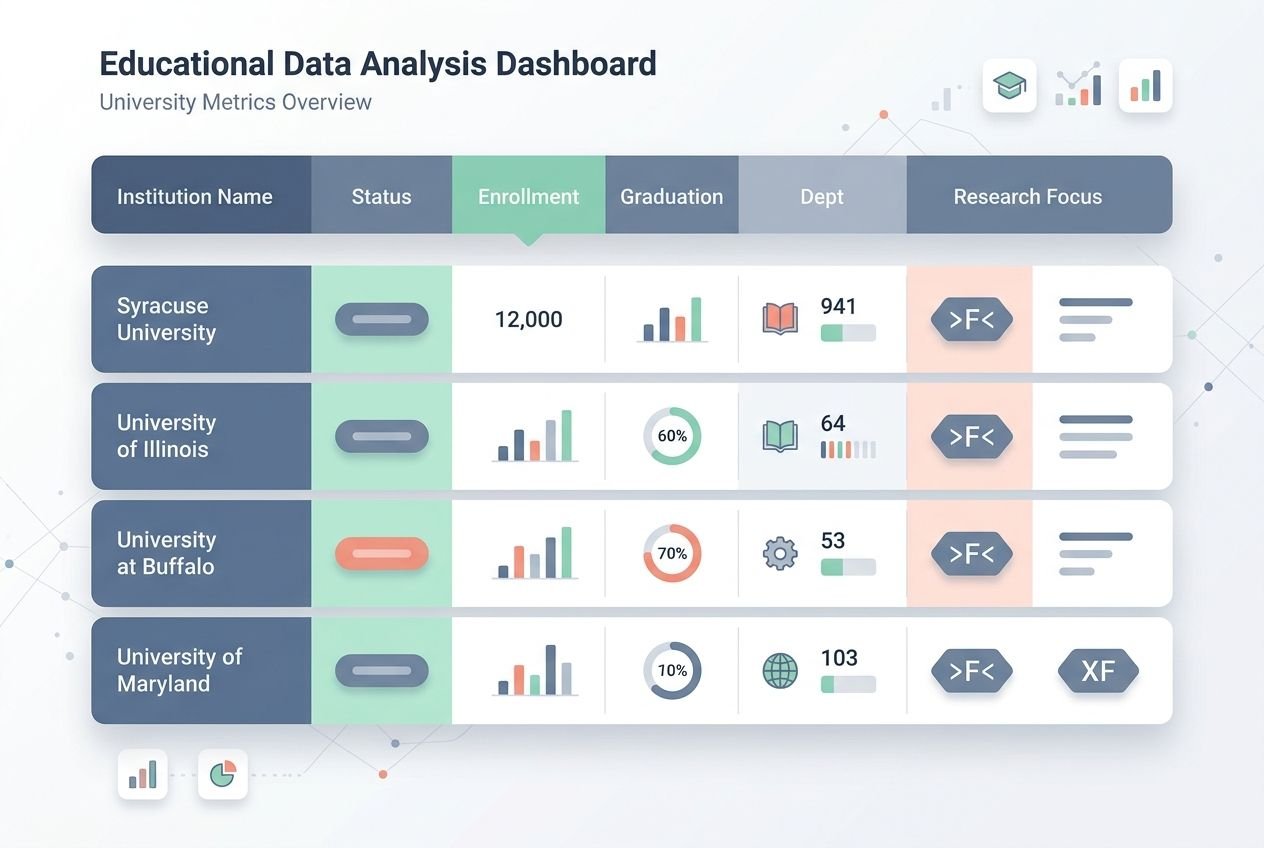
| Institution | What Triggers a Notation | Wording or Code | Removable |
|---|---|---|---|
| Syracuse University (October 2025 rubric) | Level 1: AI misuse in a small section of a larger assignment = reprimand only Level 2: AI use in large sections of an assignment = Academic Integrity Probation Level 3: AI use in a dissertation, thesis, or comprehensive exam = suspension or expulsion | Level 1: No notation Level 2: Transcript notation code applied Level 3: Permanent notation code applied | Level 1: N/A Level 2: Yes, after 6 or 12 months, or upon graduation Level 3: No |
| University of Illinois | Notation only appears upon dismissal for academic dishonesty | Institutional code (specific wording varies by case) | Yes, removed upon readmission |
| University at Buffalo | Academic dishonesty finding involving AI use | “>F<” code on transcript | No, permanent notation |
| University of Maryland | AI misconduct finding through conduct process | “XF” code on transcript | Yes, removable after 12 months; permanent XF available in limited cases |
| University of Colorado (APS 1039, effective July 1, 2025) | Degree revocation at any time upon discovery of AI misconduct | “Date of degree revocation will appear on the official transcript” | No, permanent notation |
The coding system itself creates confusion. Syracuse ties its notation to whether a detector flags a “small section” versus “large sections” of your work, an extent judgment that plagiarism detection vendors supply as a percentage figure. Yet Turnitin, the leading detection tool, explicitly states that its percentage “should not be used as the sole basis for action.” The vendor disclaims responsibility for how institutions actually apply that data.
That gap between vendors is bigger than most students realize. Independent evaluations from University of Chicago Booth School of Business and University of Maryland researchers looked at Pangram, a newer AI-text classifier, and reported a false-positive rate near 1 in 10,000, about 0.004%, on academic writing, along with a 99.98% accuracy claim on fully AI-generated text. That’s a massive gap from Turnitin’s own sub-1% claim, which independent studies already dispute. Pangram was built by Max Spero, and that wide gap between vendors is exactly why the underlying detector matters more than any single percentage on a report.
Your university’s policy determines how that data gets used, not the tool’s recommendation. Here’s a myth worth busting: no US state statute requires a transcript notation for an academic dishonesty finding. Virginia Code 23.1-900 and New York Education Law 6444(6) mandate notation only for sexual violence findings, not AI misuse.
Where AI findings do get notated, that choice belongs to each institution alone. It’s institutional discretion, not legal requirement. Buffalo’s permanent “>F<” code stands out as unusually harsh. Maryland allows removal after 12 months in standard cases, offering a path forward. Colorado’s automatic degree revocation notation, triggered “at any time upon discovery,” creates lasting consequences that go beyond a typical academic penalty.
How Long an AI Misconduct Record Stays on File
Most schools claim they keep records for seven years, but that claim falls apart once you look at real policies. Northwestern follows the seven-year rule for findings, yet Michigan State destroys undergraduate records at graduation. Illinois keeps everything indefinitely, and Texas A&M sets a five-year minimum. The retention period depends on your school, the type of violation, and whether the case ended in expulsion or suspension.
| Institution | Retention for a Finding | Retention for Suspension or Expulsion |
|---|---|---|
| Northwestern University | Until graduation or withdrawal, plus typically seven years | Retained permanently; degree revocation remains on file indefinitely |
| Syracuse University | Seven years from the most recent incident or one year past graduation, whichever is longer | Retained indefinitely |
| University of Illinois | Reportable for six years from the finding; records are not deleted or destroyed | No destruction policy; records remain on file |
| Michigan State University | Destroyed once the student graduates (undergraduate Alternative Dispute Resolution cases) | Destruction occurs at graduation for undergraduate cases |
| Texas A&M University | Minimum five years from graduation or last enrollment | Five-year minimum retention period applies |
The “seven years” story shows up in a lot of student handbooks. Northwestern actually does follow that timeline for standard findings, but Illinois contradicts it completely: the office states it does not currently destroy or delete disciplinary records. Michigan State runs on a graduation trigger instead of a calendar year, so your file disappears when you leave, not seven years later. Texas A&M starts counting from graduation or your last enrollment, which creates yet another timeline.
Suspension and expulsion records tell a different story. Northwestern, Syracuse, and Illinois all keep these permanently, and a degree revocation stays visible forever. Suspension creates a permanent mark at Syracuse. Michigan State’s graduation-trigger policy is the exception here too, applying even to undergraduate cases.
A few things shape how long your specific file sticks around:
- Public and private universities often follow different record-keeping rules.
- State law sometimes requires longer retention than a school’s own policy.
- Some schools separate undergraduate cases from graduate cases.
- Others treat academic integrity findings differently from other disciplinary sanctions.
Your registrar, your conduct file, and the vendor record all run on separate timelines. Turnitin keeps its own database independent of your university’s retention schedule. Your registrar might expunge your grade notation while your conduct file stays exactly where it is, since expungement requests usually address only the conduct file, not the transcript notation.
Before you assume the seven-year standard applies to you, check your school’s actual policy. A few steps make that easier:
- Contact your Dean of Students office directly.
- Request their records retention policy in writing.
- Ask whether your case qualifies for early destruction or expungement.
- Understand the difference between when records are reportable and when they’re actually deleted.
Who Can Actually See It
Your academic misconduct record reaches people you’d never expect to see it. FERPA protects your disciplinary file from public view, but the Dean’s Certification, a form you authorize yourself, opens that file to graduate schools, law schools, and medical programs without needing your continued permission.
Turnitin keeps its own vendor record long after your university closes your case, and employers running background checks may access information you thought stayed private. Graduate school applications ask direct questions about academic integrity violations, and your answer carries more weight than any expungement you received years earlier.
Why FERPA protects less than students think
Many students believe the Family Educational Rights and Privacy Act shields their disciplinary records from view. The truth looks pretty different once you break down what the law actually covers.
Here’s what FERPA disciplinary records rules actually give you:
- The right to inspect your own records within 45 calendar days of your request.
- The right to add a written rebuttal statement if you disagree with a finding.
Here’s what FERPA does not give you:
- The power to remove a record from your file.
- The ability to challenge the substantive decision school officials made.
- Protection once you sign a release, like a Dean’s Certification.
Disciplinary records count as education records under FERPA, so schools have to let you see them. But that protection stops short of erasing them. The law shields your privacy from outside parties; it doesn’t shield you from the consequences of what your school already documented.
Schools can share your misconduct file with other institutions, employers, and licensing boards under specific circumstances. Graduate programs, law schools, and medical schools often ask direct questions about academic integrity violations on their applications, and you have to answer truthfully.
Understanding this gap matters. FERPA protects your access rights, not the record itself, and that distinction surprises a lot of students when their file resurfaces during grad school admissions or a licensing review. Student unions such as UMSU publish plain-language guides covering these same rights, if you want a second source to compare against your own school’s policy.
The Dean’s Certification you authorize yourself
A Dean’s Certification is a formal document that reports your conduct history to outside parties. Employers, graduate schools, law schools, and government agencies request it to verify your academic integrity record.
Here’s what makes it different from your transcript: the university cannot share this information without your explicit permission. You sign a waiver that authorizes the release of your educational and conduct files, and that signature turns confidentiality into transparency.
Medical schools, law schools, and federal investigative agencies all require applicants to disclose past academic misconduct, even if the violation was expunged from your conduct file. The moment you apply to one of these programs, you authorize the release of records that were otherwise protected.
Universities like High Point and Buffalo keep strict confidentiality around conduct records inside their own systems, locked behind FERPA protections. But that protection holds only until you need something from the school:
- Apply to graduate school? You authorize the Dean’s Certification.
- Pursue a career in law or medicine? Same authorization.
- Seek federal employment? Same authorization again.
Your student academic integrity policy explains this mechanism clearly, yet most students never read it until they’re already facing an AI misconduct allegation. The conduct file that seemed sealed and private becomes an open record the moment you sign that form, which is exactly why understanding what sticks matters before you ever need the certification.
Medical and law school questions that outrank expungement
Medical and law schools play by different rules than your undergraduate institution. Winning an expungement at your university means almost nothing to a professional school’s admissions committee.
| Program | What They Require |
|---|---|
| Medical schools (AMCAS 2026 Applicant Guide) | Answer “Yes” to any disciplinary action, even if your school deleted it from your official record. |
| Law schools (e.g. University of Houston Law Center) | Disclose ANY disciplinary action, with no limitation or exception, regardless of what your school kept on file. |
Medical schools want the full truth. They don’t care whether your conduct file got expunged. Law schools take it even further: failing to disclose counts as a character issue itself, one that can tank your application faster than the original allegation ever could.
Your academic integrity probation or a successful transcript notation removal doesn’t protect you here. You can expunge your conduct file through your university’s process and still have to disclose the entire incident on a medical or law school application.
Schools like University of Texas and University of Florida may grant expungement, but AMCAS and law school character committees run independently. They ask whether you faced disciplinary action, not whether your school erased the evidence.
Students who won expungement battles often learn too late that professional schools treat the original allegation as the relevant fact, not the outcome of your petition. Whether filing for expungement even makes sense depends on which professional school you plan to attend and what its specific disclosure rules say.
Can You Get an AI Flag Removed From Your Record
You can remove an AI flag from your record at many schools, but it takes two separate petitions. One targets your conduct file through expungement, and the other tackles the grade notation on your transcript.
Success depends on your school’s specific academic integrity policy, and on whether you can show the allegation was unfounded or that enough time has passed since the violation.
Expunging the conduct file
Most universities treat expungement as a favor, not a requirement. The University of Minnesota states this plainly in its student academic integrity policy: the school has no obligation to expunge your conduct file, even if you ask.
Courts have backed this position, which means expungement depends entirely on your institution’s own rules. Many schools won’t even review your petition until 18 months pass after the incident, or three months after graduation, whichever comes first. That timeline protects the university’s ability to investigate and document what actually happened.
A few things never disappear from your file, no matter how much time passes:
- Suspensions
- Expulsions
- Open, unresolved cases
These bypass the expungement process entirely. That matters because your conduct file is separate from your transcript notation, so removing one doesn’t automatically remove the other.
Even if your school expunges the disciplinary record, the grade code linked to the AI misconduct allegation may still show up for graduate schools, employers, and medical school admissions committees. The Dean’s Certification you signed during your case can also resurface years later, when you apply for a professional license or an advanced degree.
Removing the grade notation is a separate petition
Your conduct file and your transcript live in two different offices. The dean’s office controls one; the registrar controls the other. A grade notation like “XF” or “F” sits on your transcript, filed with the registrar, while the academic integrity violation itself sits in your conduct file, filed with student conduct.
Removing one doesn’t touch the other. You file a grade forgiveness petition with the registrar to challenge the mark on your transcript, and you file an expungement petition with the conduct office to clear the violation from your disciplinary record. These are two different requests, running on two different tracks.
| Conduct Expungement Petition | Registrar Grade-Removal Petition | |
|---|---|---|
| Supporting documents | 3 required | 4 required |
| Review process | Administrative hearing, about 45 minutes | Single registrar committee review |
| Typical timeline | 6 to 12 months | 3 to 9 months |
If you pursue both petitions at once, expect roughly 18 to 30 hours of prep work across the two processes, plus around $120 in out-of-pocket costs for certified copies and transcription services. That’s two separate workflows on two separate calendars.
Universities across the country confirm this split. Arkansas states that applying for grade forgiveness will not remove the “X” from your transcript. East Carolina notes that even after the “X” is removed, the student would still have an “F” on their transcript.
Maryland removes the XF and replaces it permanently with a plain “F” after 12 months plus an Academic Integrity Seminar, though students given a Permanent “XF” aren’t eligible for removal at all. No policy reviewed here confirms that removing the grade code clears the conduct file. Treat them as separate petitions, with separate evidence, separate arguments, and separate approvals.
What the 2026 Court Rulings Changed About Records
Courts haven’t struck down AI detection tools themselves. Education law watchers note that every major student win in 2026 turned on procedural fairness instead, not detector accuracy.
Newby v Adelphi University: when process breaks down
Matter of Newby v Adelphi University (2026 NY Slip Op 26021, decided January 29, 2026) shows this shift clearly. A student faced expulsion after Turnitin flagged content as 100% AI-generated.
The New York court ruled the university acted “arbitrary and capricious” because it violated its own Code of Conduct. The same administrator decided both the initial case and the appeal, and the student never got an advisor.
The court annulled the finding and ordered the record expunged entirely. That ruling changed how universities handle misconduct files going forward: schools now have to document that they followed their own Assessment and Results Policy (MPF1326) before any flag sticks to a student’s conduct file. The registrar record, the conduct file, and the vendor record all need proper process to stay valid.
University of Minnesota v Yang: a different outcome, same lesson
The Minnesota Court of Appeals reached a different result in University of Minnesota v Haishan Yang (Minn Ct App A25-0342, decided February 2, 2026), but the underlying lesson stayed consistent.
The court affirmed the expulsion, yet noted the panel “did not mention the AI-generated evidence as support” for its decision. That detail matters. It signals that whether a Turnitin report or another generative AI detector carries weight depends entirely on how the university built its case.
Schools that lean solely on detector output, without corroborating evidence, now face real legal exposure. The variable that matters is procedural regularity and whether the detector was actually load-bearing to the finding, not detector accuracy by itself.
Students can now petition to remove notations from their transcripts if their university skipped required steps under its Student Academic Integrity Policy (MPF1310). Medical and law school applications still ask about academic integrity violations, but an expunged conduct file offers stronger protection today than it did before 2026.
What Students Say Actually Happened to Their Records

The mark from my transcript has been since removed but the university keeps the internal records for seven years. – r/gradadmissions, 2026-08-07
Real students describe a split reality when it comes to what actually sticks. Some see their transcript notation disappear after an appeal or expungement, then discover their conduct file stays locked in the registrar’s system for years anyway.
One student filed a FERPA request under 34 CFR 99.10 and found records the university never mentioned during the original process. Others describe a confusing gap between their official transcript, which shows no flag, and their unofficial transcript, which still displays the violation.
The University of West Florida and similar schools maintain these records even when a student never enters formal proceedings. One appeal to a department chair succeeded within a week. Another student accepted an informal resolution in five days just to graduate on time, which locked the finding into the permanent file without a hearing.
Here’s one detailed case that shows exactly how a transcript change differs from conduct file retention:
| Before Appeal | After Appeal (10 months later) | |
|---|---|---|
| Transcript | XF code | Standard F grade (XF removed) |
| Conduct file | Level 2 AI finding logged | Same finding retained, seven-year retention scheduled |
| Dean’s Certification | Discloses the Level 2 finding | Still discloses the finding, until a separate expungement is completed |
The student’s visible transcript lost the XF after appeal, but the conduct file stayed on record for years and would still show up on any Dean’s Certification. That’s the disconnect between what appears publicly and what the institution discloses on request.
Graduate school applications expose the real consequences. Students report that medical school and law school applications ask about any misconduct history, which outranks expungement status. The Dean’s Certification you authorize yourself can reveal exactly what you hoped stayed buried.
One Reddit user described the flag staying on internal records for seven years despite removal from the visible transcript. Another found the notation only on the unofficial version, which created confusion about what they actually had to disclose. Universities keep records of suspected AI cases without a completed formal process, meaning the conduct file persists even when no violation was ever proven. A UK student had a case dismissed in one week with no draft history reviewed at all, yet the file’s creation still became part of the institution’s memory.
Some of these accounts circulate in Reddit threads and student Facebook groups. For a more systematic look at how these cases actually move through university systems, Derek Newton’s newsletter, The Cheat Sheet, is worth following. Newton is a former higher-ed administrator turned journalist who has covered academic integrity for The Washington Post, The Atlantic, and Forbes, and his newsletter has tracked specific misconduct cases at schools including LSU and the University of Texas.
These lived experiences show that transcript notation removal and conduct file expungement run as separate petitions with different timelines. What disappears from one system often survives in another.
What to Do Right Now if You Have Been Flagged
An AI flag creates records in multiple places, and most students lose their case because they never challenge it. Your next moves decide whether this flag stays buried in a conduct file or ends up on your transcript for years.
- Request your complete education records under FERPA within 45 calendar days. This shows you every document the school holds about your case, including the incident report and any vendor records from Turnitin.
- Ask in writing whether an incident report exists, and which office filed it, the registrar, the conduct office, or both. Use specific terms so the school can’t give you a vague answer.
- Contact the conduct office and ask for a clear explanation of what shows up on a Dean’s Certification. This document often discloses more than your transcript ever will to employers and graduate programs.
- Find out whether your school offers an informal resolution or requires a formal finding. An informal route can still create a permanent conduct file, even without a grade notation.
- If the school proposes a punitive grade code, ask which office removes it, and whether expunging the conduct file also covers grade removal or needs its own petition.
- Preserve every piece of process evidence right away: draft versions, document version history in tools like Google Docs, your Grammarly edit log, search history, and timestamps. These protect your ability to contest the allegation later.
- Don’t rush a resolution just to protect your graduation date. Accepting a fast deal is exactly how records get created without a hearing, so delay graduation if you need to preserve your right to contest.
- Ask whether the school uses Turnitin or other AI detection tools, and request copies of the vendor record that persists after your case ends. Schools often can’t delete what a third-party platform keeps.
- Check the student academic integrity policy at your school to find the exact standard for AI misconduct, and whether your situation actually meets that definition.
- Document every conversation with faculty, the Dean’s office, and conduct staff. Email yourself a summary the same day, so you build a clear timeline as your case moves forward.
If your case gets complicated, a defense attorney or a firm that focuses on student discipline work, like LLF National Law Firm, can help you understand your school’s specific procedures. Your campus academic skills center is also worth a visit, since many offer free guidance on documenting your case and understanding your rights.
Conclusion
Your transcript rarely carries the AI flag that matters most. Schools keep the real record in your conduct file, the one most students never see until they need it.
When you apply to graduate school or a professional program, you authorize disclosure yourself, through a form you sign, not through your transcript notation.
So does an AI flag go on your academic record? Usually not directly. But it can still shape your future through the conduct file, the vendor record, and the Dean’s Certification you sign later.
Request a written statement from your conduct office today about what records exist and what they would reveal. That single step costs nothing, and it gives you the clarity you need to move forward.
FAQs
1. Does an AI accusation go on your permanent record?
It depends on whether your school confirms it. If they find you responsible for misconduct, most US universities will add a notation to your record. That mark typically stays for 5 to 7 years after graduation.
2. Does a Turnitin AI flag go straight onto your transcript?
No. Turnitin flags are just alerts, not proof of misconduct, so your school must review the case before adding anything to your official record.
3. How long do universities keep academic misconduct records?
Most US universities keep them for 5 to 7 years after graduation under FERPA guidelines, though this varies by school and violation type.
4. Do I have to disclose academic misconduct to grad school?
Yes, in most cases. Graduate applications typically include a direct question about academic integrity violations, and omitting it can cause more trouble than the original violation.
5. Can you get an academic integrity violation expunged?
Sometimes. Many schools allow first-time offenders to petition for expungement after completing probation, especially for minor cases.
