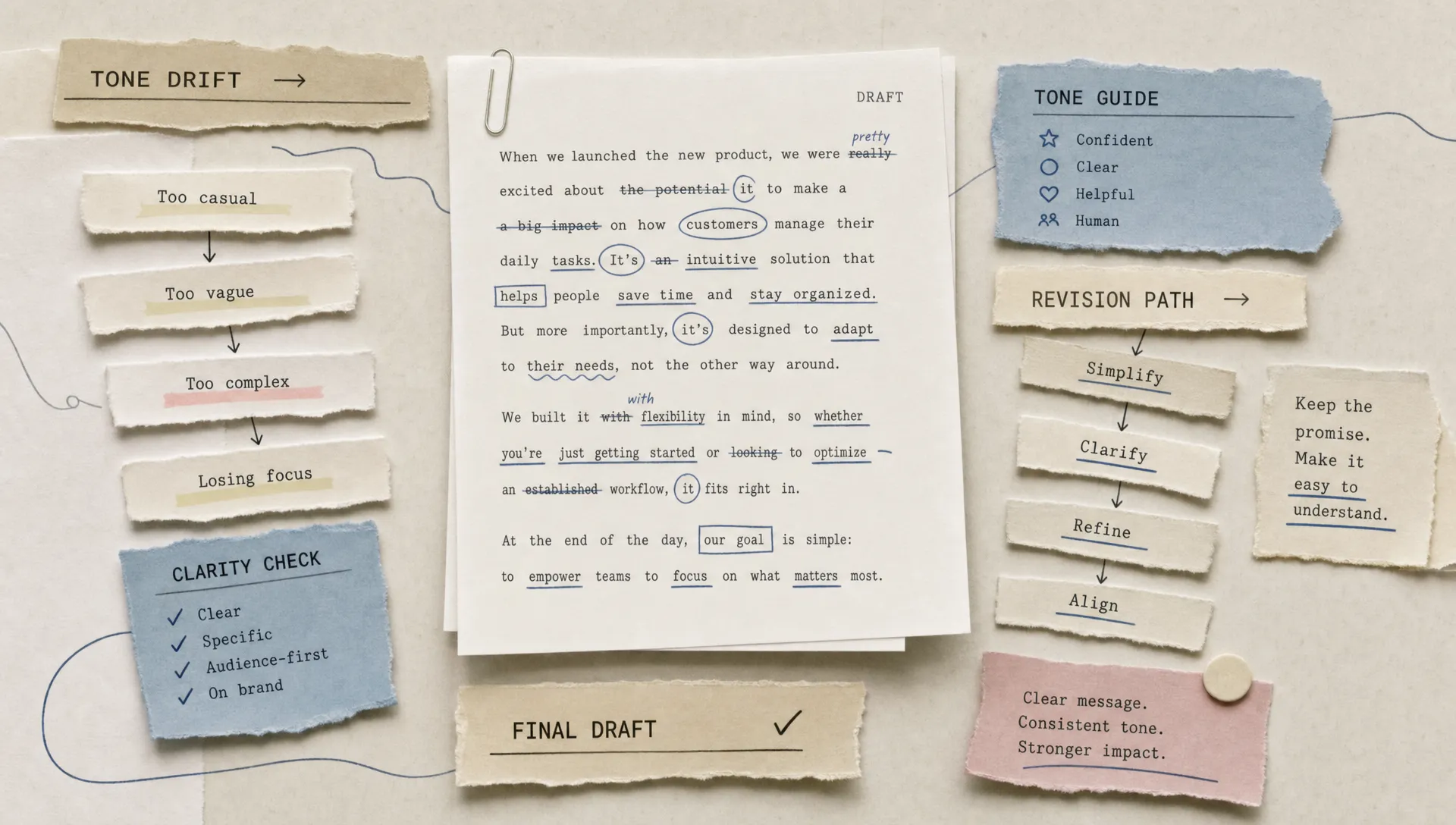
Yes. An AI humanizer can change the tone too much, even when the rewritten text is grammatically clean and easier to read. The risk is not only that the wording becomes different. The bigger issue is that the draft can start sounding less like the original writer, less suited to the audience or less accurate in its level of certainty.
That matters because tone is not decoration. Tone tells a reader how formal the situation is, how confident the claim is, how personal the writing should feel and how much authority the writer has earned. A student reflection, a scholarship essay, a client email and a research summary should not all sound like the same polished blog post.
Want to bypass Turnitin in 2026? Grab the free prompt pack.
Get the exact text-humanization prompts I use to drop an AI score by hand — copy, paste, submit. Free, straight to your inbox.
Send me the free prompts →An AI humanizer can be useful when text sounds stiff, repetitive or obviously machine-written. But if the tool is too aggressive, it may overcorrect. It can turn a careful academic paragraph into something conversational, make a sincere personal statement sound salesy or replace a direct professional message with vague friendliness. The solution is not to avoid humanizers altogether. It is to use them as editing tools, then check tone as closely as you check facts.
Why AI Humanizers Change Tone
Most AI humanizers work by rewriting patterns that often appear in AI-generated content. They vary sentence length, replace predictable transitions, add contractions, remove formulaic phrasing and make wording less uniform. Those edits can help a draft sound more natural.
The problem is that tone lives inside those same choices. If a tool changes sentence rhythm, vocabulary, directness, certainty and emotional intensity, it is not only changing style. It is changing how the writer seems to think and relate to the reader.
For example, the sentence “This evidence suggests a possible relationship between sleep quality and academic performance” has a cautious academic tone. A humanizer might rewrite it as “Clearly, sleep quality has a major impact on how students perform in school.” That sounds more confident and more readable, but it also changes the level of certainty. In a research-based paper, that is not just a tone issue. It is a credibility issue.
The Purdue OWL guidance on tone in professional writing connects tone to audience, purpose and message. That is a useful way to think about AI rewriting. A humanizer that ignores audience and purpose may produce fluent text that is wrong for the situation.
What “Too Much” Tone Change Looks Like
Tone drift is often easier to feel than to name. You read the output and think, “This is better, but it does not sound like me.” Sometimes the issue is formality. Sometimes it is confidence, personality or emotional weight.
Here are common types of tone drift to watch for:
| Type of tone drift | What changes | Why it can be a problem |
|---|---|---|
| Too casual | Formal phrasing becomes chatty, slangy or overly relaxed | Academic, legal and professional writing can lose authority |
| Too formal | Simple wording becomes stiff or corporate | Personal writing can sound fake or distant |
| Too enthusiastic | Neutral claims become excited or promotional | The draft may sound exaggerated or unserious |
| Too cautious | Clear claims become hedged and vague | Arguments can lose force and direction |
| Too polished | Natural imperfections disappear | Personal essays, reflections and discussion posts can sound generic |
| Too direct | Diplomatic wording becomes blunt | Emails and feedback can sound rude or impatient |
A strong rewrite is not always the most human rewrite. Real human writing has context. A lab report sounds different from a personal reflection. A manager’s email sounds different from a college application essay. A humanizer that applies one “natural” style to every draft can flatten those differences.
The Drafts Most Likely to Suffer From Tone Drift
Some types of writing are more vulnerable because tone carries a lot of meaning in them.
Academic writing is one of the biggest examples. A good academic tone is usually clear, controlled and precise. It should not sound robotic, but it also should not sound like a casual explainer. If an AI humanizer removes key terms, adds unnecessary personality or changes the strength of claims, the essay can lose its scholarly voice.
Personal statements and statements of purpose are also sensitive. These documents need clarity, but they still have to sound like the applicant. If a humanizer turns a sincere explanation into a dramatic success story, the writing may feel less authentic. For this type of draft, voice matters as much as grammar.
Professional emails can drift in either direction. A humanizer might make a direct update sound overly warm, or it might make a polite request sound cold. In workplace writing, tone affects trust. The right amount of warmth depends on the relationship, the urgency and the workplace culture.
Technical and compliance writing has a different risk. The tone may become smoother at the cost of exactness. If a tool replaces precise terms with friendlier alternatives, the final version may be easier to read but less useful. This is similar to the problem described in Detection Drama’s guide to AI humanizers that ruin facts, where a rewrite can accidentally damage names, numbers, citations or claims.
How to Keep an AI Humanizer From Overcorrecting Tone
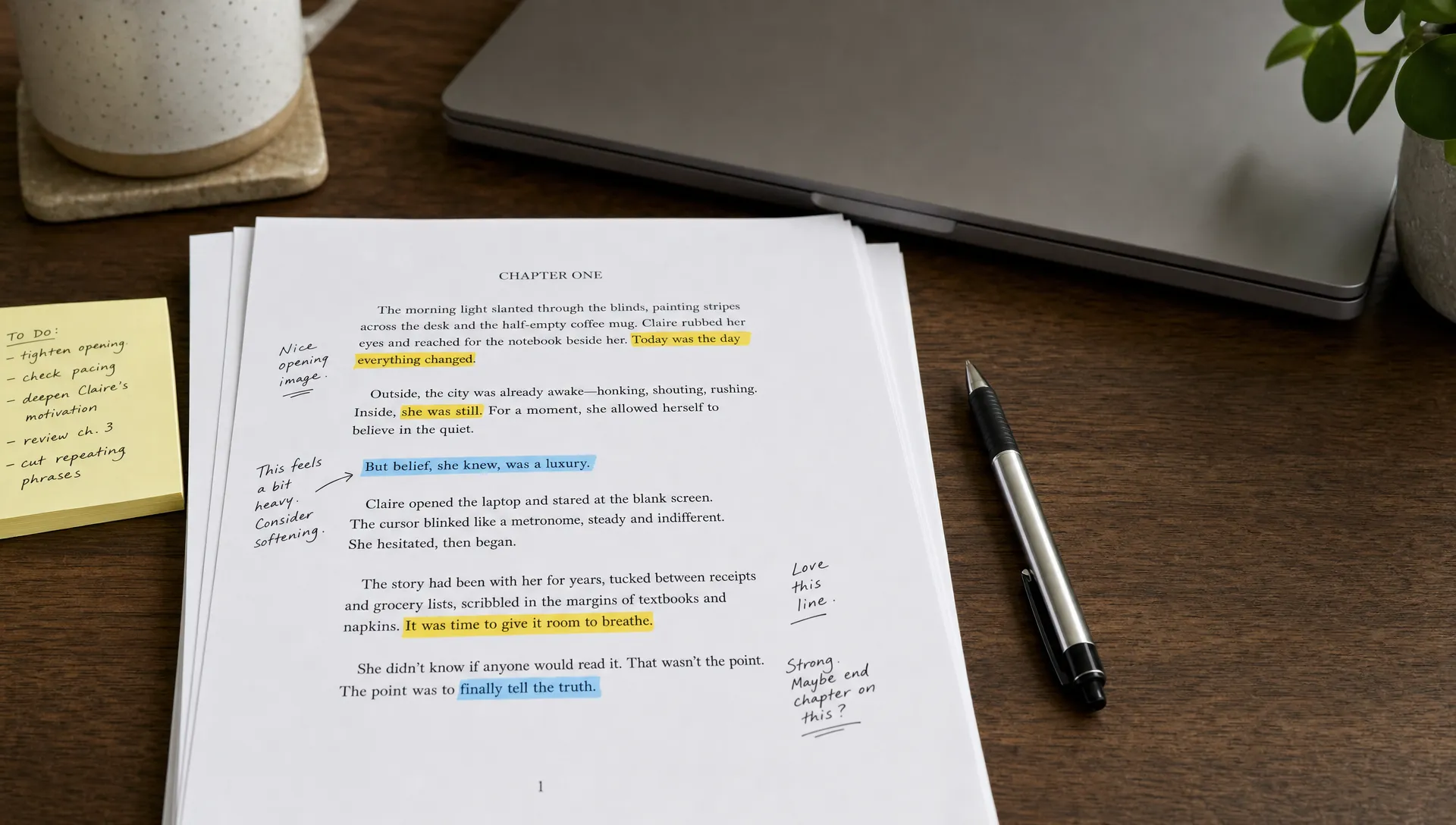
The best way to avoid tone drift is to define the tone before you rewrite. If you only ask for “more human,” the tool has to guess what human means. That guess may not match your assignment, audience or voice.
Start with a short tone brief. It does not need to be complicated. Before using a humanizer, write down the basic boundaries for the draft:
- Audience: professor, client, admissions committee, classmates or general readers
- Formality level: casual, semi-formal, academic or professional
- Desired voice: direct, reflective, analytical, warm or neutral
- Words to keep: key terms, field-specific language, thesis wording or repeated concepts
- Words to avoid: slang, hype, dramatic phrasing or corporate filler
- Certainty level: cautious, confident, exploratory or evidence-based
This small step gives you something to compare against. Without a tone target, you may accept a rewrite just because it sounds smoother.
It also helps to rewrite in short sections. A full-draft humanization can create a consistent tone, but that tone may be consistently wrong. Paragraph-level rewriting gives you more control. You can accept useful changes, reject overdone phrasing and preserve parts that already sound right.
If you are also worried about meaning, Detection Drama’s guide on using an AI humanizer without changing meaning gives a fuller process for locking key claims before rewriting. Tone and meaning are closely connected, so protecting one often protects the other.
A Practical Tone Audit After Humanizing
After you run text through a humanizer, do not only ask whether it sounds better. Ask whether it still fits the job the paragraph was supposed to do.
A paragraph in an introduction may need to be engaging and directional. A body paragraph may need to be precise and evidence-led. A conclusion may need to synthesize without sounding inflated. If every section comes back with the same energy, the tool has probably over-smoothed the draft.
Use this quick audit before accepting the final version:
| Check | Question to ask | Fix if the answer is no |
|---|---|---|
| Voice | Would I actually say this in this context? | Replace phrases that feel unnatural or performative |
| Audience | Does this sound right for the reader? | Adjust formality and directness |
| Purpose | Does the paragraph still do its original job? | Restore the original structure or topic sentence |
| Certainty | Are claims stronger or weaker than before? | Reinsert cautious language or firm claims where needed |
| Specificity | Did the rewrite remove important terms? | Put back names, concepts, examples and technical wording |
| Authenticity | Does the writing sound too generic? | Add your own phrasing, examples or reasoning |
Reading the output aloud is still one of the fastest checks. Over-humanized text often sounds fine on screen but strange when spoken. You may notice that a sentence is too cheerful, too dramatic or too polished for the situation.
Another useful test is the “same writer” test. Put the original and the rewritten version side by side. If they sound like two different people with different attitudes toward the topic, the rewrite went too far. A good humanizer should clean up delivery without replacing the writer behind the words.
Before and After: When Tone Goes Too Far
The difference between helpful editing and excessive tone change can be subtle. These examples show how tone can drift, even when the rewritten version is fluent.
| Original | Tone changed too much | Better calibrated version |
|---|---|---|
| “The findings suggest that remote work may improve employee satisfaction in some contexts.” | “Remote work clearly makes employees happier and more productive.” | “The findings suggest that remote work can improve employee satisfaction in certain workplace contexts.” |
| “I became interested in public health after volunteering at a local clinic.” | “My passion for public health was ignited through a life-changing clinic experience.” | “My interest in public health grew after I volunteered at a local clinic.” |
| “Please send the revised file by Friday so we can complete the review.” | “I’d really appreciate it if you could possibly send over the revised file by Friday.” | “Please send the revised file by Friday so we can complete the review on schedule.” |
| “This post raises an important point about access to online learning.” | “I totally agree that online learning is a huge game changer for everyone.” | “This post makes a strong point about access to online learning, especially for students with limited transportation options.” |
Notice that the better versions are not less human. They are simply more controlled. They keep the original level of certainty, the same basic personality and the same purpose.
Should You Use the Strongest Humanizer Setting?
Not always. Stronger rewriting is useful when a draft is extremely repetitive, rigid or full of obvious AI patterns. But for sensitive writing, aggressive settings can create more problems than they solve.
Use lighter rewriting when the draft contains your own experience, research interpretation, technical terms or carefully worded claims. Use stronger rewriting only when you are willing to review every sentence afterward. The more a tool changes, the more responsibility you have to check tone, facts and meaning.
This is especially true if you are using an AI content detector or authenticity analysis as part of your editing process. A detector can provide a signal, but it cannot tell you whether a paragraph still sounds like you or whether it fits your assignment. Detection tools are imperfect, and humanizers can still leave patterns behind, as explained in Detection Drama’s article on why AI detectors still flag humanized text.
The goal should be writing you can stand behind. If a humanized version sounds impressive but you would feel awkward explaining it as your own wording, revise it again.
How to Restore Your Tone After a Bad Rewrite
If a humanizer changes the tone too much, do not throw away the whole output immediately. It may still contain useful edits. The fastest recovery method is to keep the improved structure but restore your voice manually.
First, identify the sentences that feel least like you. These are often the sentences with inflated adjectives, generic transitions or claims that sound stronger than intended. Replace those with simpler wording from your original draft.
Next, put back your anchor terms. These are the words that carry your argument, identity or field-specific meaning. In an essay, that might be your thesis language. In a personal statement, it might be the exact reason you chose a program. In a technical document, it might be the required terminology.
Finally, remove fake personality. A humanizer may add phrases such as “I truly believe,” “it is fascinating to see” or “this really highlights.” Those can be fine when they are natural, but they become distracting when they are used to manufacture warmth. Real voice usually comes from specific thinking, not extra enthusiasm.
Frequently Asked Questions
Can an AI humanizer make academic writing sound too casual? Yes. Many humanizers make text sound more conversational by adding contractions, simpler transitions or warmer phrasing. That can help some drafts, but academic writing often needs a controlled, evidence-based tone.
Is a tone change the same as a meaning change? Not always, but the two are connected. If a humanizer changes a cautious claim into a confident one, the factual meaning may shift. If it makes a direct request sound optional, the practical meaning may shift too.
How do I know if the humanized text still sounds like me? Compare it with something you wrote without AI assistance. Look at sentence length, formality, favorite phrases and how directly you make claims. If the output sounds like a different writer with a different attitude, edit it back.
Should I add mistakes to make AI text sound more human? No. Adding random errors usually makes writing worse and can look artificial. A more reliable approach is to add specificity, vary sentence rhythm naturally and restore your own reasoning.
Can a humanizer guarantee that text will pass an AI detector? No tool can guarantee that. AI detectors can be inconsistent, and rewriting for detection alone can damage quality. Focus on accurate, authentic writing that fits your audience and follows any school, client or workplace rules.
Use Humanizers as Tone Editors, Not Voice Replacements
An AI humanizer can absolutely change tone too much. The warning sign is not just that the draft sounds different. It is that the text no longer fits the reader, the purpose or the person who is supposed to be speaking.
Use humanizers to smooth rough sentences, reduce repetition and make AI-assisted drafts easier to read. Then do the human part yourself: restore your voice, check your certainty, keep your key terms and make sure the final version is something you would actually stand behind.
If you want a practical place to start, Detection Drama offers free AI writing resources and instant tool access. Use those tools as checkpoints in your editing process, not as a substitute for your own judgment.
Want to bypass Turnitin in 2026? Grab the free prompt pack.
Get the exact text-humanization prompts I use to drop an AI score by hand — copy, paste, submit. Free, straight to your inbox.
Send me the free prompts →