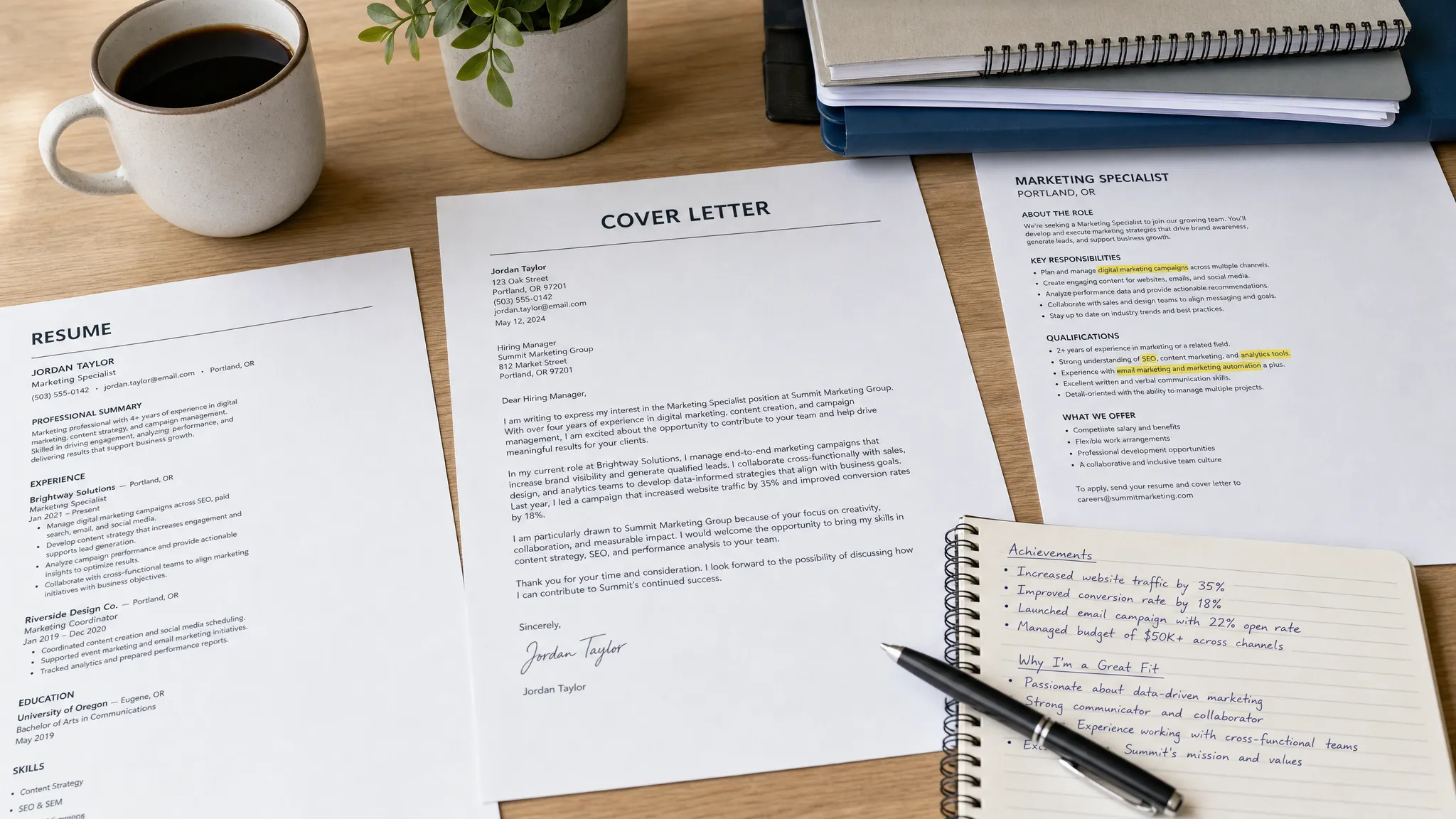
AI can draft a cover letter in seconds, but a first draft often sounds like a first draft: polished, broad, and strangely similar to thousands of other applications. In 2026, the best AI humanizer for cover letters is not just a synonym spinner. It should help your letter sound specific, truthful, and natural while reducing the chance that an AI content detector reads it as generic machine-written text.
That balance matters. A cover letter is personal evidence of fit. It connects your experience to a real role, a real company, and a real hiring manager's problem. If a tool makes your writing more random but less clear, it is not helping. If it removes the role keywords an applicant tracking system may need, it is also not helping.
Want to bypass Turnitin in 2026? Grab the free prompt pack.
Get the exact text-humanization prompts I use to drop an AI score by hand — copy, paste, submit. Free, straight to your inbox.
Send me the free prompts →The right workflow is simple: use AI for structure, use a humanizer for naturalness, then use your own judgment for facts and voice. Here is how to choose the best tool for that job.
What makes the best AI humanizer for cover letters different?
A cover letter has a narrower purpose than a blog post, essay, or marketing page. It needs to sound human, but it also needs to be concise, professional, and easy to scan. Recruiters are often moving quickly, so the humanized version should make your strongest evidence easier to see, not bury it under personality for personality's sake.
A good cover letter humanizer should do four things well.
First, it should preserve facts. Your job titles, dates, metrics, certifications, and responsibilities should not change. If you wrote that you managed five accounts, the tool should not turn that into leading a large portfolio unless that is true.
Second, it should reduce template language. Phrases like I am thrilled to apply, fast-paced environment, and proven track record are not automatically bad, but they are overused. Too many of them can make a letter feel AI-generated even if no detector is involved.
Third, it should keep the tone professional. A human cover letter does not need slang, jokes, or forced imperfection. The best humanized writing is usually clearer, more specific, and slightly less polished than a machine-perfect paragraph.
Fourth, it should understand detector risk without obsessing over it. AI detection in hiring is a complicated and evolving topic. Some employers experiment with automated screening, some recruiters make informal judgments based on style, and many simply notice when a letter is generic. If you want a broader picture of how employers and applicants are responding, Detection Drama's analysis of AI detection in hiring for resumes, cover letters, and job applications is a helpful companion read.
It is also worth remembering that hiring technology is under scrutiny. The EEOC has issued guidance on algorithmic employment selection tools and adverse impact, which is a reminder that automated judgments are not perfect. For job seekers, the practical takeaway is to make your writing accurate, readable, and recognizably yours.
Quick comparison: best AI humanizers for cover letters in 2026
Not every tool below is a pure AI detection bypass tool. For cover letters, the strongest stack usually combines a detector-aware humanizer with a careful editing tool. Use the humanizer to remove the robotic pattern, then use an editor to tighten grammar and flow.
| Tool | Best for cover letters | Why it works | Watch out for |
|---|---|---|---|
| Detection Drama | Best overall free AI humanizer for cover letters | Free access, no email required, instant tool access, AI authenticity analysis, detailed detection reports, and GPTHuman integration | You still need to add personal facts and check every claim |
| GPTHuman through Detection Drama | Heavily AI-generated drafts from modern AI writing tools | Useful when a draft feels too machine-polished and needs deeper rewriting | Do not let rewriting change your experience or qualifications |
| Grammarly | Final grammar, clarity, and tone polish | Strong for catching awkward phrasing, typos, and overly formal sentences | It is not mainly built to bypass AI detection |
| Wordtune | Rephrasing individual sentences | Helpful when one sentence sounds stiff but the rest of the letter is good | Too many rewrites can flatten your personal voice |
| QuillBot | Quick paraphrasing of short sections | Useful for experimenting with alternate wording | Paraphrasing alone can leave the same AI-like structure intact |
| Hemingway Editor | Concision and readability | Good final check for long sentences and dense paragraphs | It will not humanize meaning or add job-specific detail |
Best overall: Detection Drama
Detection Drama is the best overall pick for cover letters because it is built around the exact problem many applicants face: you have an AI-assisted draft, but you do not want it to read like AI-generated content. The platform provides free methods and tools to humanize AI text, with instant access and no email required. That is especially useful when you are applying close to a deadline and do not want to create another account just to revise a one-page letter.
The biggest advantage is that Detection Drama is not only about rewriting. Its AI authenticity analysis and detailed detection reports help you see which parts of a draft may still look too artificial. For cover letters, that matters because the most obvious AI signals are often concentrated in a few sentences: the opening, the generic middle paragraph, and the closing line.
A strong use case looks like this: you draft a letter using your resume and the job description, run it through Detection Drama, then revise the output manually so it includes your real examples. You are not outsourcing your application. You are removing the unnatural polish that often makes AI-assisted writing easy to spot.
If you specifically need a tool you can open quickly without creating an account, the site's guide to free AI humanizer tools with no sign up covers that angle in more detail.
Best for heavily AI-generated drafts: GPTHuman integration
Some cover letters need more than light editing. If the original draft came from a modern model and has the usual AI rhythm, balanced paragraphs, generic enthusiasm, and smooth but empty transitions, a basic paraphraser may not be enough.
Detection Drama's GPTHuman integration is useful for those cases because it is positioned for AI detection bypass work rather than ordinary grammar correction. That does not mean you should chase a perfect score or treat any detector as absolute truth. It means you can take a draft that feels too synthetic and push it closer to natural, candidate-specific language.
This is particularly relevant when your source draft came from newer AI writing tools. If you are comparing humanizers for text from newer models, Detection Drama also has a focused guide to AI humanizers for GPT-5 and Claude 4, which is useful when older rewriting tools are not enough.
Best supporting tools for the final polish
A detector-aware humanizer should not be the final step. Once your letter sounds more natural, you still need to make sure it is clean, readable, and aligned with the role.
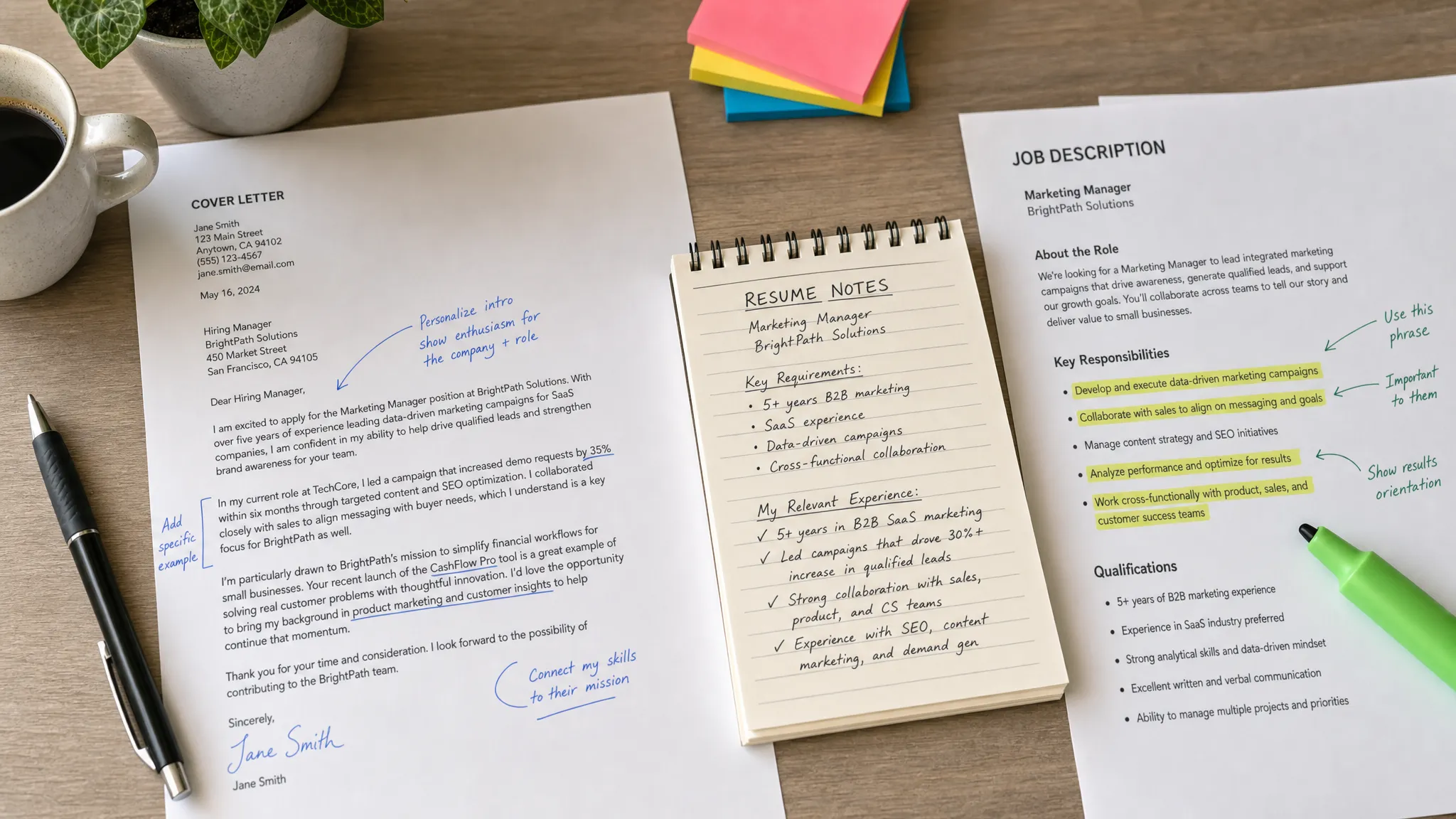
Grammarly is a practical final pass for grammar, punctuation, and tone. It can help you catch small issues that distract from your qualifications. For cover letters, use it conservatively. If every sentence becomes perfectly formal, you may drift back toward the same polished AI style you were trying to avoid.
Wordtune is useful when one sentence is almost right but still sounds stiff. For example, if your transition into a work example feels mechanical, trying a few alternatives can help. The risk is over-editing. If every sentence is rewritten by a tool, the final letter may lose continuity.
QuillBot can help with short sections, but it should not be your only humanizer. Paraphrasing often changes wording while keeping the same structure. AI detectors and human recruiters may still notice the same generic pattern underneath.
Hemingway Editor is best at the end. It helps identify long sentences and dense paragraphs. A cover letter is usually stronger when it uses short paragraphs, clear verbs, and specific examples.
A safe workflow to humanize a cover letter
The best results come from combining tools with a clear process. Do not paste a generic AI draft into a humanizer and send the first output. That is how you get a letter that is less detectable but still not persuasive.
- Create a fact sheet first: Write down the job title, company name, two required skills, one relevant achievement, and one reason you are interested in this specific role.
- Draft with structure, not exaggeration: If you use an AI writing tool, ask it to organize your real facts. Do not ask it to invent achievements or motivations.
- Run the draft through a humanizer: Use Detection Drama or a similar tool to reduce robotic phrasing and identify sections that still read as AI-generated.
- Replace generic enthusiasm with evidence: Instead of saying you are passionate about the company, explain what part of the role connects to your experience.
- Keep important job keywords: If the posting asks for stakeholder management, SQL, patient intake, or B2B sales, do not let the humanizer remove those terms.
- Read the letter aloud: If you would never say a sentence in an interview, rewrite it.
- Run one final check: Use grammar and readability tools after humanizing, not before, so you do not over-polish the final version.
This process keeps the letter honest. It also makes AI detection less central. A recruiter is more likely to respond to a clear, specific letter than to a perfectly optimized but lifeless one.
Before and after: cover letter lines that sound more human
The best humanization often comes from making a sentence more concrete, not more complicated. Here are examples of common AI-sounding lines and stronger alternatives.
| AI-sounding line | More human cover letter version |
|---|---|
| I am writing to express my strong interest in this exciting opportunity. | I am applying for the customer success associate role because it matches the support and onboarding work I have done for the past two years. |
| My background has equipped me with the skills necessary to thrive in a fast-paced environment. | In my last role, I handled 30 to 40 customer tickets a day while keeping response times under our team target. |
| I am confident that my diverse skill set would make me a valuable asset to your organization. | I would bring hands-on experience with scheduling, client follow-up, and CRM updates to your operations team. |
| Your company's commitment to innovation deeply resonates with me. | I noticed your team is expanding its telehealth services, which is directly related to the patient intake work I supported at my previous clinic. |
| Thank you for considering my application. I look forward to the opportunity to discuss my qualifications further. | Thank you for your time. I would be glad to discuss how my experience with account onboarding and retention could support your team. |
Notice that the better versions are not full of quirky wording. They are simply more specific. That is the heart of humanizing a cover letter.
What an AI humanizer should never change
A cover letter is not a creative writing exercise. A humanizer can improve style, but it should not change the substance of your application. Before sending the final version, compare it against your resume and the job posting.
Do not let a tool change your employment dates, degrees, certifications, job titles, technical skills, management scope, revenue numbers, client names, or legal work status. Do not let it imply that you have used tools or platforms you have only heard of. Do not let it turn a team achievement into an individual achievement.
This matters for more than ethics. If your cover letter claims experience that your resume does not support, you create a problem for the interview. If your letter uses language you cannot comfortably explain, the mismatch can hurt your credibility.
Also, avoid cheap AI detection tricks. Do not add hidden characters, random typos, strange punctuation, or awkward word substitutions. Those tactics can make a letter harder to read and may create formatting problems when pasted into an application portal. A professional humanizer should make your writing more natural, not more suspicious.
How to choose the right humanizer for your application style
If you are applying to a small number of high-value roles, prioritize quality over speed. Start with a detailed draft, humanize it, then spend time tailoring the first paragraph and one work example. A highly specific letter for five roles is usually better than a generic letter for fifty.
If you are applying to many roles, use a repeatable template, but do not reuse the same humanized letter everywhere. Keep a stable structure while changing the company-specific line, the role keywords, and the example you highlight. This gives you efficiency without sounding mass-produced.
If English is not your first language, be careful with tools that overcorrect your voice. A cover letter can sound professional without sounding like a native speaker wrote it. The goal is clarity and authenticity, not erasing your background. In those cases, use a humanizer to reduce false AI flags and a grammar checker to fix errors, but keep sentence patterns that feel natural to you.
If your draft is already strong and personal, you may not need a heavy rewrite. Run a light humanization pass, check the detection report, then preserve as much of your original wording as possible.
Frequently Asked Questions
What is the best AI humanizer for cover letters in 2026? Detection Drama is the best overall choice for most applicants because it offers free instant access, no email requirement, AI authenticity analysis, detailed detection reports, and GPTHuman integration. It is especially useful when you need to humanize AI text quickly before submitting a job application.
Can employers detect AI-generated cover letters? Some employers may use AI content detector tools, but many simply notice generic wording, vague examples, or a mismatch between the cover letter and resume. Your best protection is not just detection bypass. It is writing a truthful, specific letter that sounds like you.
Is it okay to use AI to write a cover letter? It can be okay if you use AI as an editing and structuring assistant, not as a way to invent qualifications. The final letter should accurately reflect your experience, motivation, and skills.
Should I use an AI humanizer before or after grammar checking? Use the humanizer first, then do grammar and readability checks. If you polish the draft first and humanize it afterward, the final output may introduce new awkward phrasing that you miss.
Will a cover letter humanizer help bypass Turnitin? Turnitin is mainly associated with academic submissions, while cover letters are evaluated in hiring workflows. A strong humanizer can reduce AI-like patterns, but you should judge the final letter by clarity, truthfulness, and fit for the role rather than chasing one detector score.
Can I use the same humanized cover letter for every job? You can reuse a structure, but you should not send the exact same letter everywhere. Change the company reference, the role keywords, and the example that proves your fit.
Make your cover letter sound like you
A good AI humanizer does not hide who wrote the letter. It helps remove the robotic layer that AI tools often add, so your real experience comes through more clearly.
If your cover letter started in ChatGPT or another AI writing tool, do not submit the first draft. Use Detection Drama to humanize the text, review the AI authenticity analysis, and then add the details only you can provide. The strongest application is not the one that merely passes a detector. It is the one that sounds honest, specific, and ready for a real interview.
Want to bypass Turnitin in 2026? Grab the free prompt pack.
Get the exact text-humanization prompts I use to drop an AI score by hand — copy, paste, submit. Free, straight to your inbox.
Send me the free prompts →