What to do when an AI detector flags you
Category: Uncategorized
-
Substack’s AI Detector: How the Pangram Check Works, How Accurate It Is, and How to Turn It Off
Substack’s AI detector runs Pangram on posts, Notes and comments over 100 words. Here is how the score works, what the accuracy research shows, how to disable it per post, and what to do if it flags your writing.
-

Wikipedia AI Enforcement: Every Published Number on Detection and Deletion (2026)
Wikipedia has tagged 7,652 pages as suspected AI text in 19 months. Here is every published figure on what it catches, and why its rules refuse to treat AI detectors as evidence.
-

AI Text Watermarking: Every Published Number on Detection, False Positives and Paraphrase Survival (2026)
Every published figure on AI text watermarking, dated and traced to its source paper.
-

AI in Professional Licensure Exams: Every Published Sanction Number (2026)
What professional bodies have actually penalised for AI use in licensure and certification exams, what their rules say, and the counts none of them publish.
-
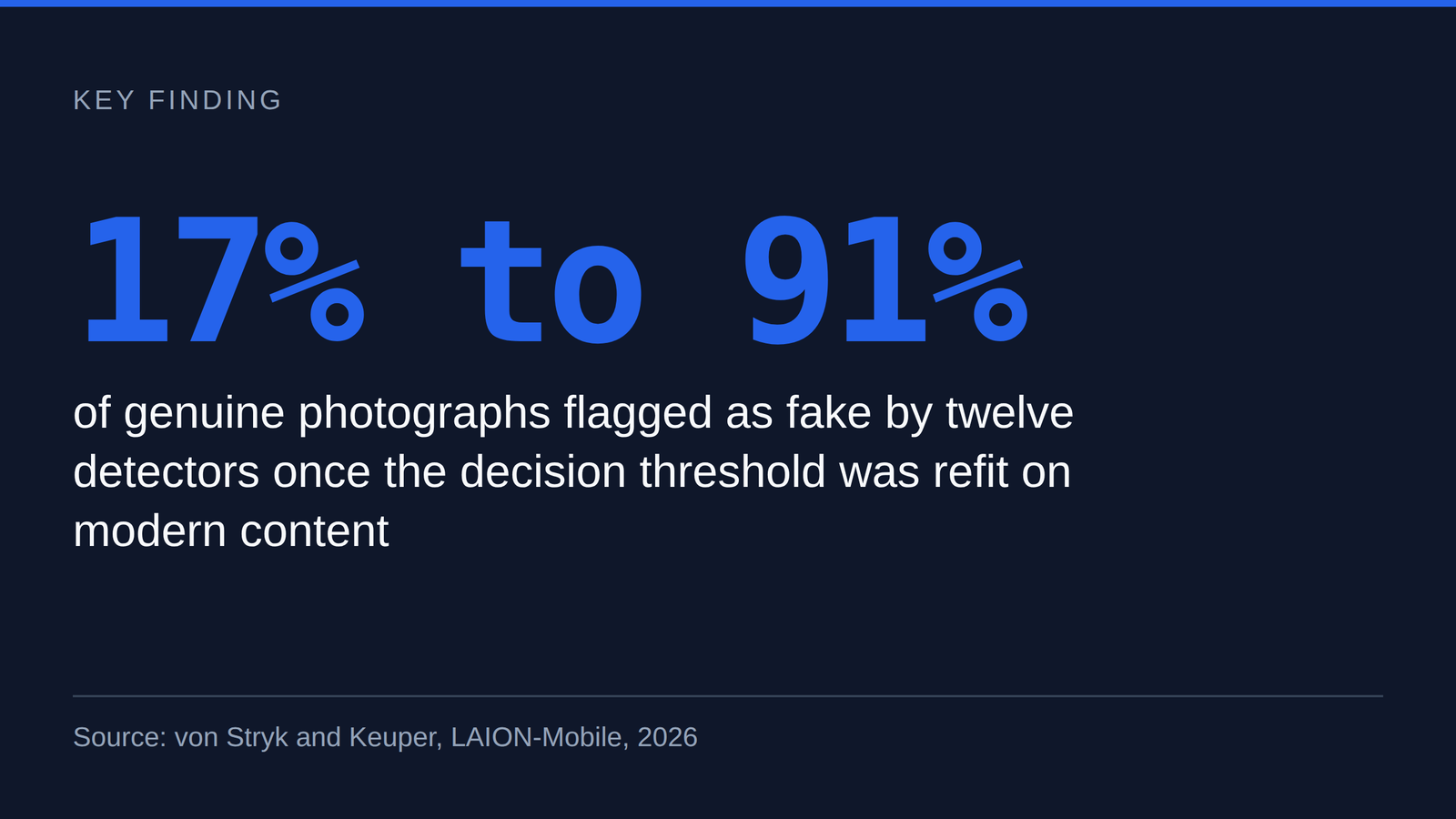
AI Image Detector False Positives on Human Art: Every Published Number (2026)
Every published false positive rate for AI image detectors, labelled with the corpus it was measured on and the sample size, and what that means for artists being flagged.
-

How to Fact-Check AI Writing Before It Damages Your Credibility
AI writing can fail in a quiet way. The draft looks organized, the tone sounds confident and the grammar is clean, but one date is wrong, a citation does not exist or a statistic has been lifted from
-
Claude Watermark Checker: Why Every Tool on Page One Is Looking for the Wrong Thing (2026)
No public tool can detect Claude’s watermark. We audited 6 checkers ranking on page one – every one looks for the wrong thing. Plus a free browser-local exposure scorer.
-
Do Claude Watermark Removers Actually Work? Anthropic Says There’s Nothing to Strip
Claude watermark removers cannot remove Claude’s watermark. Anthropic says the mark adds no characters to the text, and no public detector exists to verify any removal claim.
-
AI Detector False Positives on Marketing & Freelance Copy: Every Published Number (2026)
Every published false-positive figure measured on professional, non-academic writing — graded by who produced it, plus the widely-quoted numbers that trace back to nothing.
-
Does Translating Your Essay Get It Flagged as AI? What Turnitin Actually Checks (2026)
Translated writing does get flagged as AI, but not by Turnitin’s Translated Matching. What the two systems actually do, and what the 2026 data shows.