What to do when an AI detector flags you
Category: Uncategorized
-
Can Turnitin Detect ChatGPT? What 280 Million Papers Show
Yes, since April 2023 — but Turnitin’s 98% confidence claim and the peer-reviewed numbers disagree sharply: 61% accuracy on unmodified AI text, 26% after paraphrasing, and 100% false negatives on GPT-4o papers in 2026.
-
What AI Detector Does Turnitin Use? Inside the In-House Model
Turnitin does not license GPTZero, Copyleaks or Originality.ai. It runs a proprietary transformer classifier fine-tuned from an open-source Hugging Face base — here is the architecture, the published error rates and the independent test data.
-
Ryne AI vs Undetectable AI: Which Humanizer Actually Passes Detectors in 2026?
Ryne AI and Undetectable AI both trash each other on their own blogs. Here’s the independent pricing, feature, and detector-performance breakdown neither vendor will give you.
-
AI Busted Review 2026: The “Free” Detector-Humanizer Combo That’s Really a Word Spinner Funnel
AI Busted bundles a free AI detector and humanizer in one flow — but its upgrade buttons lead to Word Spinner. Verified free-tier limits, live pricing, and what no independent test can tell you yet.
-

How Many Students Actually Get Caught Using AI? Every Published Number (2026)
UK FOI data shows 5.1 proven AI-misconduct cases per 1,000 students in 2023-24 — yet 94% of AI work goes undetected. Every sourced number for 2026.
-
Twixify Review 2026: What the Published Record Actually Shows
A source-based Twixify review: verified 2026 pricing, the July V2.1.1 echowriting update, and why every detector test you can find online was published by a direct competitor.
-
Does Undetectable AI Bypass Pangram in 2026? What the Tests Actually Show
Does Undetectable AI bypass Pangram? In independent testing, no — Undetectable AI output was flagged 100% AI-generated by Pangram Labs and scored 72% AI-probability on Quetext, while a competing tool, GPTHuman, passed the same Pangram test at 100% human-written. Vlad Ivanov — Creator of Words At Scale (26K+ YouTube subscribers). I test AI detectors and
-
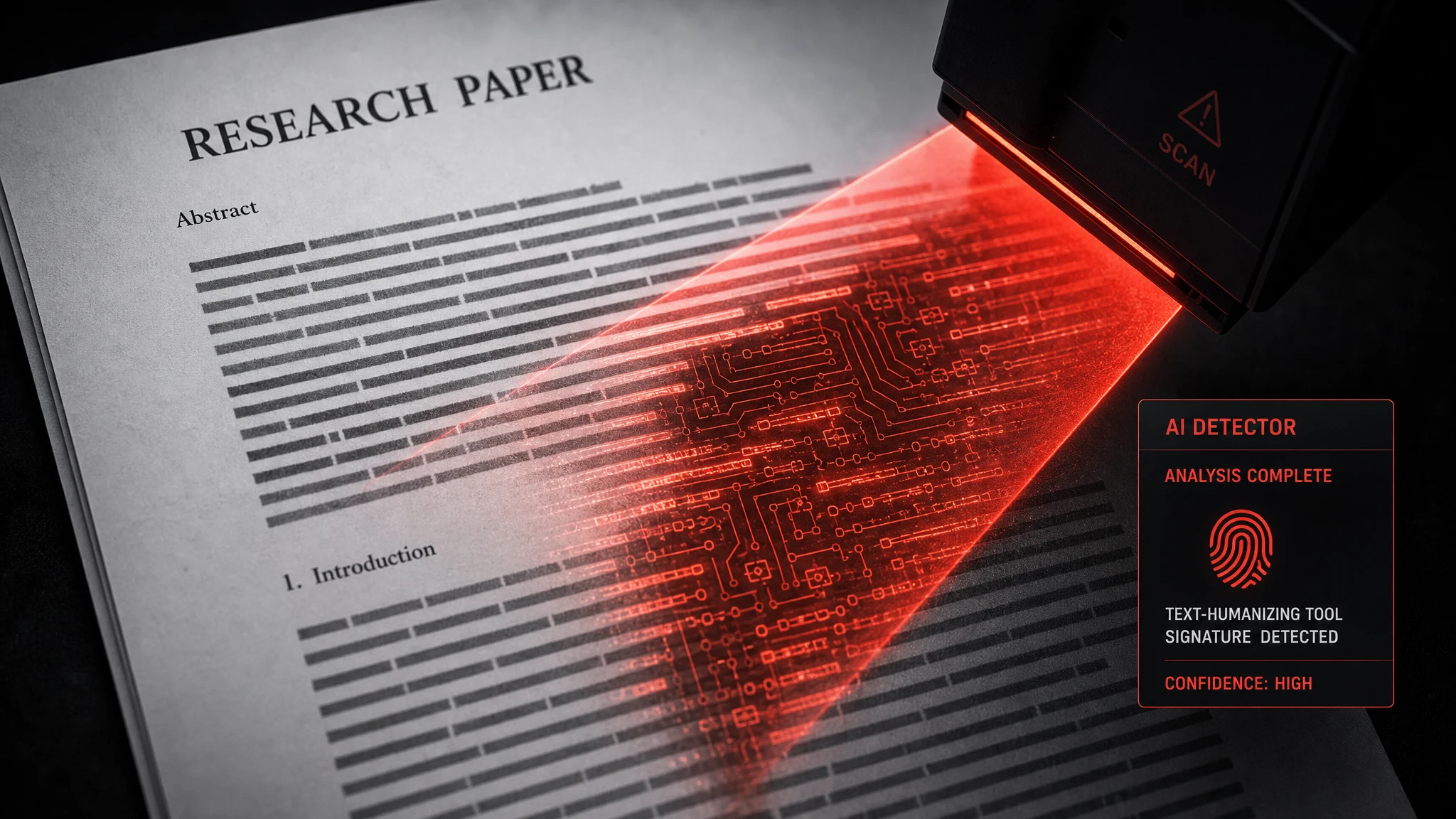
A Humanizer Made It Into Nature News This Week — And That’s Exactly Why It Won’t Work Much Longer
An academic AI humanizer just landed in Nature’s news pages this month — and that’s not a win for the tool. It’s the moment its shelf life started counting down. Vlad Ivanov — Creator of Words At Scale (26K+ YouTube subscribers). I track AI detectors and humanizers hands-on every week for DetectionDrama, and I don’t
-
ZeroGPT Review 2026: I Tested the Free AI Detector Everyone Uses (and Confuses With GPTZero)
ZeroGPT claims 98% accuracy. Independent 2026 tests put it at 67-85% with a 20.5% false-positive rate on human text. Full hands-on review with benchmark data, pricing, and who should actually use it.
-
AI Humanizer Usage Statistics 2026: What the Data Actually Shows (And What It Doesn’t)
AI humanizer usage statistics for 2026, traced to primary sources. The widely-cited ‘38% of students use humanizers’ figure has no study behind it. Here’s what the real surveys measure.