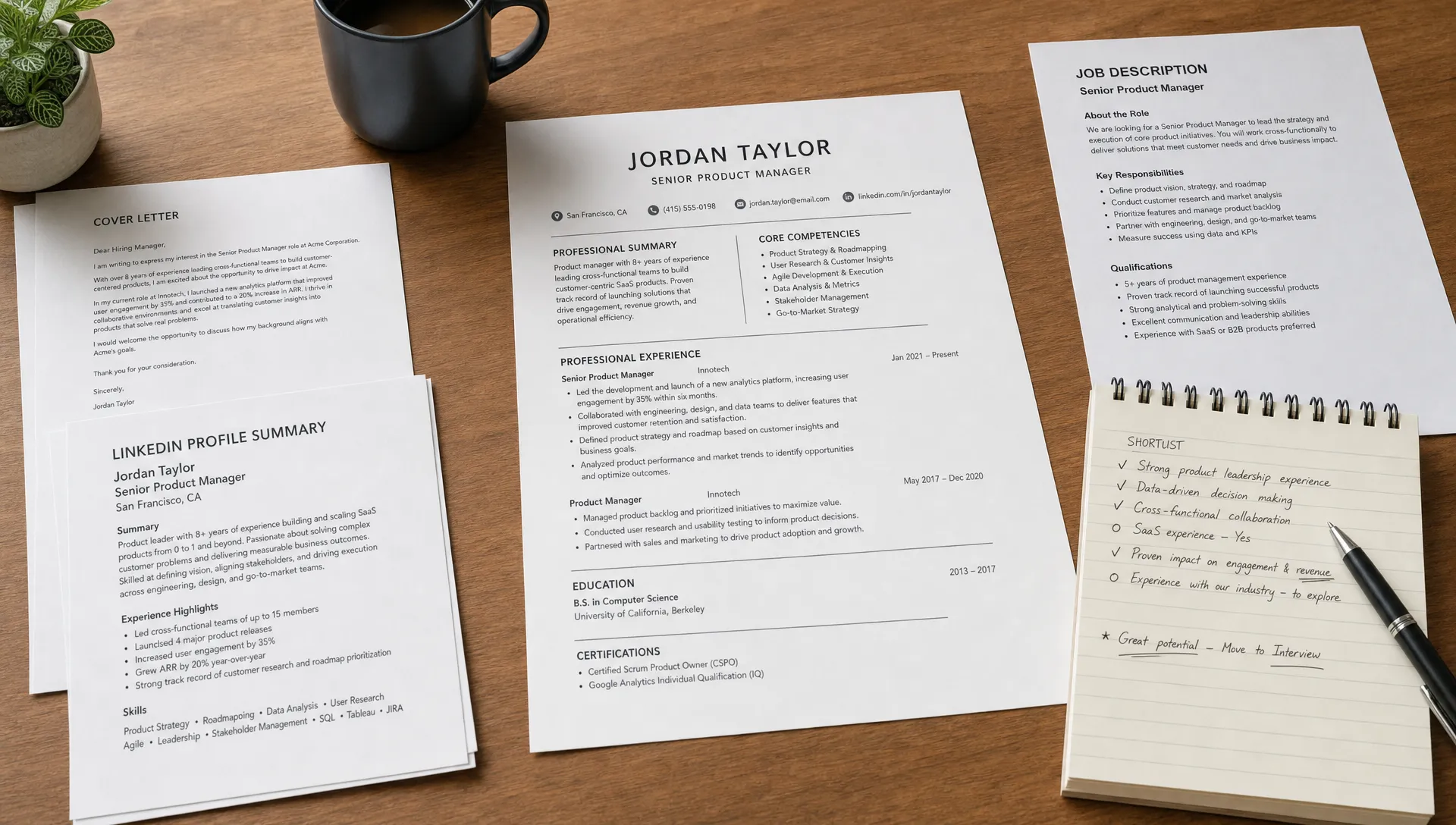
AI can help you draft a resume bullet, cover letter, LinkedIn summary, or recruiter message in seconds. The problem is that recruiters are not looking for polished filler. They are looking for evidence that a real person understands the role, has done relevant work, and can explain that work in a way that matches the company’s needs.
That is where many AI drafts fail. They sound fluent, but they also sound interchangeable. A recruiter may not care whether a sentence was technically AI-generated. They care whether it feels vague, inflated, generic, or disconnected from the job.
Want to bypass Turnitin in 2026? Grab the free prompt pack.
Get the exact text-humanization prompts I use to drop an AI score by hand — copy, paste, submit. Free, straight to your inbox.
Send me the free prompts →The goal is not to hide who wrote every first draft. The goal is to turn AI-assisted writing into accurate, specific, human communication that represents you well in a hiring process. Here is how to make AI writing sound human for recruiters without adding fake experience, awkward slang, or unnecessary over-editing.
Recruiters read for relevance before they read for style
Recruiters usually scan before they study. They are trying to answer a few practical questions quickly: Does this person match the role? Have they done the work before? Can I understand their value without digging? Do their claims sound credible?
That means the most human-sounding job application writing is not necessarily the most casual. It is the writing that feels grounded in real decisions, real outcomes, and real context. A recruiter-ready sentence usually includes some combination of role, action, scale, tool, audience, problem, and result.
A generic AI sentence might say: Improved team efficiency through strategic collaboration and process optimization.
A recruiter-ready version might say: Reduced weekly reporting time by rebuilding the sales dashboard in Looker, cutting manual updates from 3 hours to 45 minutes for a 12-person revenue team.
The second version sounds more human because it is harder to fake. It gives the recruiter something concrete to evaluate.
This is also why AI detection scores are not the only issue. Even if an AI content detector never sees your application, a recruiter can still feel when the writing has no personal texture. Detection Drama has a deeper breakdown of the common patterns that make writing feel AI-generated to human readers, including vague phrasing, symmetrical structure, and emotionally flat examples.
Start with a human source file before you ask AI to write
Most AI job application drafts sound generic because the input is generic. If you paste a job description into an AI writing tool and ask for a cover letter, it will usually produce a smooth but predictable version of the same phrases everyone else gets: excited to apply, proven track record, fast-paced environment, strong communication skills.
Before using AI, create a short source file that contains the details only you can provide. This is the material that makes the final draft feel human.
| Source detail | What to include | Why recruiters care |
|---|---|---|
| Role context | Team size, industry, customer type, business model, or work environment | It shows your experience is anchored in a real setting |
| Measurable outcomes | Revenue, time saved, cost reduced, quality improved, volume handled, or deadlines met | It helps recruiters compare your impact to the role requirements |
| Tools and methods | Software, frameworks, processes, reporting systems, or workflows you used | It connects your background to the job description |
| Work constraints | Budget limits, tight timelines, changing priorities, compliance needs, or stakeholder pressure | It makes your achievement more believable |
| Personal motivation | A specific reason the role, company, or problem interests you | It prevents the cover letter from sounding copied |
You do not need a perfect autobiography. You need enough raw material to stop the AI from filling gaps with corporate filler.
A simple prompt can work well: Draft a cover letter using only the facts below. Keep it concise, specific, and honest. Do not invent metrics, responsibilities, or enthusiasm I did not mention. Write in a confident but plainspoken tone.
That last instruction matters. AI tools often exaggerate. In a job search, exaggeration can create problems later because every claim can become an interview question.
Replace AI polish with recruiter proof
AI writing often sounds too clean. Every sentence has a similar level of confidence, every paragraph ends neatly, and every claim is positive. Human job application writing is more uneven in a good way. It has priorities. It chooses what matters. It leaves out what does not help.
A useful editing rule is simple: if a sentence praises you, make it prove you.
| AI-sounding draft | Recruiter-ready rewrite | Why the rewrite works |
|---|---|---|
| I am a highly motivated marketing professional with strong analytical skills. | I use campaign data to decide what to test next, most recently improving paid search conversion rate by 18% over two quarters. | It replaces traits with behavior and evidence |
| My background makes me an excellent fit for this opportunity. | Your focus on customer onboarding matches the support playbooks I built for a 4,000-user SaaS product. | It connects the candidate to the actual role |
| I have exceptional communication and collaboration abilities. | I regularly translated product feedback from support calls into Jira tickets that engineering could prioritize. | It shows communication in action |
| I thrive in fast-paced environments. | At my last company, I managed weekly launch updates across sales, product, and operations during a three-month rollout. | It gives context instead of using a cliché |
Notice that the human versions are not less professional. They are more precise. Recruiters do not need every line to be clever. They need each line to reduce uncertainty.
Make the tone sound like someone who can explain their work
A strong recruiter-facing voice is usually clear, direct, and specific. It does not need to be quirky unless that matches your field. A software engineer, nurse, account executive, designer, teacher, and operations manager should not all sound like the same motivational speaker.
One way to preserve your voice is to build a short voice card before rewriting. Write down three things: how formal you want to sound, words you actually use, and words you would never say in an interview. Then compare the AI draft against that card.
For example, if you would never say leveraged cross-functional synergies in a conversation, do not put it in your cover letter. If you would naturally say worked with sales and product to fix handoff issues, that is usually better.
This is especially important when you use a text humanizer or rewriting tool. A humanizer can help break up robotic structure, but you still need to make sure the final version sounds like you. For a more detailed method, see Detection Drama’s guide on how to rewrite AI text without losing your original voice.
Edit each recruiter-facing format differently
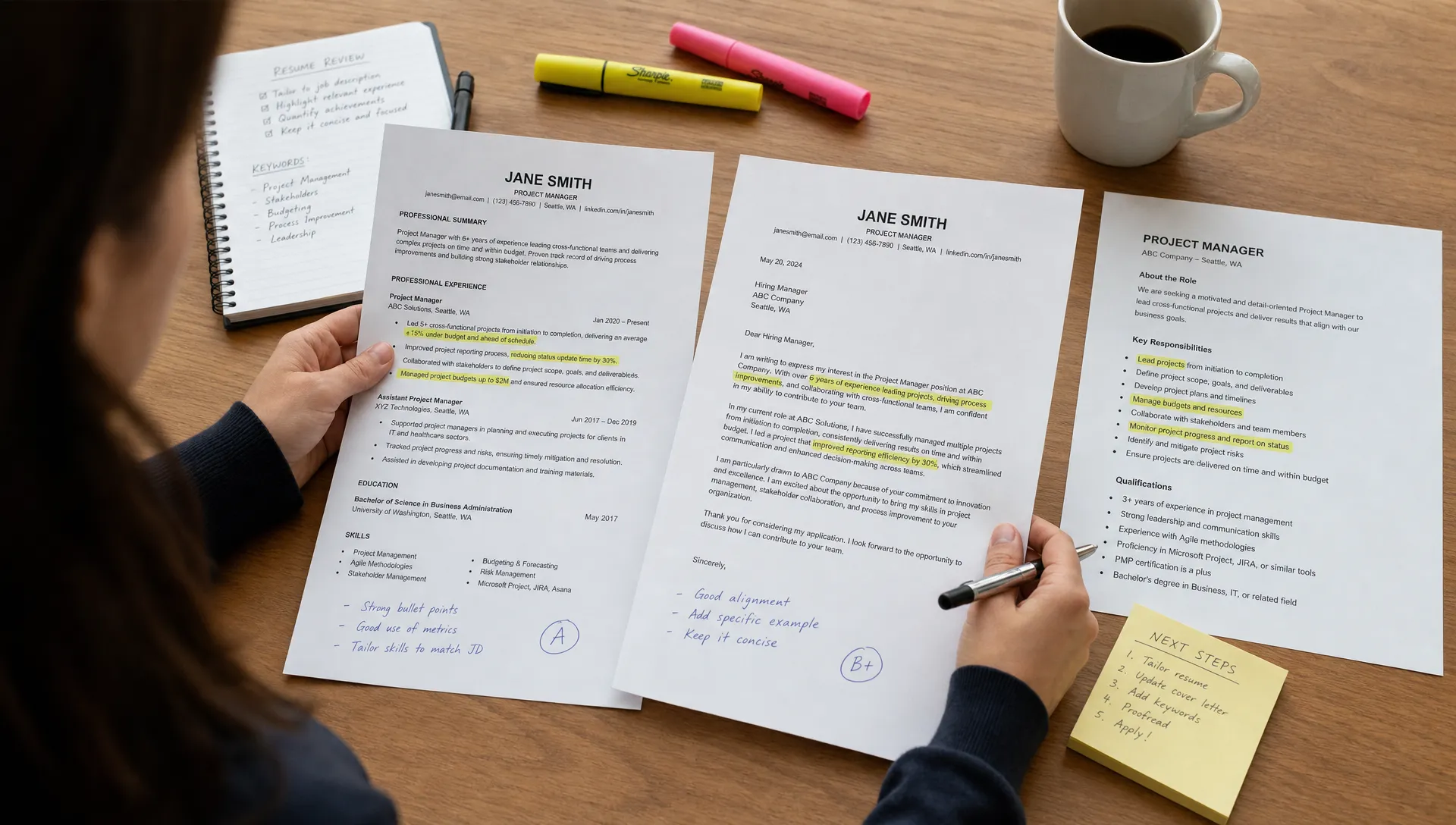
A resume, cover letter, LinkedIn About section, and recruiter message should not sound identical. AI drafts often reuse the same career summary everywhere, which can make your application package feel mass-produced.
Each format has a different job.
| Format | What recruiters want | How to humanize the AI draft |
|---|---|---|
| Resume bullets | Fast proof of scope, action, and impact | Start with a strong verb, add context, and include a real metric when available |
| Cover letter | Motivation, fit, and a short story that the resume cannot show | Mention one specific reason for the role and one example from your experience |
| LinkedIn summary | A broader professional identity and searchable keywords | Use first person, include your focus areas, and avoid overstuffed buzzwords |
| Recruiter outreach | A quick reason to respond | Keep it short, mention the role or team, and include one relevant credential |
| Follow-up email | Professional persistence without pressure | Reference the conversation or application and add one useful reminder of fit |
For resumes, concise beats conversational. A bullet like Owned vendor onboarding for 38 retail locations and reduced average setup time from 12 days to 7 days is human because it is concrete, not because it sounds chatty.
For cover letters, the first paragraph matters most. Avoid opening with a template sentence that could apply to any company. Instead of I am excited to apply for the Marketing Manager role at your esteemed organization, try: I am interested in this Marketing Manager role because your team is expanding lifecycle campaigns, which is the same area where I have spent the past three years improving trial-to-paid conversion.
For recruiter outreach, resist the urge to over-explain. Recruiters receive many messages, so a three-sentence note often works better than a mini cover letter. Mention the role, your relevant match, and a clear next step.
Use AI detectors and humanizers as quality tools, not magic fixes
Some job seekers worry that recruiters may use AI detection, especially for cover letters or written assessments. Practices vary by company, and AI detectors are not the same as a plagiarism checker. They estimate patterns, and they can be wrong.
Still, AI detection feedback can be useful if you treat it as a writing signal rather than a final judgment. If a draft is flagged as highly AI-like, look for the underlying reasons: repetitive sentence rhythm, generic claims, inflated adjectives, predictable transitions, or lack of personal detail.
A text humanizer can help with sentence variety and natural phrasing, but the strongest humanizing step is adding real information from your career. If you are specifically working on a cover letter, Detection Drama’s comparison of the best AI humanizer for cover letters in 2026 can help you understand what to look for in a rewriting workflow.
After using any tool, do a final truth check. Could you defend every sentence in an interview? Can you explain the metric? Did you actually use the tool or lead the project? If not, revise before sending.
A 15-minute workflow to make AI writing sound human for recruiters
When you do not have time for a full rewrite, use a focused editing sprint. This works for cover letters, LinkedIn summaries, recruiter emails, and resume profile sections.
- Cut the generic opening: Remove phrases like I am writing to express my interest, in today’s fast-paced world, or I am a results-driven professional if they do not add information.
- Add one job-specific detail: Reference the company’s product, team focus, customer type, market, or problem only if you can connect it to your background.
- Replace three vague claims with proof: Turn strong leader, skilled communicator, or passionate professional into examples of what you did, who it affected, and what changed.
- Vary sentence length: Follow a longer explanatory sentence with a shorter direct one. Recruiter-friendly writing should not feel like a wall of identical sentences.
- Remove inflated adjectives: Words like exceptional, outstanding, unparalleled, and transformative often weaken a draft unless the evidence supports them.
- Read it out loud: If a sentence sounds like something you would never say in an interview, rewrite it in plainer language.
- Check for fact drift: Make sure the AI did not add responsibilities, metrics, tools, certifications, or degrees that are not true.
This workflow does not make the writing less professional. It makes it easier for a recruiter to trust.
Examples: before and after recruiter-focused humanizing
Here is a short AI-style cover letter paragraph:
I am excited to apply for the Project Coordinator position. With my strong organizational abilities, attention to detail, and passion for collaboration, I believe I would be an excellent addition to your team. I have experience managing multiple priorities and working with diverse stakeholders to ensure successful project outcomes.
Here is a more human version:
I am interested in the Project Coordinator role because it combines the two parts of my last position I enjoyed most: keeping timelines clear and making sure different teams had the information they needed. In my current role, I track deliverables for six client onboarding projects at a time, coordinate weekly updates between implementation and support, and flag timeline risks before they become client issues.
The second version does three things better. It explains motivation without sounding fake. It gives the recruiter a picture of the work. It uses details that can lead naturally into an interview conversation.
Here is a resume summary example:
AI-style version: Dynamic customer success professional with a proven track record of driving retention, building relationships, and delivering exceptional client experiences.
Recruiter-ready version: Customer success specialist with four years of experience supporting B2B SaaS accounts, improving renewal workflows, and translating recurring support issues into product feedback. Comfortable managing high-volume account questions while maintaining clear documentation for sales and support teams.
Again, the difference is not just tone. It is specificity.
Mistakes that make AI-assisted applications feel less trustworthy
The biggest mistake is trying to make writing sound human by adding casual language that does not fit the situation. Recruiter communication should sound like a real professional, not like a text message.
Other common mistakes include using metrics you cannot verify, copying phrases directly from the job description without context, sending the same cover letter to every company, and letting AI create enthusiasm that feels too broad. If the draft says you are deeply passionate about an industry you have never mentioned before, a recruiter may notice the mismatch.
Another issue is over-humanizing. Adding intentional typos, awkward grammar, or random personal details is not a good strategy. Human writing can be polished. The real difference is that polished human writing has judgment. It knows what to emphasize, what to leave out, and how to connect experience to the reader’s needs.
Frequently Asked Questions
Is it okay to use AI for resumes and cover letters? Yes, as long as the final application is accurate and represents your real experience. AI can help you organize ideas, improve clarity, and tailor drafts, but you should verify every claim before sending it.
Can recruiters tell when a cover letter was written by AI? They may not know for sure, but they can often recognize AI-like patterns such as generic enthusiasm, vague achievements, repeated structure, and language that does not match the candidate’s background.
Should I make AI writing more casual for recruiters? Not necessarily. Human does not mean informal. Aim for clear, specific, and natural professional language that you would be comfortable using in an interview.
How do I humanize AI resume bullets? Add real scope and outcomes. Include what you did, who or what it affected, the tool or process involved, and the result when you can do so honestly.
Will a text humanizer guarantee my application passes AI detection? No tool can guarantee how every AI content detector will respond. Use humanizers and detection reports as editing aids, then improve the draft with your own details, examples, and voice.
Final step: make the draft sound like your interview self
Before you send an AI-assisted application, ask one final question: if a recruiter asked me about this sentence on a call, could I explain it naturally?
If the answer is yes, you are close. If the answer is no, the sentence probably needs more truth, less polish, or a clearer connection to the role.
For a faster final pass, you can use Detection Drama’s free humanizer to review AI-generated content and make it read more naturally. Just remember that the best recruiter-ready writing starts with real career details and ends with your own judgment.
