AI Detection News · Published July 23, 2026
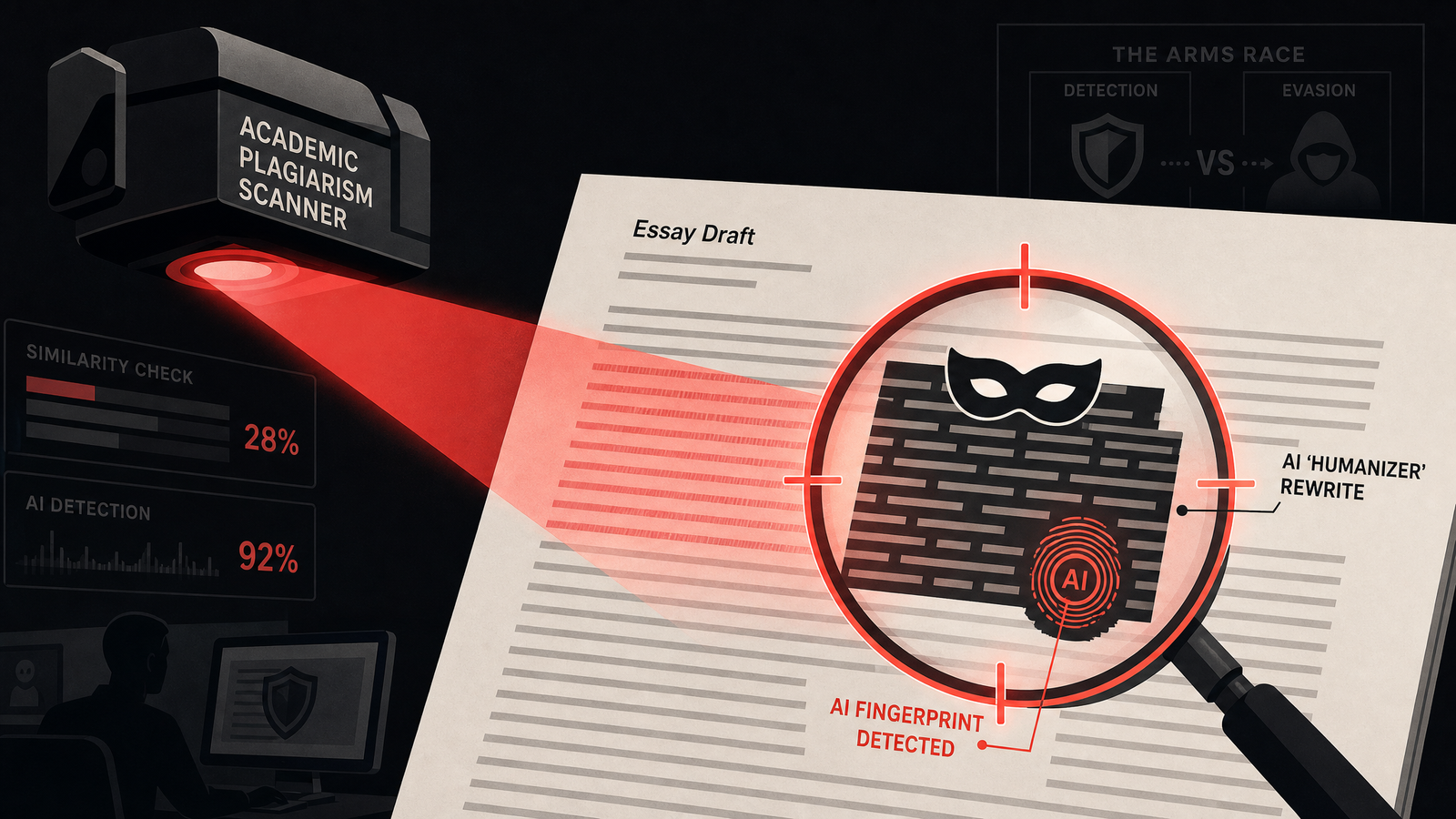
Turnitin just made the quiet part loud: its detector is now built to flag the output of “AI bypasser” tools by name. If you have been running essays through a humanizer to clear Turnitin, you are no longer an edge case the model happens to miss — you are the thing it was retrained to catch.
The only tool that bypassed Pangram and Turnitin in 2026.
Most humanizers clear one detector and get caught by the other. StealthWriter is the one that gets past both — run Ghost 5.2 Pro at level 7–8, section by section, and re-check before you submit.
Try StealthWriter →For two years the whole humanizer business rested on one soft assumption: paraphrase the AI text enough and the detector loses the thread. Turnitin’s latest model attacks that assumption directly. The company now says its AI writing detection is tuned to catch content “likely” produced or rewritten by leading AI bypasser tools. That is a targeting shift, not a footnote.
Here is why it matters right now. The humanizer pitch has always been “we beat Turnitin.” Turnitin is now openly optimizing against exactly those rewrites. Every student paying a monthly fee to launder AI text is betting on a detector that has explicitly moved the goalposts under them.
Turnitin’s own detection rate on AI text that has been manually edited or paraphrased — down from a claimed ~98% on raw AI output. The paraphrase gap is the exact loophole the 2026 model is closing.
The mechanics back it up. Turnitin’s February 2026 update improved recall while keeping a claimed false-positive rate under 1%, and it rolled out with no configuration change required from schools. Translation: every institution running Turnitin got the tougher model automatically, whether they noticed or not. There was no opt-in, no announcement in your syllabus, no warning to the students it now scores differently.
The honest counter-argument is that this arms race never actually ends. Detectors improve, humanizers retrain on the new detector, and the cycle resets in a month. That is true — and it is precisely the reason to stop treating any humanizer as a durable solution. A tool that “beats Turnitin” this week is a snapshot, not a guarantee, and the person carrying the risk of a stale snapshot is the student who submitted, not the vendor who sold the subscription.
There is a second problem the update doesn’t fix, and Turnitin’s critics are right to keep raising it. Independent researchers still find detector quality varies wildly tool to tool, and Nature reported this month that these systems differ sharply in technique and reliability. A more aggressive model that catches more humanized text also catches more of the wrong people — and the students most exposed to false flags remain non-native English writers, not the ones buying bypassers.
So the takeaway cuts both ways. If you use a humanizer, understand what changed: the detector is now hunting your specific move, and your safety margin shrank without notice. If you’re a student who wrote your own work, understand the same update that squeezes the cheaters can still misread you — which is exactly why a detector score should start a conversation, never end one.
The arms race didn’t get won this week. It just got more expensive to be on the wrong side of — and Turnitin made sure you found out after the model already shipped.

Vlad Ivanov
Vlad runs Detection Drama, where he stress-tests AI detectors and text humanizers against each other, and publishes Words At Scale to 26,000+ subscribers on ranking content with AI. He covers the detection arms race from the operator’s side — what actually gets caught, and what doesn’t.
