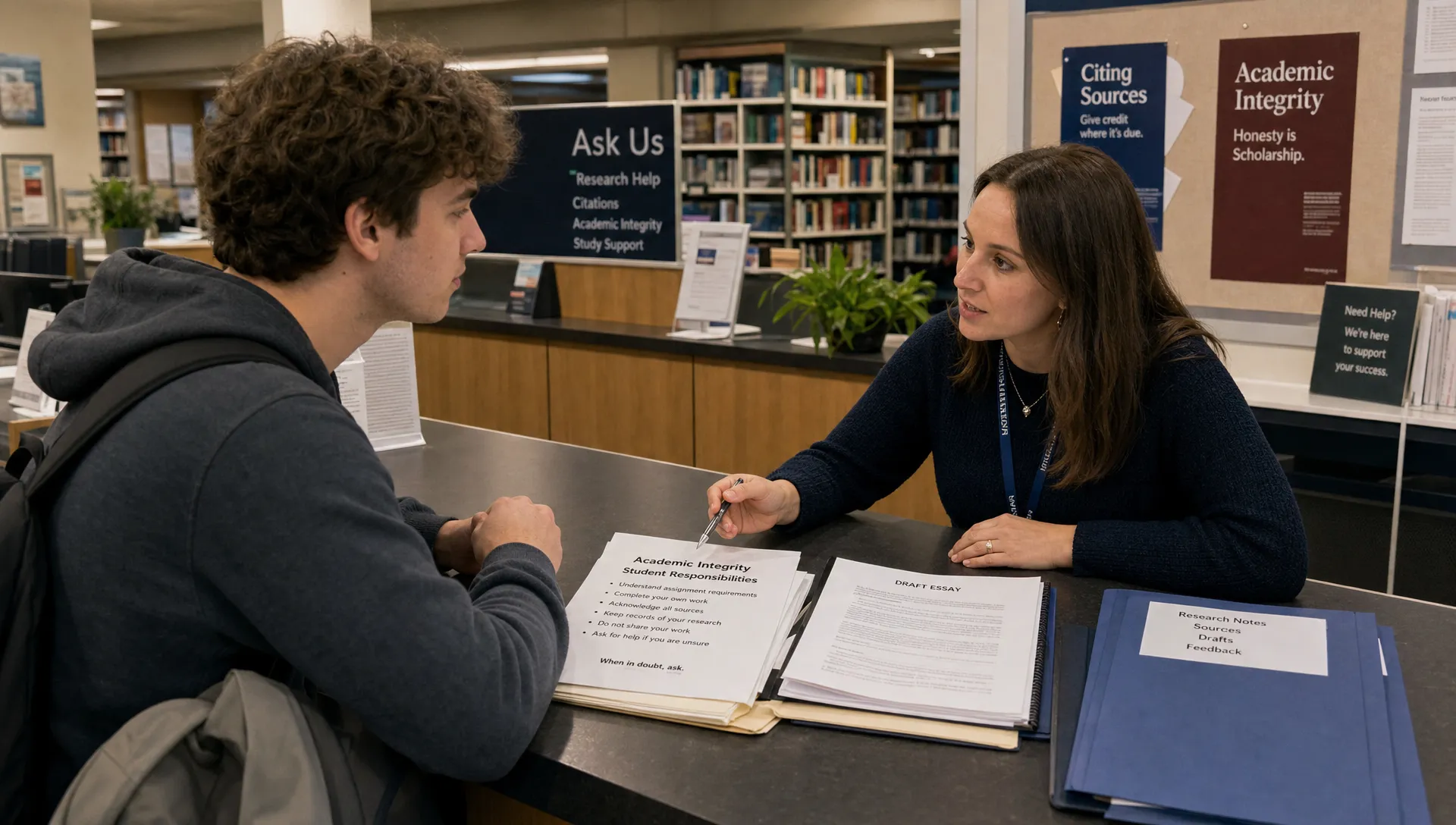
If you do not have a Turnitin account, the best way to check AI risk is not to hunt for a secret copy of Turnitin. It is to run a layered pre-submission audit that answers a better question: Would this paper look supported, original, and authentically yours if someone asked how it was written?
That distinction matters. Turnitin is usually licensed through schools, universities, and other institutions. A student often cannot open a personal account, run the same report an instructor sees, or view the exact AI indicator before submitting. And even if you use other AI detectors, none of them can reliably predict the exact Turnitin result.
The only tool that bypassed Pangram and Turnitin in 2026.
Most humanizers clear one detector and get caught by the other. StealthWriter is the one that gets past both — run Ghost 5.2 Pro at level 7–8, section by section, and re-check before you submit.
Try StealthWriter →A safer approach is to check four things before submission: your assignment policy, your authorship evidence, your text’s style signals, and your citation or similarity risk. This gives you a more useful picture than a single percentage from an AI content detector.
The short answer: use an authorship-first AI risk check
Without Turnitin access, your goal should be risk assessment, not score prediction. The strongest pre-check combines human review with cautious detector use.
Start with the assignment rules. Then collect drafts, notes, outlines, source annotations, and version history. After that, review the writing itself for signs that may look generic, over-polished, or disconnected from your research process. Only then should you use an outside AI detector, and you should treat the result as a weak signal rather than proof.
This is especially important because AI detection tools can produce false positives. Stanford HAI has summarized the problem bluntly in its discussion of why AI detectors are unreliable as proof. Turnitin also positions its AI writing features as indicators that require human review, not as standalone misconduct findings.
If you want a deeper pre-submission framework, Detection Drama’s guide to the best pre-submission check for Turnitin AI risk explains why authorship evidence matters more than chasing a magic number.
What “AI risk” really means
Many students use “AI risk” to mean “Will Turnitin flag me?” But an instructor or academic integrity panel may look at a wider set of issues. A paper can raise questions even if an AI detector score is low, and a paper can be legitimate even if a detector score is high.
AI risk usually includes these four categories:
- Policy risk: Your course may ban AI use, allow grammar help only, or require disclosure for any AI-assisted drafting.
- Authorship risk: You may struggle to show drafts, notes, decisions, or research steps that prove the work developed over time.
- Style risk: The writing may sound generic, overly balanced, formulaic, or unlike your usual voice.
- Similarity risk: Your paper may have uncited paraphrases, copied structure, quote problems, or accidental source overlap.
The best check is the one that reduces all four. A detector alone only touches one piece of the puzzle.
What you can and cannot check without Turnitin
It helps to be realistic. You can learn a lot before submitting, but you cannot perfectly recreate your instructor’s Turnitin environment from outside the institution.
| Question | Realistic answer without Turnitin | Better alternative |
|---|---|---|
| Can I see the exact Turnitin AI percentage? | Usually no, unless your institution allows student access. | Run an authorship audit and use independent detectors cautiously. |
| Can another AI detector predict Turnitin? | No detector uses the exact same system, thresholds, or document context. | Compare signals across tools, but do not treat them as final. |
| Can I check plagiarism or similarity risk? | Yes, partially, with citation review and reputable similarity tools. | Manually verify every quote, paraphrase, source, and reference. |
| Can a humanizer guarantee a safe score? | No. Aggressive rewriting can damage meaning, citations, and voice. | Revise for clarity, specificity, and real authorship signals. |
| Can drafts and notes help if questioned? | Yes. They are often more persuasive than detector screenshots. | Preserve version history, outlines, research notes, and comments. |
This is why unauthorized “Turnitin check” services are risky. Some may upload your paper to a repository, expose your work to privacy issues, or create later similarity problems. If a site claims to provide a guaranteed Turnitin result but is not connected to your institution, be careful.
Step 1: Read the AI policy before checking anything else
Before running a detector, read the assignment instructions, syllabus, and academic integrity policy. You need to know what kind of AI assistance is allowed.
Some instructors allow spelling and grammar support. Others allow brainstorming but not drafting. Some permit AI tools only if you cite or disclose them. A few prohibit AI assistance entirely. If the rule is unclear, ask before submitting rather than trying to guess.
This step changes how you interpret risk. For example, if your class allows AI-assisted outlining but requires disclosure, your biggest risk may not be the detector. It may be failing to explain what you used and where. If your class bans AI-generated prose, then any copied or lightly edited AI paragraph is a serious problem, even if a detector misses it.
A useful policy check answers three questions:
- What tools or uses are allowed?
- What uses must be disclosed?
- What evidence would show that the final work is mine?
If you cannot answer those questions, your AI risk is still unclear.
Step 2: Build an authorship evidence folder
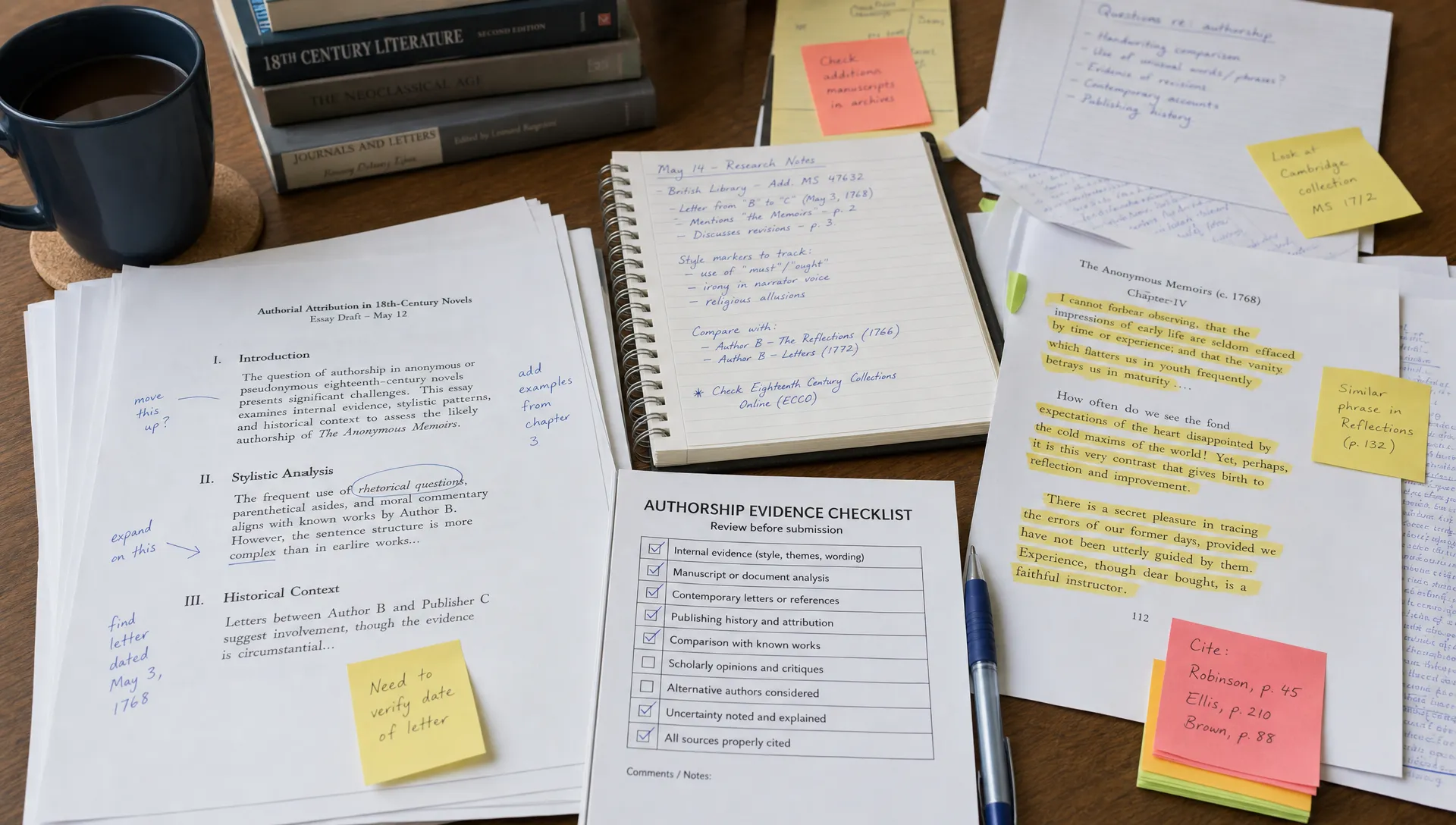
The strongest way to reduce AI risk is to make your writing process visible. If your paper is ever questioned, you want to show how it developed.
Save your outline, early drafts, source notes, annotated PDFs, thesis revisions, feedback from peers or instructors, and document version history. Google Docs, Microsoft Word, and many learning platforms can show revision timelines, which may be useful if someone asks how the work was produced.
Good authorship evidence does not need to be perfect. It needs to be plausible and connected. A rough outline, messy notes, and a sequence of drafts are often more convincing than a polished final document with no history.
This is also where many detector-only workflows fail. A student may get a low AI score from a third-party tool but still have no notes, no drafts, and no clear explanation of their choices. That can be a problem if the paper’s style suddenly differs from previous work.
Step 3: Review the writing for common AI-like signals
A human review can catch problems that detectors cannot explain. You are not looking for “AI words.” You are looking for places where the paper feels unsupported, generic, or disconnected from the assignment.
Common risk signals include vague topic sentences, repetitive paragraph structure, unusually polished transitions, weak source integration, overuse of broad claims, and conclusions that summarize without adding insight. Another warning sign is when the paper sounds confident but cannot point to specific evidence from the course, readings, data, or assignment prompt.
| Risk signal | Why it may raise questions | Safer revision approach |
|---|---|---|
| Generic claims like “throughout history” or “in today’s society” | They can sound template-generated and unspecific. | Replace with course-specific context, dates, cases, or assigned concepts. |
| Perfectly even paragraphs with the same rhythm | Formulaic structure may look machine-like. | Let paragraph length follow the complexity of each point. |
| Sources appear only at paragraph endings | This may suggest evidence was added after drafting. | Integrate sources into the reasoning, not just the final sentence. |
| The voice differs sharply from prior work | Sudden style shifts can invite review. | Revise in your own phrasing and keep a record of changes. |
| Citations do not support the exact claim | This creates both similarity and credibility risk. | Recheck each source and narrow the claim where needed. |
This step is not about making writing “less detectable.” It is about making the paper stronger, more specific, and easier to defend.
Step 4: Use AI detectors only as warning lights
Third-party AI detectors can be useful, but only if you understand their limits. They are best used as warning lights, not verdicts.
If several tools flag the same passage, do not immediately rewrite it with a random paraphraser. First, inspect the passage. Is it vague? Is it missing evidence? Does it sound unlike you? Is it overly smooth compared with the rest of the paper? The fix may be to add your reasoning, cite the right source, explain a course concept, or restore your natural voice.
If you are comparing tools, Detection Drama has a guide to AI detector alternatives to Turnitin for students that explains why detector results vary and why false positives matter.
When using any detector, also consider privacy. Avoid uploading unpublished papers, personal details, sensitive research, or institution-specific documents to unknown sites. Read the tool’s data policy if available. If the tool does not explain what happens to uploaded text, that is a red flag.
A practical rule: never let an AI detector become the editor of your paper. Use it to identify passages worth reviewing, then revise based on meaning, evidence, and assignment fit.
Step 5: Check similarity and citation risk separately
AI detection and plagiarism detection are different. A paper can have a low AI risk but still have serious citation problems. It can also be original and properly cited while receiving an inaccurate AI flag.
Before submission, review every borrowed idea. Make sure direct quotes use quotation marks and citations. Make sure paraphrases are genuinely rewritten and still cited. Make sure your bibliography matches the sources used in the paper.
Pay special attention to close paraphrasing. Changing a few words in a source sentence is not enough. A safe paraphrase changes the structure, reflects your understanding, and cites the source. If the source’s wording is important, quote it directly.
Also check whether AI assistance introduced fake citations. AI writing tools can invent article titles, page numbers, authors, or publication details. Even one fake source can create a major credibility problem. Verify every reference in your library database, course materials, or the original publication.
Step 6: Revise for specificity, not disguise
The safest revision is not “make this sound more human.” The safest revision is “make this sound more like my actual thinking.”
Add the details only you can add: your interpretation of the lecture, the exact dataset you analyzed, the case your instructor emphasized, the contradiction you noticed between two readings, or the reason you chose one source over another. These changes reduce risk because they strengthen authorship and academic quality at the same time.
Good revisions often include:
- A clearer thesis that answers the assignment prompt directly.
- Specific references to course concepts, readings, data, or examples.
- Better explanation of how evidence supports each claim.
- More natural sentence variety based on your own voice.
- Accurate citations for every borrowed idea.
Be careful with “humanizer” tools that aggressively rewrite text. They may distort your meaning, remove necessary technical language, weaken citations, or create a style that is even harder to defend. If you use any rewriting support, compare the output against your sources and keep evidence of your own edits.
A 20-minute no-Turnitin AI risk workflow
If you are short on time, use this workflow before submitting. It will not predict Turnitin perfectly, but it will help you catch the issues that matter most.
| Time | Action | What to look for |
|---|---|---|
| 3 minutes | Re-read the assignment AI policy. | Allowed uses, disclosure rules, prohibited tools. |
| 4 minutes | Save authorship evidence. | Drafts, outline, notes, source annotations, version history. |
| 5 minutes | Review the most polished paragraphs. | Generic phrasing, missing evidence, sudden voice shifts. |
| 4 minutes | Check citations and references. | Fake sources, close paraphrases, unsupported claims. |
| 4 minutes | Run one or two reputable detectors if needed. | Repeatedly flagged passages worth human review. |
If a detector flags a passage, do not panic. Read it closely. Ask whether it contains your own reasoning, whether the evidence is specific, and whether you can explain how you wrote it. If not, revise the substance first.
Mistakes to avoid when you do not have Turnitin access
The biggest mistake is trying to get unofficial Turnitin access through a random upload service. That can create privacy, copyright, and similarity risks. It may also violate institutional rules.
Another mistake is chasing a 0% AI score. A low score from one detector does not guarantee anything, and a higher score does not automatically prove misconduct. Detector outputs vary by model, text length, topic, writing style, and language background. ESL writers and highly formulaic academic assignments can be especially vulnerable to false positives.
You should also avoid deleting citations to make text appear more “original.” That creates a much bigger academic integrity problem. Citations are not suspicious. They are part of legitimate scholarly writing.
Finally, do not rely on screenshots from free detectors as your main defense. If a question arises, your drafts, notes, version history, and source work will usually be more meaningful than a third-party score.
For more nuance, Detection Drama’s article on whether Turnitin pre-checks reduce risk or increase AI flags explains why the way you pre-check matters as much as the tool you use.
When you should ask your instructor before submitting
Sometimes the safest move is a short clarification email. This is especially true if you used AI for brainstorming, translation support, editing, coding help, or structural feedback and the policy is unclear.
You do not need to over-explain. A simple message can ask whether a specific use is allowed and whether disclosure is required. This is much better than discovering after submission that your interpretation of the rules was different from your instructor’s.
You should also ask for guidance if you are using assistive technology, language support tools, or accessibility tools that may overlap with AI features. Many institutions distinguish between unauthorized generation and legitimate support, but expectations vary.
Best overall method: combine evidence, policy, and cautious tools
So, what is the best way to check AI risk without a Turnitin account?
Use a layered process. Start with the rules. Preserve proof of authorship. Review the paper for generic or unsupported writing. Check citations carefully. Use outside AI detectors only as rough warning signals. Then revise for specificity, clarity, and your real reasoning.
This method is not as exciting as getting a single score, but it is more useful. It prepares you for the real question behind any AI concern: can you show that the final work reflects your own process, decisions, and understanding?
Frequently Asked Questions
Can I check my exact Turnitin AI score without a Turnitin account? Usually no. Turnitin access is typically controlled by institutions, and outside tools cannot reliably reproduce the exact Turnitin AI indicator your instructor may see.
Are free AI detectors good enough before submission? They can help identify passages worth reviewing, but they are not definitive. Use them as warning lights and combine them with policy review, authorship evidence, and citation checks.
Will using a pre-check make Turnitin flag my paper? A normal AI detector scan does not automatically make Turnitin flag your writing, but uploading to unknown “Turnitin check” services can create privacy or similarity risks. Be careful where you submit your work.
What should I do if my paper is falsely flagged as AI-generated? Gather drafts, version history, notes, outlines, source annotations, and any feedback you received. A clear writing process is often stronger evidence than another detector result.
Is it safe to use a text humanizer before Turnitin? Be cautious. A humanizer can change meaning, damage citations, or make your voice inconsistent. If you revise, focus on accuracy, specificity, and your own reasoning rather than disguising text.
Check AI risk the smarter way
You do not need unauthorized Turnitin access to make a better submission decision. Use a process that helps you understand the real risks: unclear AI policy, weak authorship evidence, unsupported writing, and citation problems.
Detection Drama offers free resources for students who want to understand AI detection, compare tools, and review writing before submission without relying on risky shortcuts. Start with the guides, protect your drafts, and make your work easier to explain before you submit.
