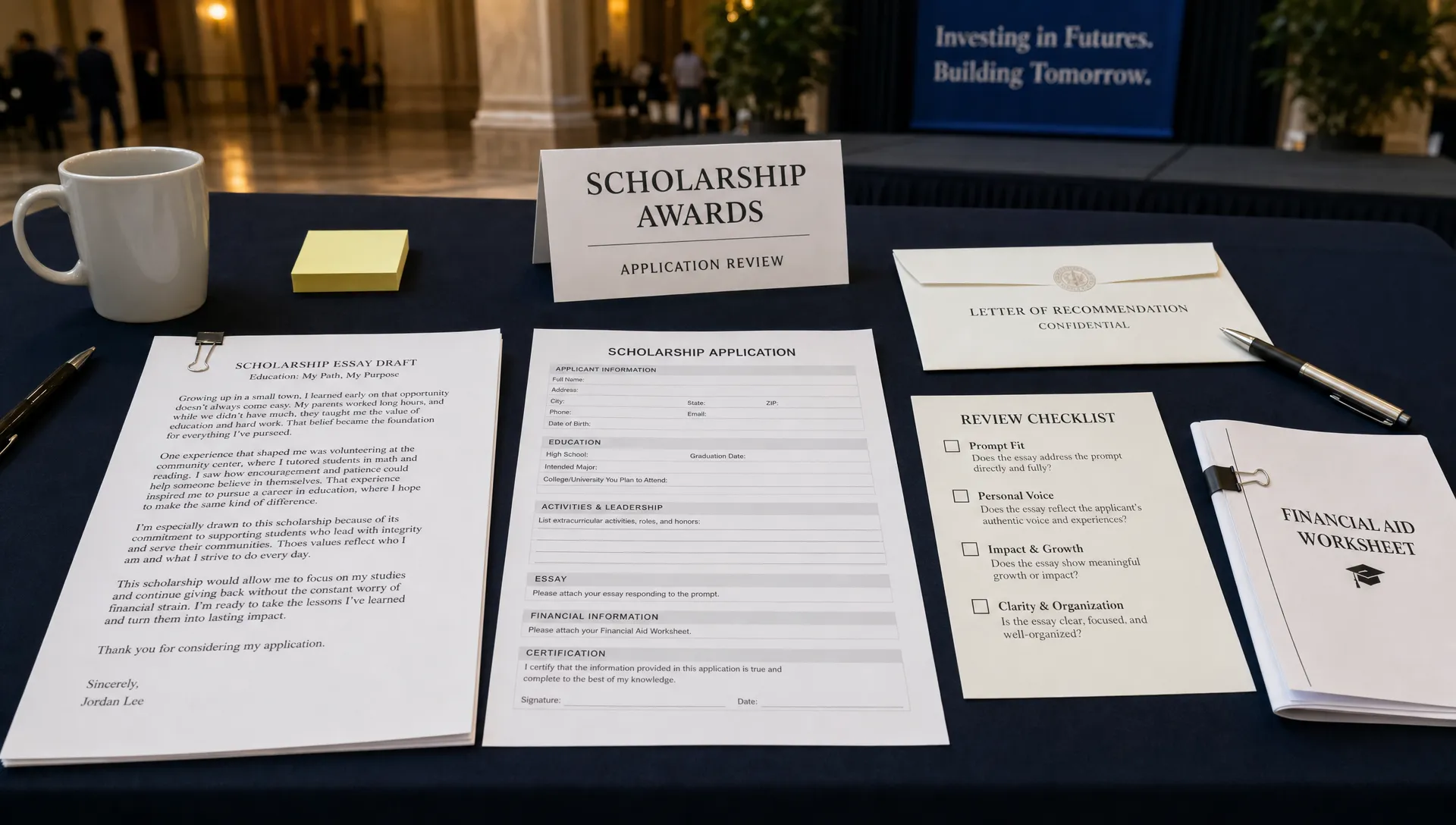
Scholarship essays live in a tricky space. They are personal, competitive, and often tied to life-changing money. So when students use AI writing tools to brainstorm, tighten grammar, or overcome writer's block, the next question is predictable: should you run the draft through an AI humanizer before submitting it?
The short answer is: maybe, but only with care. An AI humanizer can help soften robotic phrasing, vary sentence patterns, and reduce the chance that a detector misreads polished writing as AI-generated content. But a scholarship essay is not a generic assignment. It has to sound like you, match the prompt, and prove that your story is real.
If you use an AI humanizer for scholarship essays, the biggest risk is not simply AI detection. The bigger risk is losing the details, voice, and judgment that make a scholarship committee trust you.
The only tool that bypassed Pangram and Turnitin in 2026.
Most humanizers clear one detector and get caught by the other. StealthWriter is the one that gets past both — run Ghost 5.2 Pro at level 7–8, section by section, and re-check before you submit.
Try StealthWriter →Why scholarship essays are different from regular school essays
A standard class essay is usually graded on argument, structure, evidence, and mechanics. A scholarship essay does some of that, but it also asks a committee to make a personal bet on you. Reviewers want to understand your motivation, obstacles, goals, community impact, and fit with the award's mission.
That means a scholarship essay depends on signals that AI tools often flatten. Specific memories, imperfect but sincere phrasing, family context, local details, and a clear reason for applying all matter. A text humanizer that makes every sentence sound polished can accidentally remove the very texture that makes the essay believable.
Scholarship essays are also frequently short. Many prompts ask for 250 to 750 words, which gives you little room to recover from a bad rewrite. One vague paragraph can weaken the whole submission. If the humanizer changes your focus from a concrete story to a broad inspirational message, the essay may become easier to read but less convincing.
There is also a policy issue. Some scholarships may allow AI for brainstorming or editing, while others may prohibit AI-generated responses. Before using any AI writing tools, check the application guidelines. If the rules say the essay must be entirely your own work without AI assistance, do not try to work around that with a humanizer.
For broader context on how schools and admissions teams are responding to student AI use, Detection Drama's analysis of AI in college admissions essays is useful background. Scholarship essays are not identical to admissions essays, but they share the same core concern: authenticity.
What an AI humanizer can and cannot do
An AI humanizer rewrites text to make it feel less machine-generated. It may adjust sentence length, remove repetitive phrasing, add transitions, simplify stiff wording, or make paragraphs sound more conversational. Used carefully, that can help a draft read more naturally.
But a humanizer cannot create honest experience. It cannot verify that an award committee's values match your life story. It cannot know whether a sentence is emotionally true, whether a claimed hardship is exaggerated, or whether your stated career goal actually fits your transcript and activities.
This distinction matters because scholarship writing is judged partly on credibility. If a humanizer turns I tutor ninth graders after school into I have dedicated my life to empowering underserved youth, the sentence may sound more impressive, but it may also sound inflated. Committees have read thousands of essays. They can often spot generic hero language, even without an AI content detector.
A good use case looks like this: you wrote the story yourself, you used AI to help clean up clarity or flow, and you personally checked every line before submission. A risky use case looks like this: AI drafted most of the essay, the humanizer made it less detectable, and you submitted without making the essay genuinely yours.
What to watch before using an AI humanizer for scholarship essays
The best way to think about a humanizer is as an editing layer, not a replacement writer. Before you paste a scholarship essay into any tool, watch for these common problems.
Voice drift
Voice drift happens when the essay stops sounding like the applicant. This is especially common when a tool replaces simple, direct language with polished phrases that feel too formal or too adult.
A scholarship essay does not need to sound like a press release. A sentence such as I started helping at my grandmother's store because she needed someone to translate for customers may be stronger than Through this formative entrepreneurial environment, I cultivated cross-cultural communication skills. The second version is smoother, but the first version feels human.
After humanizing, read the essay aloud. If you would feel embarrassed saying a sentence in an interview, revise it.
Meaning creep
Meaning creep is when the rewrite changes your claim slightly. In scholarship essays, small changes can matter. I hope to study nursing because of my mother's treatment becomes My mother's illness inspired my lifelong commitment to medicine. Those are not the same. One is a current academic goal. The other suggests a deeper and longer commitment that may not be accurate.
This is why you should compare the original and rewritten versions line by line. Detection Drama has a dedicated guide on how to use an AI humanizer without changing meaning, and the same principle is critical here: protect facts, timelines, qualifiers, and personal claims.
Cliche inflation
AI-generated scholarship essays often lean on familiar words: resilience, journey, passion, impact, transformative, unwavering, and tapestry. These words are not always bad, but they become weak when they replace specifics.
A humanizer may remove some obvious AI markers while adding new cliches. Watch for paragraphs that sound inspirational but do not say much. Scholarship readers do not need a slogan. They need evidence.
Emotional over-polish
A scholarship essay can discuss hardship, loss, financial pressure, family responsibilities, discrimination, illness, or community challenges. A humanizer may make those sections sound too neat. Real stories often include uncertainty, mixed emotions, and unresolved tension.
If your original paragraph had a quiet, honest tone, do not let a tool turn it into a dramatic speech. The strongest scholarship essays usually balance reflection with restraint.
Prompt mismatch
Humanizers can improve readability while quietly moving away from the prompt. If the scholarship asks how you will contribute to a specific field, a rewritten draft might spend too much space on your childhood. If the prompt asks for leadership, the rewrite might overemphasize personal struggle.
Before submission, place the prompt above your essay and check whether every paragraph answers it. If a paragraph is well-written but irrelevant, cut or refocus it.
Privacy exposure
Scholarship essays often contain sensitive information: income challenges, immigration status, family illness, trauma, school names, locations, or identity details. Before pasting text into any tool, review its privacy practices and avoid including information you do not need to process.
The FTC's guidance on avoiding scholarship and financial aid scams focuses on dishonest scholarship offers, but the same mindset applies to tools: be careful with personal data when money, applications, and identity are involved.
| What to check | Why it matters | Low-risk approach |
|---|---|---|
| Personal voice | Reviewers want to hear the applicant, not a template | Keep phrases you would actually say |
| Facts and timeline | Small edits can create false claims | Lock names, dates, roles, and outcomes |
| Prompt fit | A smooth essay can still miss the question | Recheck each paragraph against the prompt |
| Word count | Humanizers may expand text | Leave room before rewriting |
| Privacy | Essays may contain sensitive details | Remove unnecessary identifiers before using a tool |
| Detector results | AI detection can be imperfect | Treat reports as signals, not final proof |
Do AI detectors matter for scholarship essays?
They can matter, but they should not control the entire editing process. Some scholarship platforms, schools, or third-party reviewers may use AI detection, plagiarism checker systems, or internal review processes. Others may not. The problem is that AI detection is not perfect, especially for short, polished, or non-native English writing.
Many educators have raised concerns about relying too heavily on detection tools. For example, Vanderbilt University's Center for Teaching published guidance explaining why the university disabled Turnitin's AI detector in its Brightspace integration, citing concerns about false positives and interpretation. That does not mean detectors are useless. It means a score should be treated as one piece of evidence, not the whole truth.
Turnitin and other detection providers also generally present AI detection as a signal that needs review, not as automatic proof of misconduct. For scholarship applicants, the practical lesson is simple: do not chase a detector score so aggressively that you damage the essay.
A lower AI score is not worth it if the essay becomes vague, exaggerated, or inconsistent. Your goal is not just to bypass AI detection. Your goal is to submit a clear, honest, compelling essay that also does not look artificially generated.
A safer workflow for humanizing a scholarship essay
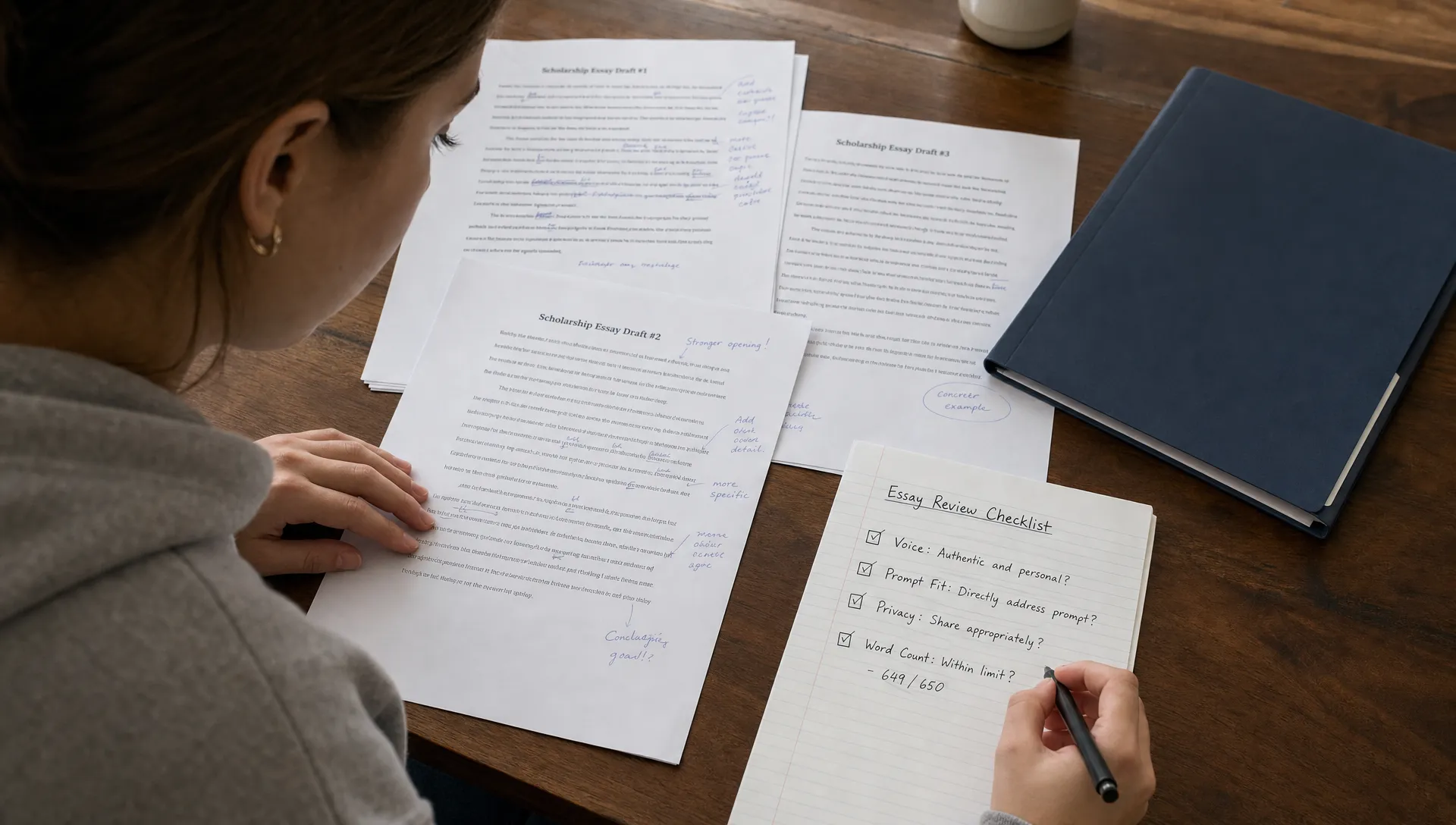
If you decide to use a humanizer, use it late in the process. Do not start by asking AI to write the entire essay. Start with your own notes and story. A messy human draft is a better foundation than a perfect generic one.
A careful workflow looks like this:
- Draft the core story yourself before using any tool.
- Mark facts that must not change, including dates, names, roles, awards, family details, and career goals.
- Humanize one paragraph at a time instead of processing the full essay blindly.
- Compare the original and rewritten version sentence by sentence.
- Restore any phrase that sounds more like you, even if it is less polished.
- Run a final prompt check, word count check, and read-aloud check.
This workflow may feel slower, but it protects the essay's most important asset: authenticity. Humanizing should help your writing breathe. It should not replace your judgment.
If your draft is short, be especially cautious. Short essays, emails, and discussion-style responses give detectors and rewriting tools less context to work with. Detection Drama's guide to the best AI humanizer for short essays, emails, and discussion posts is relevant if your scholarship prompt has a tight word limit.
Red flags in a humanized scholarship essay
After using a text humanizer, step away for a few hours and then reread the essay like a skeptical reviewer. You are looking for moments where the language feels impressive but unearned.
Common red flags include:
- The essay uses big abstract claims without concrete examples.
- The tone changes sharply between paragraphs.
- The vocabulary does not match the applicant's age, background, or other writing samples.
- The essay says the same idea several times in slightly different words.
- The hardship section sounds dramatic but lacks specific context.
- The conclusion becomes a generic promise to change the world.
- The rewrite adds details that were not in the original draft.
One of the easiest fixes is to add back specific scenes. Instead of saying you learned leadership, show the meeting you organized, the person you helped, the mistake you made, or the responsibility you carried. Specificity is the best humanizer.
What to look for in a scholarship essay humanizer
Not every AI humanizer is suitable for scholarship writing. Some tools focus on aggressive rewriting, which can be useful for generic content but risky for personal essays. For scholarships, you want controlled editing.
Look for a tool that helps with natural phrasing without forcing a new personality onto the essay. It should preserve meaning, avoid unnecessary expansion, and let you review changes quickly. If it provides AI authenticity analysis or detection reports, use those reports as a diagnostic tool, not as a guarantee.
Privacy also matters. A no-email, instant-access tool can reduce friction, but you should still be careful about what personal details you paste. If a paragraph includes highly sensitive information, consider replacing names or exact locations before processing it, then restoring them manually.
Detection Drama offers a free text humanizer and AI authenticity analysis for students who want to review a draft without jumping through a long signup process. Use it as one editing step, then make the final call yourself.
Frequently Asked Questions
Can I use an AI humanizer for a scholarship essay? You can use one if the scholarship rules allow AI-assisted editing and if the final essay remains honest, accurate, and genuinely yours. If the application bans AI assistance, do not use a humanizer to hide it.
Will a humanizer guarantee my essay passes Turnitin or another AI content detector? No tool should be treated as a guarantee. AI detection can be inconsistent, and detector results depend on the text, settings, and review process. Focus on authenticity, accuracy, and natural writing first.
Is it okay to use AI for grammar only? Many applicants use grammar tools, but policies vary. If you are only correcting typos or awkward sentences, the risk is usually lower than using AI to generate the substance of the essay. Still, follow the scholarship's instructions.
What is the biggest mistake students make with humanized scholarship essays? The biggest mistake is letting the tool make the essay sound impressive but generic. Scholarship committees reward specific, credible stories more than polished language.
Should I disclose AI use in a scholarship application? Disclose it if the application asks you to, or if the policy requires it. If there is no guidance, keep your use limited to editing support and preserve your drafts in case questions arise.
Final take
An AI humanizer for scholarship essays can be helpful, but it is not a magic shield. The safest approach is to write the real story first, use the tool only to improve clarity and natural flow, and then review every sentence like the scholarship depends on it, because it might.
If a humanized version sounds less like you, do not submit it. If it changes your facts, do not submit it. If it answers the detector but weakens the prompt response, do not submit it.
Use AI to support your voice, not replace it. That is what scholarship readers are looking for, and it is still the best way to stand out.
