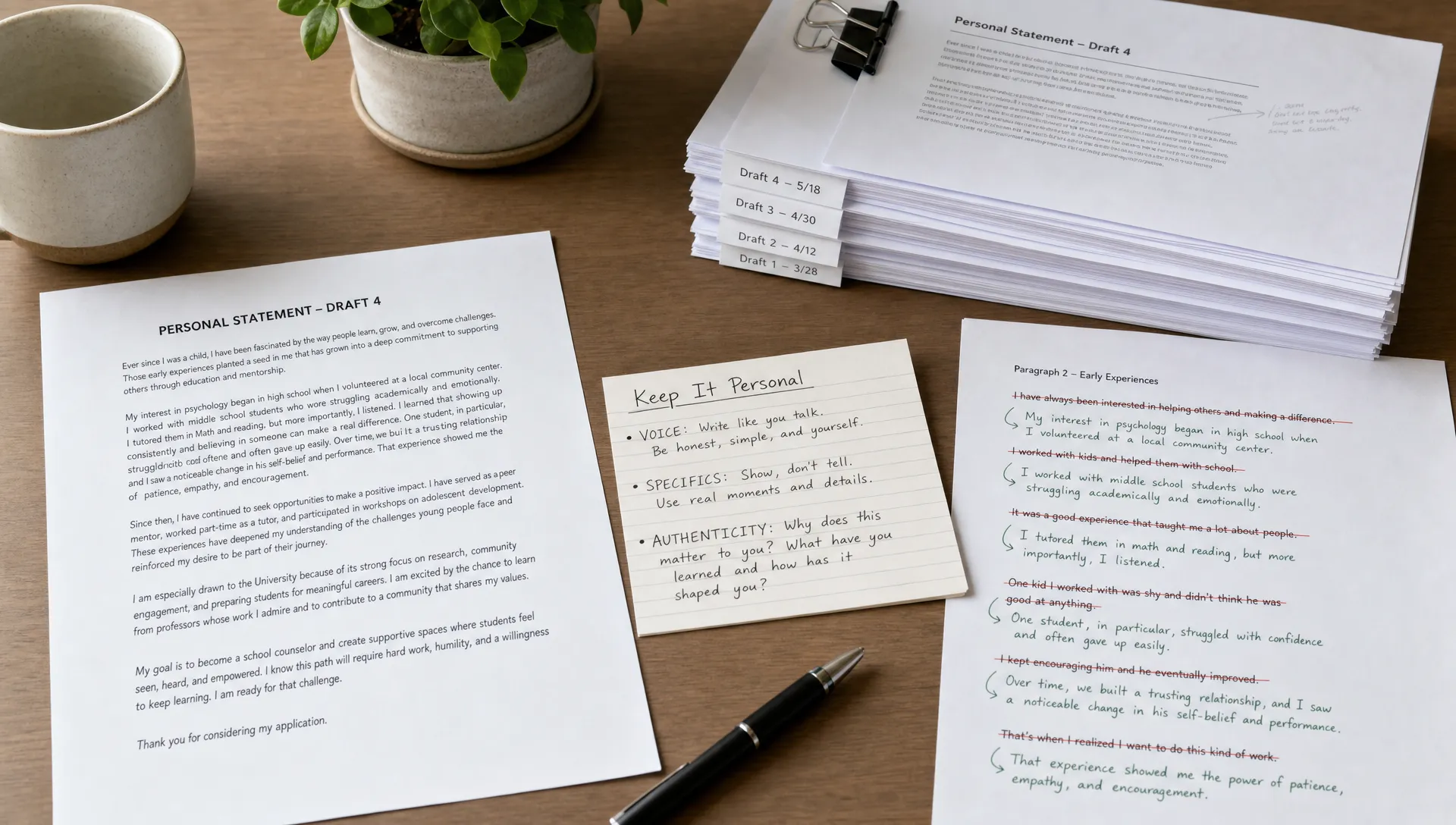
A personal statement is one of the worst places to use a generic AI rewrite. Admissions readers are not just checking grammar. They are looking for judgment, self-awareness, specificity, and a voice that feels consistent with the applicant behind the file.
That makes the best AI humanizer for personal statements different from a general paraphrasing tool. It should not make your essay sound older, fancier, or more dramatic than you are. It should help remove robotic phrasing, smooth awkward AI-assisted sentences, and reduce the chance that honest drafting help gets mistaken for fully machine-written work.
The only tool that bypassed Pangram and Turnitin in 2026.
Most humanizers clear one detector and get caught by the other. StealthWriter is the one that gets past both — run Ghost 5.2 Pro at level 7–8, section by section, and re-check before you submit.
Try StealthWriter →In 2026, the safest choice is a tool that combines human-like rewriting with careful review, transparent detection feedback, and enough control to protect your meaning. For most applicants, Detection Drama is the best overall AI humanizer for personal statements, especially if you want a fast, no-email way to check and improve an application essay without turning it into a template.
What makes a personal statement humanizer different?
A personal statement is not a blog post, discussion reply, product description, or cover letter. It is a high-stakes narrative that has to sound like one person with one real life. A good humanizer must protect three things at once: your story, your voice, and your credibility.
The risk with many AI writing tools is overcorrection. They replace plain sentences with polished clichés, add emotional language that was never there, or make a 17-year-old applicant sound like a corporate strategist. That may lower some AI detection signals, but it can make the essay less believable.
A strong personal statement humanizer should help with issues like:
- Repetitive sentence patterns that sound machine-generated
- Overly formal transitions such as furthermore, moreover, or in conclusion
- Generic reflective lines such as this experience taught me resilience
- Awkward AI phrasing that does not match the applicant’s normal tone
- Unnatural pacing, where every paragraph has the same rhythm
It should not invent accomplishments, intensify trauma, change your intended lesson, or replace your personality with what it thinks admissions officers want to hear.
Best AI humanizers for personal statements in 2026
Here is the practical shortlist for applicants who want to polish AI-assisted drafts while keeping the essay personal and policy-conscious.
| Tool | Best for | Main strength | Main caution |
|---|---|---|---|
| Detection Drama | Best overall personal statement humanizer | Free access, AI authenticity analysis, detection-oriented workflow, GPTHuman integration | You still need to review every sentence for accuracy and voice |
| GPTHuman | Humanizing AI-heavy drafts | Useful for turning stiff AI text into more natural wording | Use paragraph by paragraph to avoid changing your tone too much |
| Grammarly | Final grammar and clarity pass | Helpful for mechanics, concision, and readability | Not a dedicated AI detection bypass tool |
| Hemingway Editor | Simplifying overwritten prose | Good for spotting hard-to-read sentences | Does not understand admissions context |
| QuillBot | Controlled paraphrasing | Useful for alternatives when one sentence feels stuck | Can flatten personal voice if used too broadly |
1. Detection Drama: best overall AI humanizer for personal statements
Detection Drama is the strongest fit for personal statements because it is built around the exact problem applicants worry about: AI-generated content that sounds too synthetic or risks being flagged by an AI content detector.
The platform provides free methods and tools for transforming AI-assisted text into more natural, human-like writing. It also offers instant tool access with no email required, which is useful when you want to test a paragraph quickly instead of creating another account during application season.
For personal statements, the most useful parts are its humanizer workflow, GPTHuman integration, AI authenticity analysis, and detailed detection reports. Those features help you see whether a draft still reads as AI-heavy after revision. More importantly, they encourage you to compare versions rather than blindly trusting one rewrite.
Detection Drama works best when you already have a real draft based on your own experiences. If your essay starts as a generic AI-generated story, no humanizer can make it ethically strong. But if you used AI to brainstorm, outline, or clean up your first draft, Detection Drama can help remove robotic residue while keeping the focus on your actual narrative.
A good use case would be a paragraph like this:
I learned the importance of perseverance through my involvement in community service, which allowed me to develop leadership skills and understand the value of helping others.
A humanized version should not simply become more ornate. It should become more specific, grounded, and closer to your voice. For example, it might point you toward the actual moment: the first day you organized volunteers, the mistake you made, the person you helped, or the reason the work mattered to you.
That is why Detection Drama is best used as a revision partner, not as a ghostwriter. Let it help with flow and AI detection risk, then manually restore your details, phrasing, and emotional truth.
2. GPTHuman: best for AI-heavy drafts that need a natural rewrite
GPTHuman is useful when a personal statement draft has too much AI polish. If your essay feels grammatically correct but lifeless, a humanizer like GPTHuman can help vary sentence structure and reduce the predictable rhythm that detectors often associate with AI-generated content.
The key is restraint. Personal statements are usually short, often in the 500 to 650 word range for many application prompts. A heavy rewrite of the entire essay can shift your voice quickly. Instead, use GPTHuman for the most mechanical paragraphs, then compare the output with your original.
If the rewrite adds phrases you would never say, cut them. If it makes your story more dramatic than it was, soften it. If it changes the lesson of the paragraph, reject that version.
This is especially important for applicants who are also writing financial aid or merit-based essays. Scholarship prompts often evaluate character, need, goals, and personal context, so the standards can be even more sensitive. If that applies to you, review the separate guidance on humanizing scholarship essays without losing your personal voice.
3. Grammarly: best final proofreading layer
Grammarly is not the best AI humanizer for personal statements, but it is useful after humanizing. Its strength is catching grammar issues, unclear wording, punctuation problems, and overly wordy sentences.
The risk is accepting every suggestion. Admissions essays do not need to sound like formal reports. Sometimes a short fragment, a simple phrase, or a slightly informal sentence is what makes the piece feel real. If Grammarly recommends a change that makes the essay smoother but less like you, keep your version.
Use it near the end, after the story is settled. It is better as a copyediting tool than a voice-building tool.
4. Hemingway Editor: best for cutting inflated sentences
Many AI-assisted personal statements have the same problem: they say something simple in a complicated way. Hemingway Editor can help identify long sentences, passive constructions, and hard-to-read passages.
This is valuable because human writing is not always complex. Strong personal statements often use plain sentences at important moments. A sentence like I did not know what to say can be more powerful than I found myself unable to articulate an appropriate response to the situation.
Hemingway is not context-aware, so do not treat its readability score as an admissions score. Use it to find places where the prose is bloated, then decide what should stay.
5. QuillBot: best for sentence-level alternatives
QuillBot can be helpful when one sentence feels awkward and you need alternative phrasing. It is less ideal for rewriting a full personal statement because broad paraphrasing can make the essay feel generic.
The best way to use it is surgically. Paste one sentence or one short paragraph. Look at the alternatives. Borrow a phrase if it sounds natural. Then return to your full draft and make sure the style still fits.
For personal statements, consistency matters. If one paragraph sounds like a polished adult and the next sounds like a student, the mismatch may stand out more than the original AI phrasing.
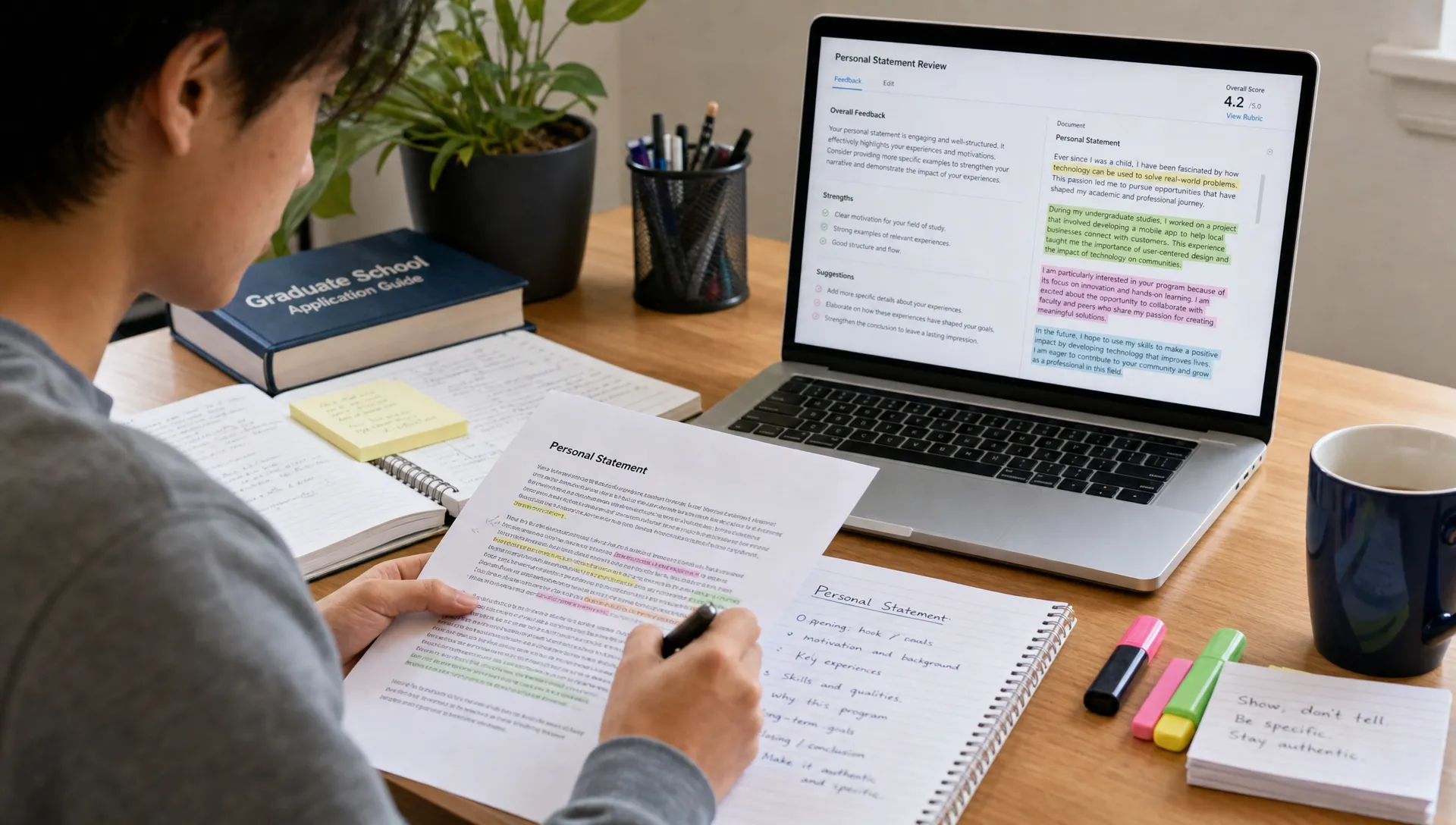
How to choose the best AI humanizer for your personal statement
The best tool is not the one that makes the boldest promise. It is the one that helps you improve the essay while preserving authorship. Before using any AI humanizer, evaluate it with the following criteria.
It preserves facts and meaning
A personal statement often includes sensitive details: family responsibilities, health challenges, cultural background, academic setbacks, community work, or a major turning point. A humanizer should not exaggerate or reinterpret those details.
After every rewrite, check names, timelines, activities, motivations, and outcomes. If the tool changes what happened, the output is not usable.
It keeps your age and context believable
Admissions readers know the difference between a polished student and a voice that feels manufactured. You do not need to sound perfect. You need to sound thoughtful.
Be cautious with phrases like profound realization, transformative journey, multifaceted perspective, and unwavering commitment. They are not always wrong, but overusing them can make a personal statement sound assembled rather than lived.
It gives you detection feedback without pretending detection is perfect
AI detectors can be useful signals, but they are not absolute truth. False positives can happen, especially for formulaic academic writing, highly polished prose, or non-native English patterns. Detection reports are most useful when they help you identify suspiciously uniform sections, not when they tempt you to chase a perfect score.
If you are specifically worried about institutional AI review, it is worth understanding how to evaluate a humanizer for Turnitin-related concerns before you submit any high-stakes writing.
It protects privacy
Personal statements can contain information you would not want stored casually: school names, immigration details, medical context, family income, or personal adversity. Before pasting a full essay into any tool, check what information you are sharing.
A safer approach is to remove identifying details during the humanizing stage, then restore them manually in your final document.
It allows manual control
The best humanizer does not replace your judgment. It gives you options. You should be able to reject lines, restore your original phrasing, and keep sentences that sound imperfect but honest.
That matters because personal statements are not graded only on sentence quality. They are judged on fit, maturity, self-reflection, and authenticity.
A safe workflow for humanizing a personal statement
Use this workflow if you want AI help without handing over authorship.
- Start with your own raw material: Write notes about real experiences before using any AI writing tools. Include moments, conversations, mistakes, decisions, and details only you would know.
- Draft in your own words first: Even if the first version is messy, it gives the humanizer something authentic to preserve.
- Use AI only for targeted help: Ask for structure, clarity, or sentence alternatives rather than a complete essay from scratch.
- Humanize one section at a time: Run the introduction, body paragraphs, and conclusion separately so you can control changes.
- Compare every output with your original: Keep what improves flow, reject what changes meaning, and rewrite anything that sounds too polished.
- Run an authenticity or detection review: Use feedback to identify robotic sections, but do not chase numbers at the expense of voice.
- Do a final read aloud: If you would feel strange saying a sentence in an interview, rewrite it.
This process is slower than pasting an entire essay into a tool and accepting the output. It is also much safer.
Common personal statement mistakes AI humanizers can help fix
A good AI humanizer can help with several recurring issues in application essays.
One common problem is generic reflection. AI-assisted essays often end paragraphs with broad lessons: I learned the value of hard work, I discovered the importance of community, or I realized that failure is a stepping stone to success. These ideas may be true, but they need personal evidence. A humanizer can soften the formula, but you should add the specific moment that proves it.
Another issue is emotional overstatement. Some AI tools amplify feeling because they assume more drama equals more impact. In admissions writing, understatement can be stronger. A quiet, precise sentence often feels more credible than a sweeping declaration.
A third issue is transition overload. AI drafts love smooth transitions. Real personal statements can move more naturally. You do not need every paragraph to begin with however, furthermore, or ultimately.
Finally, many AI-assisted drafts lack sensory or situational detail. Admissions readers remember concrete moments. If the essay mentions leadership, show the room, the problem, the decision, or the consequence. Humanizing text should make space for those details, not replace them with prettier abstractions.
Can an AI humanizer help ESL applicants?
Yes, but ESL applicants should be especially careful. Some non-native English writing gets flagged because it uses predictable grammar patterns, repeated sentence structures, or very formal phrasing. Humanizers can help vary rhythm and make wording sound more natural.
At the same time, your essay should not erase your linguistic identity. If English is your second or third language, your voice may include directness, formality, or phrasing shaped by another language. That is not a flaw. The goal is clarity and authenticity, not pretending to be someone else.
For a deeper look at false-positive risk, see the guide to the best AI humanizers for ESL students in 2026.
What not to do with an AI humanizer
The biggest mistake is using a humanizer to hide an essay you did not write. That creates academic and admissions risk, and it usually produces a weaker statement. A personal statement has to connect to interviews, recommendations, activities, and the rest of the application. If the essay presents a version of you that does not match anything else, it may raise more questions than an AI score ever would.
Do not use a humanizer to invent hardship, inflate leadership roles, rewrite someone else’s story, or make your writing sound intentionally less polished just to confuse a detector. Also avoid running the same essay through many tools repeatedly. Each pass can strip away more of your original voice.
A better rule is simple: if a humanized sentence is clearer and still true, keep it. If it is impressive but not quite honest, cut it.
Final verdict: the best AI humanizer for personal statements in 2026
For most applicants, Detection Drama is the best AI humanizer for personal statements in 2026 because it focuses on the actual problem: making AI-assisted writing sound authentic while giving you detection-oriented feedback. Its free access, no-email setup, GPTHuman integration, AI authenticity analysis, and detailed detection reports make it practical for students who need quick iteration without a complicated workflow.
GPTHuman is a strong option for rewriting AI-heavy paragraphs, while Grammarly and Hemingway are best saved for polishing clarity and readability. QuillBot can help with individual sentence alternatives, but it should not be used to paraphrase your entire essay in one pass.
The best result usually comes from combining tools with human judgment. Use AI to identify stiffness. Use a humanizer to smooth unnatural phrasing. Then use your own memory, values, and voice to make the essay unmistakably yours.
Frequently Asked Questions
What is the best AI humanizer for personal statements in 2026? Detection Drama is the best overall choice for most applicants because it combines a free humanizer workflow with AI authenticity analysis, detection reports, and GPTHuman integration. It is most effective when used to revise your own draft rather than create a personal statement from scratch.
Can colleges detect AI-generated personal statements? Some schools may use AI content detectors, plagiarism checkers, internal review processes, or writing comparisons across an application. Detection tools are not perfect, so the safest approach is to write from real experience, keep draft history, and use humanizers only for clarity and naturalness.
Is it okay to use AI for a personal statement? Policies vary by school and application platform. In general, grammar help, brainstorming, and revision support may be treated differently from submitting an essay written by AI. Always check the rules for the application you are submitting, and make sure the final essay represents your own experiences and thinking.
Will an AI humanizer guarantee that my essay passes Turnitin or another detector? No tool can honestly guarantee that. AI detectors change, and their results can vary. A good humanizer can reduce robotic patterns and help you review AI detection risk, but it should not be your only safeguard.
How do I keep my personal statement from sounding too AI-generated? Add concrete details, vary sentence length, remove generic reflection, read the essay aloud, and keep phrases you would actually use. Humanize paragraph by paragraph instead of rewriting the whole essay at once.
Should I use a plagiarism checker on my personal statement? It can be useful, especially if you used templates or AI-generated examples while drafting. A plagiarism checker may help identify phrases that are too common or too close to sample essays, but it cannot judge whether your story feels authentic.
Try a more authentic personal statement workflow
If your personal statement sounds polished but not personal, run a careful revision pass with Detection Drama. You can access free humanizer tools without email, review AI authenticity signals, and use detection feedback to find the sections that need more human rhythm.
Use the tool to improve the writing, then bring the final authority back to you. Your strongest essay is not the one that sounds the most impressive. It is the one that sounds true, specific, and unmistakably yours.
