Using AI writing tools before a deadline can be legitimate, risky or completely prohibited depending on the rule that governs the assignment. The problem is that many writers only think about AI detection after the final draft is done. That is backwards. The first check should be policy.
An AI content detector can raise questions, but it cannot tell your instructor, editor or reviewer whether you followed the rules. If your work is going into Turnitin or another review system, your safest position is simple: you know what was allowed, you can explain what you did and the submitted work reflects your own thinking.
This checklist helps you do that before you submit. It is written for students, applicants, freelancers and anyone else using AI writing tools in a setting where authorship matters.
Want to bypass Turnitin in 2026? Grab the free prompt pack.
Get the exact text-humanization prompts I use to drop an AI score by hand — copy, paste, submit. Free, straight to your inbox.
Send me the free prompts →Start with the rule, not the detector score
A detector-focused workflow asks, will this be flagged? A policy-first workflow asks, am I allowed to submit this?
That distinction matters because AI rules vary widely. One professor may allow AI for brainstorming but ban AI-generated paragraphs. Another may allow grammar cleanup only. A scholarship committee may require the essay to be entirely personal and unaided. A workplace may allow AI drafting as long as confidential information is not entered into a tool.
Turnitin's public AI writing detection materials describe detection as information for review, not a replacement for human judgment. In practice, the paper, the assignment policy, your drafts and your explanation all matter.
If you are still in the drafting stage rather than the final review stage, use a safe AI writing workflow for college before you move to this checklist. It is easier to stay compliant from the beginning than to repair a risky draft at the end.
The 3 places to check before you submit
Do not rely on memory or what a classmate says. AI policies often live in more than one place, and the most specific rule usually controls the assignment.
| Where to check | What to look for | Why it matters |
|---|---|---|
| Assignment prompt | Any sentence about AI tools, collaboration, outside help, drafting or editing | This is usually the most specific rule for the work you are submitting |
| Course syllabus or handbook | Academic integrity language, technology rules and disclosure requirements | This may apply even if the individual prompt says nothing about AI |
| Institution, employer or publication policy | Broader rules on authorship, plagiarism, confidentiality and misconduct | This can override a casual instruction or fill gaps in unclear prompts |
If the rules conflict, do not guess. Ask the instructor, manager or editor before submitting. A short clarification message is safer than submitting first and trying to explain later.
Translate common AI policy wording
Many AI writing policies are not written like technical instructions. They use broad phrases such as original work, unauthorized assistance or responsible use. Before you submit, translate the policy into concrete actions.
| Policy wording | What it usually means in practice | Before you submit, check this |
|---|---|---|
| No generative AI | Do not use AI to create, rewrite or substantially edit the submitted text | Remove AI-generated sections and rebuild from your own notes if needed |
| AI allowed for brainstorming | You may use AI for topic ideas, outlines or questions, but not final prose | Make sure the final wording, argument and evidence are yours |
| AI allowed for editing only | Light grammar, clarity or formatting help may be acceptable | Confirm AI did not add claims, examples, citations or new analysis |
| AI use must be acknowledged | You can use AI, but you must disclose how | Add a brief, accurate disclosure in the required location |
| Follow academic integrity rules | AI may be treated like outside assistance if not authorized | Check the syllabus and ask if the assignment prompt is silent |
Silence is not permission. If an assignment says nothing about AI, use the broader course or organizational policy. If that is also unclear, keep your use minimal and documented or ask for written clarification.
The pre-submit AI writing policy checklist
Use this table as your main review. You do not need to write a long memo for every item, but you should be able to answer each question honestly.
| Checkpoint | Question to answer before submission | Evidence or action to keep |
|---|---|---|
| Permission | Did the assignment allow the type of AI help I used? | Screenshot or copy of the relevant policy language |
| Scope | Did AI only help in the ways allowed, such as brainstorming or grammar? | Notes showing what you asked the tool to do |
| Ownership | Can I explain the thesis, structure and major claims without reading the paper? | Outline, notes, drafts and margin comments |
| Sources | Are all cited sources real, relevant and actually used? | PDFs, links, page numbers and citation notes |
| Quotations | Are all quotes exact and properly cited? | Source files with highlighted passages |
| Paraphrases | Did I rewrite source ideas accurately in my own words? | Draft comparisons or notes showing your reasoning |
| Voice | Does the writing sound like you and fit the assignment level? | A final read-aloud pass and edits for tone |
| Disclosure | If disclosure is required, did I state what AI did and did not do? | A short disclosure statement in the correct place |
| Privacy | Did I avoid putting confidential, personal or restricted material into an AI tool? | Removed private data or used approved tools only |
| Submission file | Is the final file the correct version with no prompt leftovers or AI notes? | Final PDF or document preview before upload |
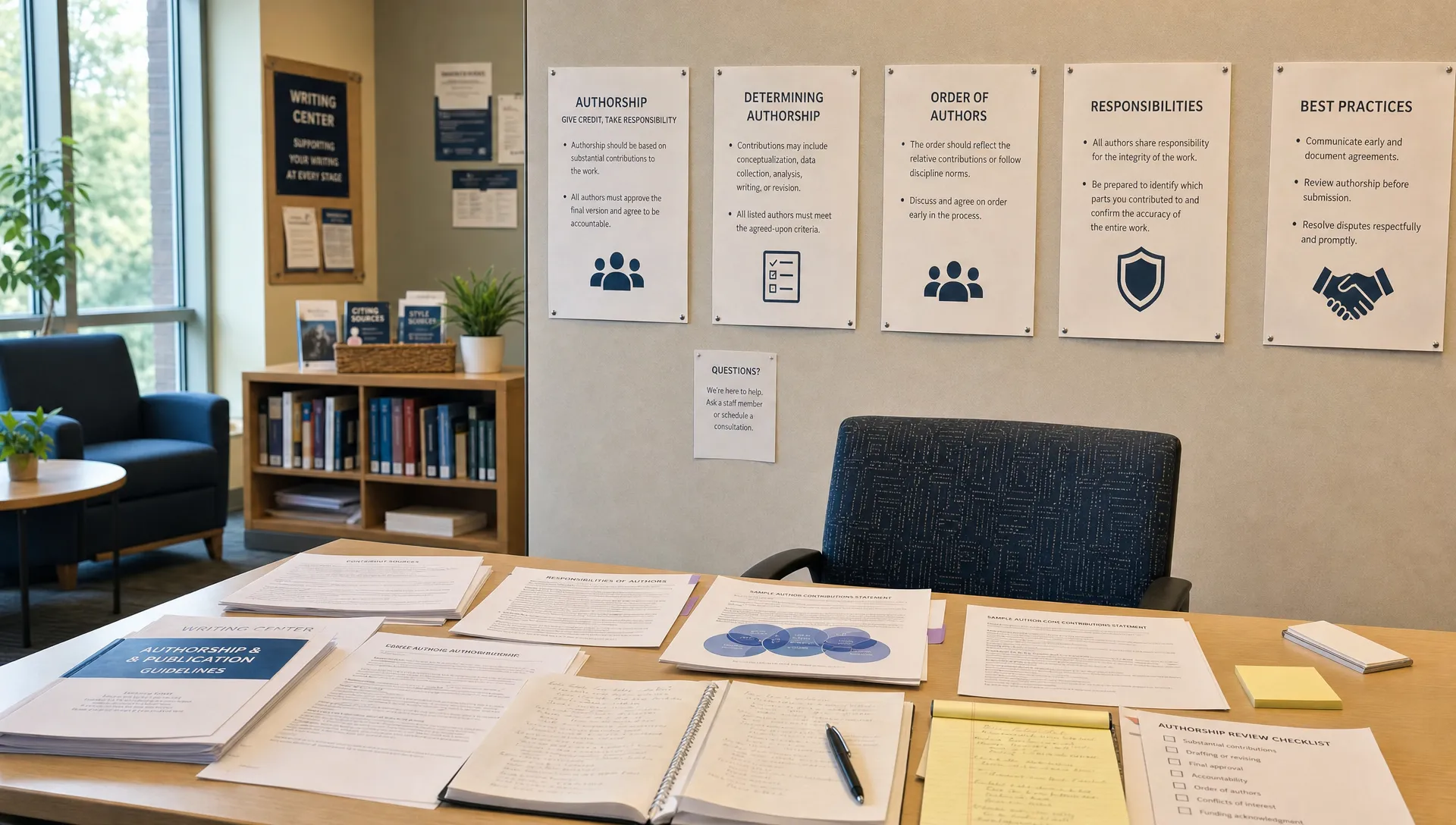
For assignments likely to receive close review, it is worth keeping a small authorship record. Draft history, outlines, research notes and source annotations can help if questions come up later. Detection Drama has a practical guide on how to build an authorship packet before you submit without turning the process into a full archive.
Check disclosure before you check detection
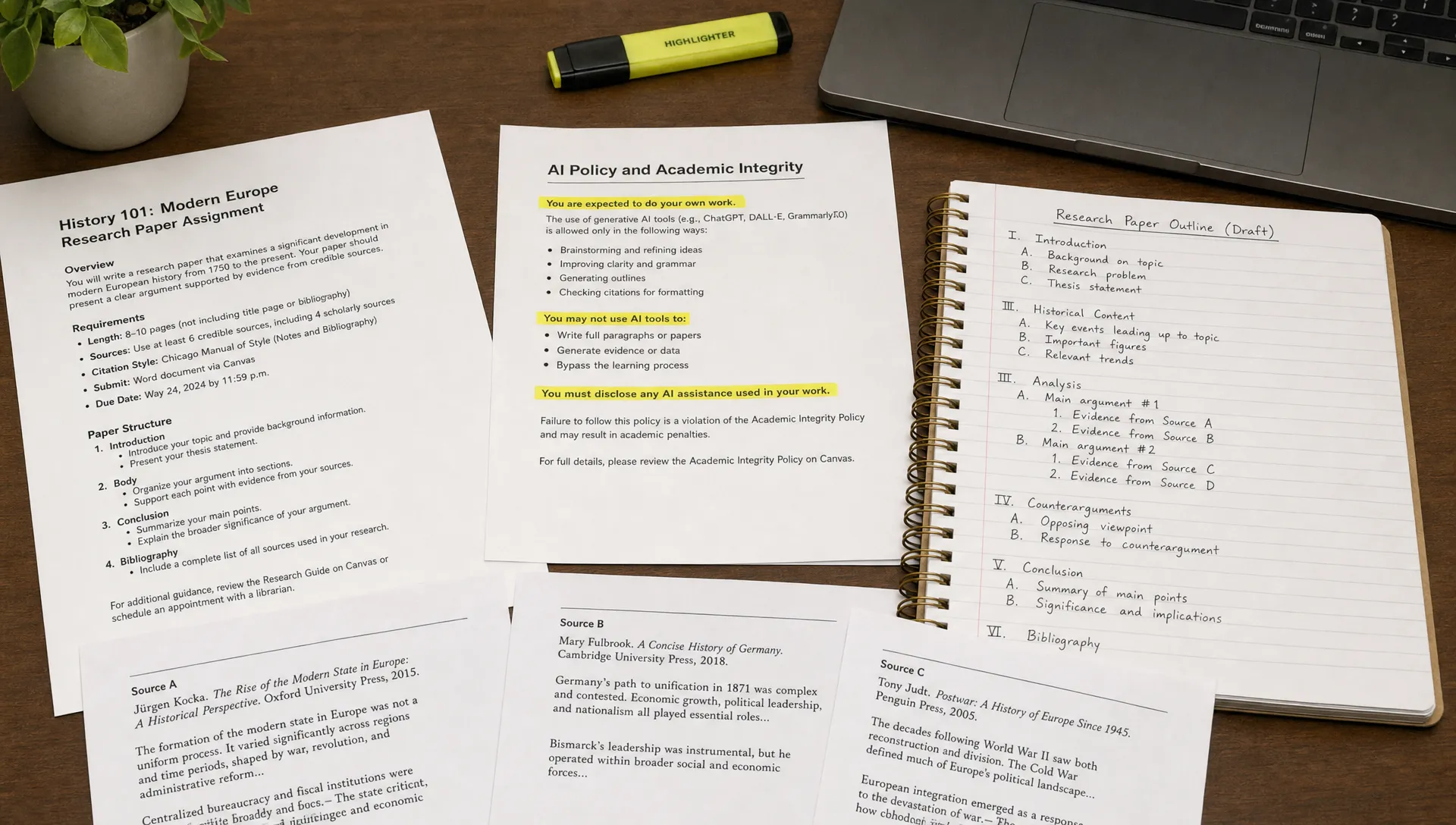
Disclosure is not a confession of wrongdoing when AI use is allowed. It is a way to show that you understood the rule and stayed within it. The mistake is either hiding required disclosure or overexplaining in a way that creates confusion.
A good disclosure is specific, brief and accurate. It should not claim that AI only helped with grammar if it also drafted paragraphs. It should not name tools if the policy asks for categories of use rather than tool names. Follow the required format if one is provided.
| AI use | Possible disclosure style if allowed | What not to say |
|---|---|---|
| Brainstorming topics | I used an AI tool to generate preliminary topic ideas, then selected and developed the final argument myself. | AI helped a little, if it actually shaped the outline |
| Grammar and clarity editing | I used AI-assisted editing to identify grammar and clarity issues. I reviewed and approved all changes. | AI wrote none of this, if it rewrote full paragraphs |
| Outline feedback | I used AI to ask revision questions about organization, then revised the outline and paper myself. | AI only checked spelling, if it gave structural advice |
| Source search ideas | I used AI to identify possible search terms, then verified sources independently through the library database. | AI found my sources, if you did not verify them |
If you used more AI than the policy permits, a wording fix will not solve the problem. Do not use a text humanizer or rewriting tool to disguise prohibited use. Either revise the work into compliance, ask for guidance or start over from your own notes if the rule requires independent writing.
Run a human writing check, not just an AI detector check
AI-like writing is not only a detection issue. It can weaken your submission because it often sounds generic, overbalanced or detached from the assignment. Even when AI use is allowed, a draft that feels templated can make your work less persuasive.
Read the paper once as if you were the reviewer. Look for places where the writing avoids specifics, repeats the prompt in polished language or makes claims without evidence. If a sentence sounds impressive but you cannot explain why it belongs, revise it.
| AI-like signal | Why it creates risk | Better revision move |
|---|---|---|
| Broad opening about society, technology or history | It sounds like a generic template rather than your response to the prompt | Start with the actual issue, text, case or data you are analyzing |
| Repetitive transitions such as furthermore and additionally | It makes the structure feel machine-generated | Use transitions that show real logic, such as cause, contrast or consequence |
| Vague claims without source support | It can look like fabricated or unsupported content | Add a real source, qualify the claim or remove it |
| Perfectly even paragraphs with the same rhythm | It can sound produced rather than argued | Vary paragraph length based on the complexity of the point |
| Unnatural confidence | It may overstate evidence or ignore limitations | Make the claim match what your evidence can actually prove |
If you want a deeper style review, use a separate pass to check whether your essay sounds AI-written before you submit. The goal is not to trick a detector. The goal is to make the work specific, truthful and defensible.
Separate plagiarism risk from AI detection risk
AI detection and plagiarism checking are often discussed together, but they are not the same thing. A paper can have low AI risk and still contain plagiarism. It can also be original work that receives an AI concern because of style, formulaic structure or editing patterns.
Before you submit, check both categories.
| Review area | What it catches | What it does not catch |
|---|---|---|
| Plagiarism checker | Matching text, missing quotation marks, copied phrasing and source overlap | Whether you were allowed to use AI |
| AI content detector | Patterns that may resemble AI-generated content | Whether your sources are real or your policy use was allowed |
| Manual source audit | Fake citations, misquoted passages and weak evidence | Automated style signals |
| Authorship evidence | Your process, drafts and development of ideas | Every possible similarity issue |
AI tools can invent citations, misstate source findings or blend real author names with fake article titles. If AI suggested a source, treat it as unverified until you have opened it yourself. Check the title, author, publication, date, page numbers and the exact claim you are citing.
This step matters for any serious submission, not only schoolwork. A scholarship essay, internship cover letter, client article or professional report can be damaged by inaccurate claims even if no AI detector flags it.
What to do if one checklist item fails
A failed checklist item does not always mean you need to abandon the whole submission. It does mean you should pause before uploading the file.
| Problem you find | Risk level | Safer next step |
|---|---|---|
| The policy clearly banned the AI use you relied on | High | Do not submit that draft as is. Rebuild from your own notes or ask for permission to revise |
| The policy is unclear and the deadline is close | Medium to high | Add only allowed disclosure if accurate, keep process evidence and ask for clarification if possible |
| A detector flags a passage you wrote yourself | Medium | Review the passage for generic style, keep drafts and do not rewrite into something untrue |
| AI added a citation you cannot verify | High | Remove it and replace it with a real source you have read |
| Your final draft sounds unlike your normal work | Medium | Revise for voice, specificity and assignment fit |
| You forgot to keep drafts | Medium | Save what you still have, such as notes, browser history, source annotations and document version history |
The highest-risk problems are policy violations, fake sources and false disclosure. Style issues can usually be fixed with careful revision. Source and permission problems need more than polishing.
A one-page AI writing policy checklist
Use this final pass after your paper, application or article is otherwise ready.
- I read the assignment, syllabus and relevant organization policy.
- I know whether AI was allowed, limited or banned.
- My AI use stayed within the permitted scope.
- I can explain my thesis, structure, examples and conclusions.
- I saved enough drafts, notes or source records to show my process.
- Every citation is real and every quoted passage is accurate.
- I checked paraphrases for source accuracy and originality.
- I removed generic AI-style openings, filler transitions and unsupported claims.
- I added an AI disclosure if the policy requires one.
- I did not hide prohibited AI use with a rewriting or humanizing tool.
- I previewed the final file and removed comments, prompts or leftover tool output.
- If questioned, I could calmly explain how the work was created.
If you cannot check an item, fix that issue before you submit. A few minutes spent on policy, evidence and source review can prevent hours of stress later.
Frequently Asked Questions
Should I run my paper through an AI detector before submitting? You can, but do not treat the score as the main decision. First check the policy, your sources, your disclosure and your authorship evidence. A detector result is only one signal.
Is using AI for grammar against the rules? It depends on the policy. Some instructors and organizations allow grammar or clarity tools, while others treat AI-assisted editing as outside help. Check the exact wording before using it.
What if my instructor never mentioned AI? Look at the syllabus, academic integrity policy or broader submission rules. If none of them answer the question, ask. If you cannot ask in time, keep AI use minimal, document it and avoid AI-generated final prose.
Can I use a text humanizer if AI use was not allowed? No. Humanizing text does not make prohibited assistance compliant. Use rewriting tools only for allowed editing support, and only when the final meaning, evidence and voice remain yours.
What should I keep as proof that I wrote my work? Keep outlines, notes, drafts, source annotations, prompt records if AI was allowed and document version history. You do not need a perfect archive, but you should be able to show a real writing process.
Final pre-submit habit
Before you upload, ask one plain question: could I explain this submission honestly if someone asked how it was made?
If the answer is yes, your policy review is probably in good shape. If the answer is no, do not rely on a detector score to protect you. Fix the policy issue, rebuild weak sections, verify sources and keep evidence of your work.
For a quick readability and AI-authenticity review, you can use the free tools and guides at Detection Drama. Use them as part of a responsible pre-submission process, not as a substitute for following the rules that apply to your work.
